







- Where
- Autun, Burgundy
- Directions
- Directions
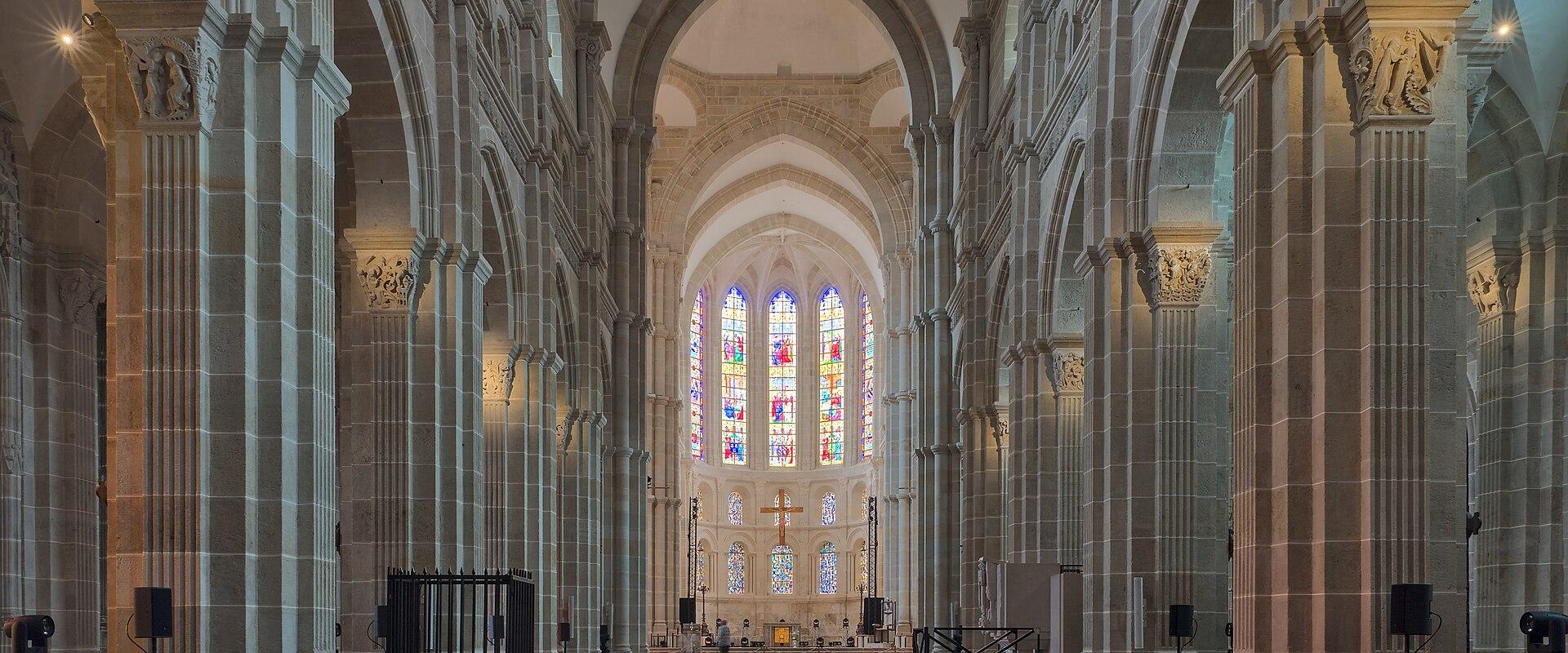
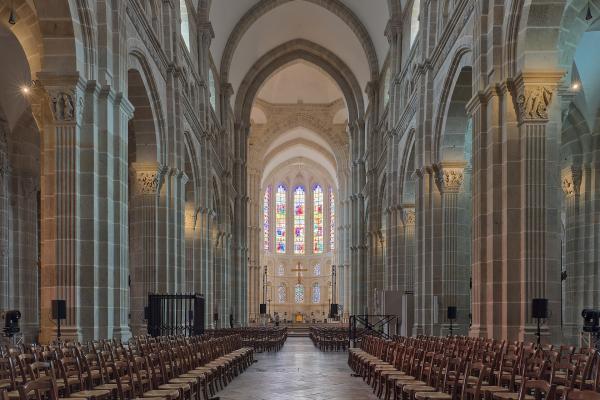
Autun's cathedral is one of the masterpieces of Romanesque art in Burgundy, built in the second quarter of the twelfth century on a hill in the old upper town. The Cathédrale Saint-Lazare was begun around 1120 and consecrated in 1130, when it received the relics of Lazarus, the man raised from the dead according to the Gospels, whose cult brought pilgrims. It was designed to rival the great Cluniac churches of the region, and its architecture follows the pattern of Cluny's abbey church, with a tall nave of round arches and a barrel vault, a triforium of fluted pilasters, copied from the Roman gates of Autun itself, and a dramatic use of light.
The cathedral is above all famous for its sculpture. The master responsible, whose name, Gislebertus, is carved below the figure of Christ on the west portal, is one of the few Romanesque sculptors known by name. His Last Judgment on the tympanum above the main door, carved about 1130, is a work of astonishing power. In the centre, a tall figure of Christ presides, while below an angel and a demon weigh the souls of the dead, and on either side the saved and the damned face their fates. The elongated figures, expressive faces and vivid details, such as the terrified faces of the damned and the monstrous hands of demons reaching from above, make the portal one of the most memorable in medieval art. In the eighteenth century, the canons covered the tympanum in plaster because they found it old-fashioned, which inadvertently protected it, and it was rediscovered in the nineteenth century.
Inside, the capitals of the columns carry more of Gislebertus's work, with scenes from the Bible and from saints' lives carved with great imagination, including the Flight into Egypt, the Dream of the Magi and the Suicide of Judas. These capitals are among the finest examples of Romanesque storytelling in stone. The reclining Eve, carved for a lintel of the north portal and now displayed in the nearby Musée Rolin, is one of the most celebrated of all Romanesque sculptures. The building was later modified with a Gothic spire in the fifteenth century and chapels added around the sides, and a chapter house has recently been restored and displays treasures of the Romanesque period.
Autun was founded by the Romans as Augustodunum, and it preserves impressive remains of that age. The Roman theatre, one of the largest in Gaul, the Porte Saint-André and Porte d'Arroux, two ancient city gates, and the ruined Temple of Janus can all be visited on foot, and the Musée Rolin has a fine collection of antiquities and medieval art. The Église Saint-Nazaire, the Parc de la Combe à l'Orme and the old streets complete a day in the town.
The cathedral suits those interested in art history, architecture and pilgrimage. Allow an hour, and bring binoculars or a small torch if you want to see the carving high on the capitals. Opening hours differ by season and the cathedral may close during services, so check ahead. Concerts are held in the cathedral, and the acoustic is excellent.
Categories
More photos coming soon
Nearby Attractions
Other places to visit in Autun
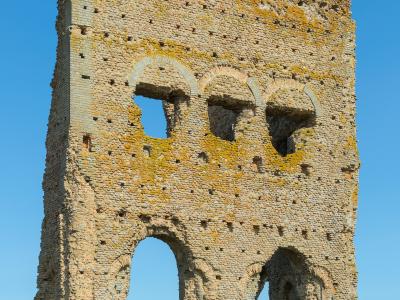
Temple of Janus
1st-century Roman temple ruin in Autun
Historic Architecture · Museums & Culture
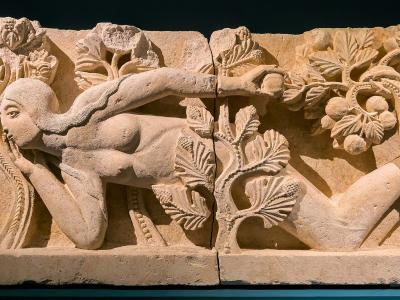
Musée Rolin
15th-century palace housing Gallo-Roman to 20th-century art
From €5.50 Historic Architecture · Museums & Culture
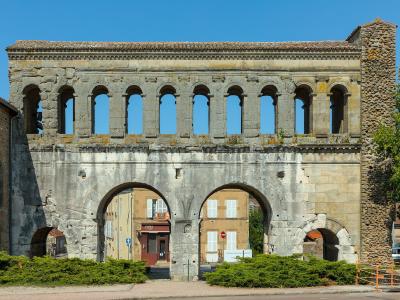
Porte Saint-André
Best-preserved Roman gate in France
Free Architectural Landmarks · Heritage Trails
Parc de la Combe à l'Orme
Natural history museum in Autun's park
Nature & Parks
Questions people ask
Quick Facts
Best Time to Visit
Late June to early September offers warm weather and ideal conditions for outdoor exploration.