







Mont-Saint-Michel
A medieval abbey on a tidal island in the bay between Normandy and Brittany
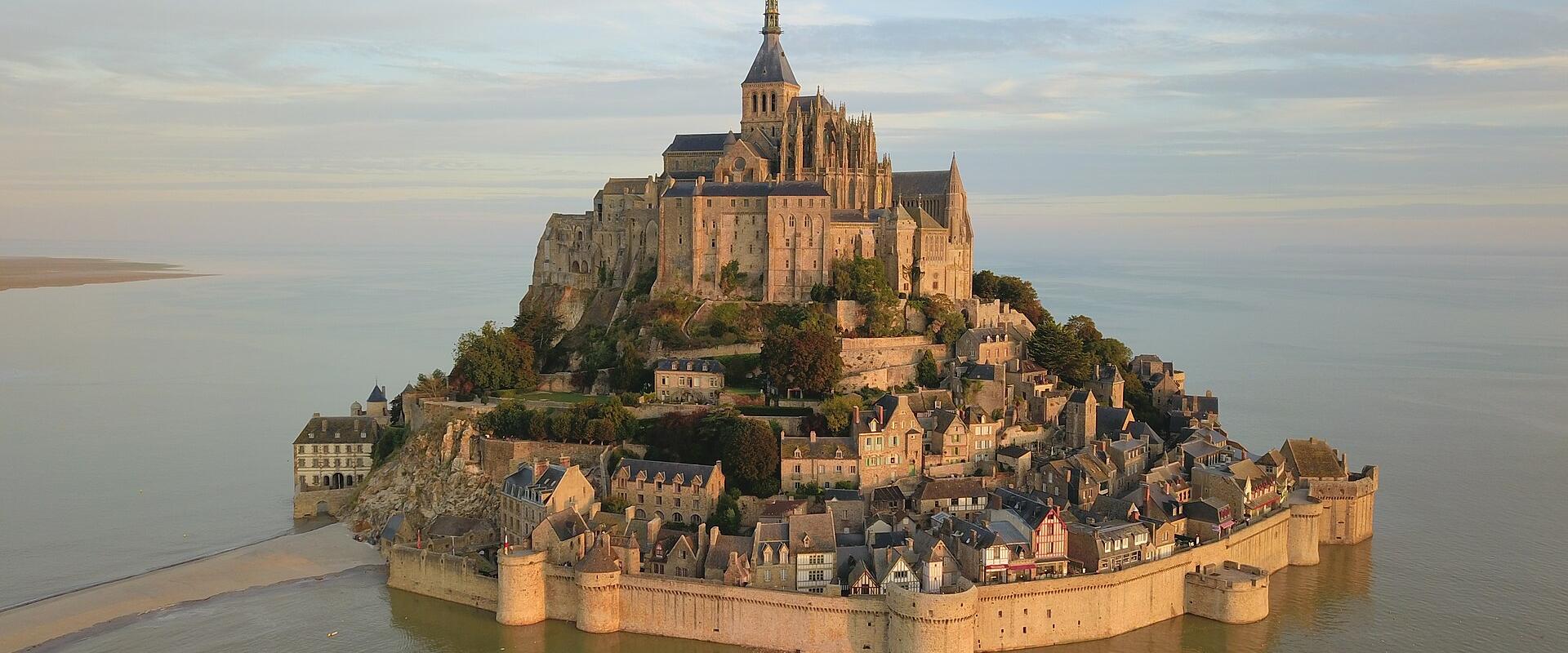
Mont-Saint-Michel stands in the bay of the same name, on the border between Normandy and Brittany, in the Manche department. The island itself is small, a granite outcrop roughly a kilometre around, but its silhouette is visible for miles across the flat salt meadows and sands. Only a few dozen people live on the Mont year-round, yet it is one of the most visited sites in France, and its image of an abbey rising above the water has become a symbol of the country.
The history of the Mont begins with a legend. In 708 the Archangel Michael is said to have appeared to Aubert, Bishop of Avranches, and asked him to build a sanctuary on the rock, then known as Mont Tombe. A small church was built, and pilgrims soon followed. In 966 Benedictine monks settled on the island at the request of the Duke of Normandy, and from the 11th century onwards they raised an ambitious abbey on the summit, with a Romanesque church built over crypts that support it on the uneven rock. In the 13th century the monks added La Merveille, a group of Gothic buildings on the north side that includes the cloister, the refectory, the Knights' Hall and the Guests' Hall, often described as a masterpiece of medieval architecture.
During the Hundred Years' War the Mont became a fortress. A small garrison held out against repeated English sieges, and the island was never captured, which made it a symbol of French resistance. Two English cannons abandoned in the 15th century, known as the Michelettes, can still be seen near the entrance. After the French Revolution the monks were expelled and the abbey was turned into a prison, a role it kept until 1863. It was classified as a historic monument in 1874, and restoration work in the late 19th century gave the abbey church its present spire, topped in 1897 by the gilded statue of Saint Michael by the sculptor Emmanuel Frémiet. A small monastic community, the Monastic Fraternities of Jerusalem, still lives and prays in the abbey.
The Mont is laid out on a vertical plan. Visitors enter through the fortified gates at the foot of the rock and climb the Grande Rue, the narrow main street lined with half-timbered and stone houses, shops, hotels and restaurants. Here stands the small parish church of Saint-Pierre, and side stairways lead up to the ramparts, built and strengthened mainly in the 15th century, which offer views across the bay. At the top, the abbey tour leads through the church, the cloister suspended above the sea, the vast halls of La Merveille and the great wheel once used to haul supplies up the rock.
The bay is as much an attraction as the monument. Its tides are among the largest in continental Europe, and at low tide the sea withdraws for kilometres, leaving sands, channels and quicksand. At the highest tides the water surrounds the Mont completely, a spectacle that draws crowds to the ramparts and the bridge. Walking out onto the sands on your own is dangerous because of the speed of the incoming tide and the quicksand, but licensed guides lead crossings of the bay from the mainland, often following the old pilgrims' routes.
For much of the 20th century a causeway linked the Mont to the coast and encouraged the build-up of silt around it. A large project to restore its maritime character replaced the old road and car parks: a dam on the Couesnon now uses the river and the tides to flush sediment away, and in 2014 a light, curving bridge-walkway opened in place of the causeway. Cars are left in car parks on the mainland, and visitors continue by free shuttle bus, horse-drawn carriage or on foot.
The abbey and the main street become very crowded in the middle of the day, especially in summer. Arriving early, staying for the evening when day visitors leave, or spending a night in one of the hotels on the island or on the mainland makes the visit far more peaceful. The nearest railway station is at Pontorson, with bus connections to the Mont, and the town of Avranches, where manuscripts from the abbey's library are displayed, is close by. Saint-Malo and the Emerald Coast of Brittany are within an easy drive, making Mont-Saint-Michel a natural part of a trip through northern France.
Best time to visit
Spring and autumn bring smaller crowds and dramatic tides; arrive early in the morning or stay into the evening in summer to avoid the midday peak.
What to see in Mont-Saint-Michel
Our picks first.
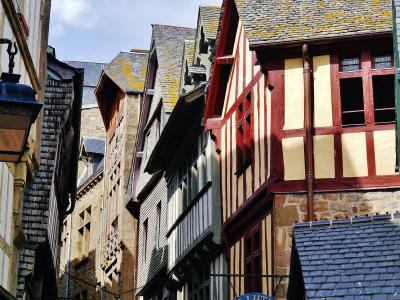
Grande Rue (Mont-Saint-Michel)
The steep medieval main street climbing Mont-Saint-Michel
Free Historic Towns · Local Cuisine
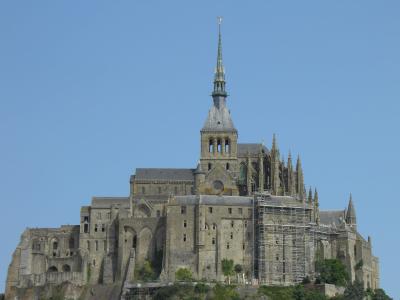
Mont-Saint-Michel Abbey
The Benedictine abbey crowning the tidal island of Mont-Saint-Michel
Historic Architecture · Heritage Trails
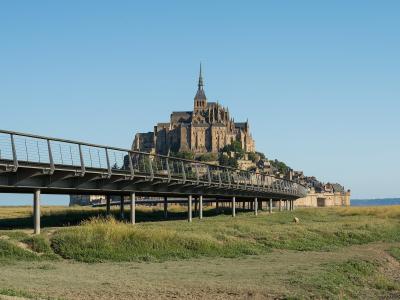
Mont-Saint-Michel Bridge and Couesnon Dam
The bridge-walkway and dam that made the Mont an island again
Free Historic Architecture · Nature & Parks
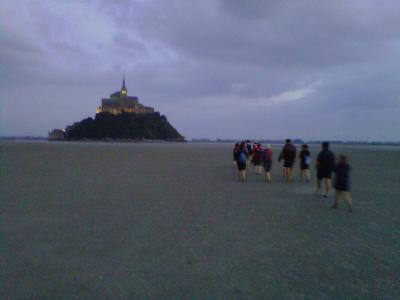
Guided Bay Crossing to Mont-Saint-Michel
Walk across the sands to Mont-Saint-Michel with a licensed guide
Coastal & Maritime · Guided Tours
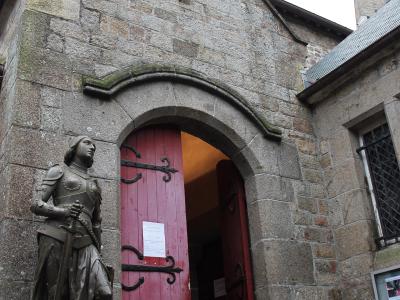
Église Saint-Pierre (Mont-Saint-Michel)
The parish church of Mont-Saint-Michel on the Grande Rue
Free Historic Architecture · Churches
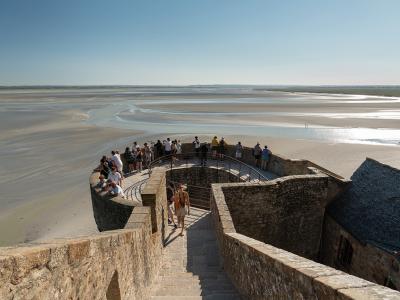
Ramparts of Mont-Saint-Michel
Medieval walls and towers with views over the bay
Free Fortresses · Heritage Trails
Mont-Saint-Michel by interest
The same sights, grouped by what you came for.
Planning a visit to Mont-Saint-Michel
Good to know
- Currency
- EUR
- Language
- French
Quick Facts
Book your stay
Questions people ask
More places in Normandy
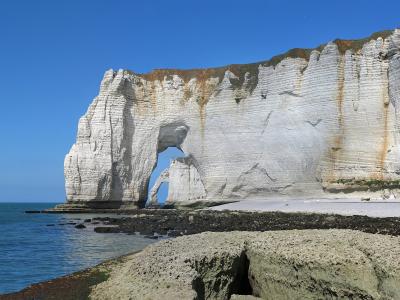
Normandy
Etretat
Dramatic chalk cliffs and seaside village in Normandy
Normandy
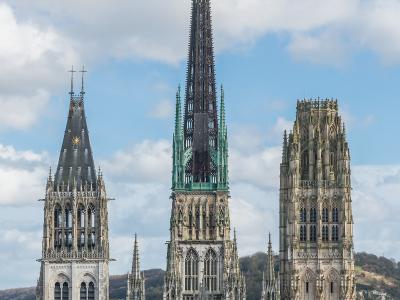
Rouen
Historic capital of Normandy with Gothic cathedral and medieval quarter
Normandy
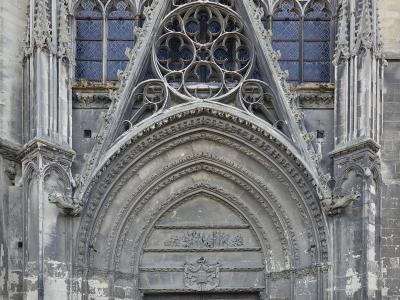
Caen
Historic Norman capital with D-Day heritage and William the Conqueror's legacy
Normandy
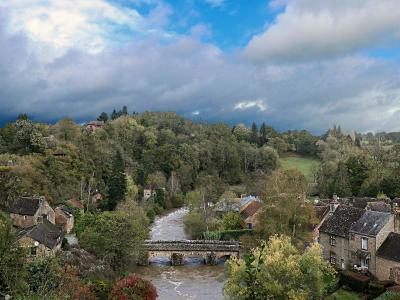
Saint-céneri-le-gérei
Medieval village on the Sarthe River in the Alpes Mancelles