







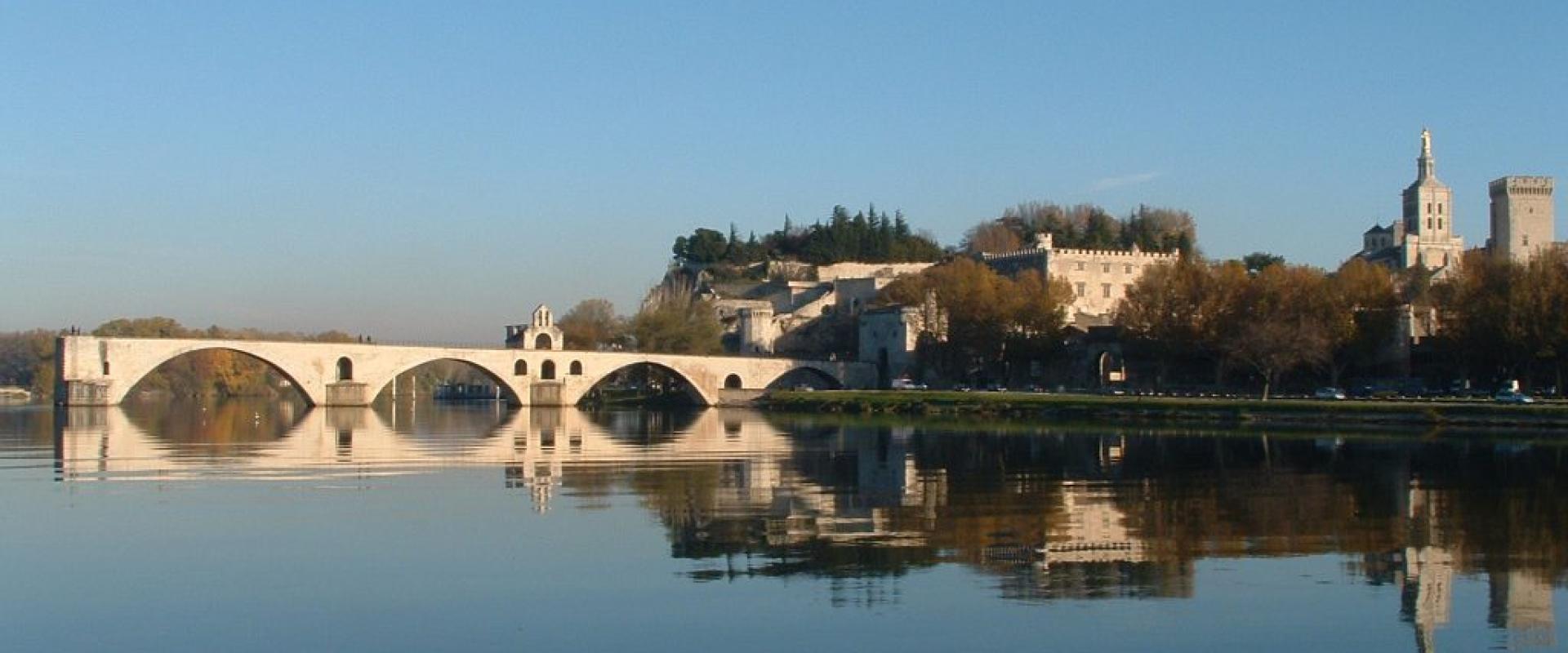
Avignon
The walled city of the popes on the Rhône, home of a world-famous theatre festival
Avignon lies where the Rhône meets the Durance, in the western part of Provence. The old city, known locally as intra-muros, is surrounded by ramparts built in the 14th century, which still run for several kilometres around the centre with their towers and gates. Inside the walls the streets are narrow and winding, opening onto squares shaded by plane trees, and most of the major sights are within a short walk of one another.
The city's golden age began in 1309, when Pope Clement V settled in the region rather than in Rome, which was then torn by factional strife. His successors made Avignon the capital of Western Christendom. Benedict XII began the fortress-like palace in the 1330s, and Clement VI enlarged it with grander halls and chapels, decorated with frescoes by artists such as Matteo Giovannetti. Cardinals, bankers, artists and merchants followed the papal court, transforming a modest town into a cosmopolitan city. After Gregory XI returned to Rome in 1377, the Great Western Schism brought rival popes back to Avignon until the early 15th century, and the city and the surrounding Comtat Venaissin remained under papal rule until the French Revolution.
The Palais des Papes is the centrepiece of any visit. It is one of the largest Gothic buildings in Europe, and visitors can explore its ceremonial halls, chapels, private apartments with painted walls and the vast courtyard where the main performances of the festival are staged. Next door, the cathedral of Notre-Dame des Doms, topped by a gilded statue of the Virgin, has Romanesque origins and contains the tombs of popes. Above both, the Rocher des Doms is a rocky outcrop turned into a landscaped garden, with a pond, shady paths and views across the Rhône to Villeneuve-lès-Avignon and, on clear days, to Mont Ventoux.
At the foot of the rock stands the Pont Saint-Bénezet, better known as the Pont d'Avignon, the bridge of the famous children's song. Built in the 12th century and rebuilt several times, it was repeatedly damaged by the Rhône's floods and finally abandoned in the 17th century. Only four of its arches remain, with a small chapel dedicated to Saint Nicholas, ending abruptly in the middle of the river. The Petit Palais, the former archbishop's residence at the end of the Place du Palais, houses a museum of medieval and Renaissance painting and sculpture, with a strong collection of Italian works and paintings from the Avignon school.
The Place de l'Horloge, the main square, is lined with cafés and home to the town hall, the opera house and a traditional carousel. From here, streets lead to the covered market of Les Halles, whose façade is covered by a large vertical garden, and to the Rue des Teinturiers, a picturesque street along a small canal with old waterwheels. Avignon also has several notable museums, including the Musée Calvet for fine arts, the Musée Angladon and the Collection Lambert for contemporary art.
The Festival d'Avignon, created by Jean Vilar in 1947, is one of the most important theatre festivals in the world and takes place every July. Alongside the official programme, the Festival Off turns almost every available hall, chapel and courtyard into a stage, and the streets fill with performers and posters. Visiting during the festival is exhilarating but busy, and hotels are booked far in advance.
Avignon is well connected. The Avignon TGV station, south of the centre, has high-speed trains from Paris and other cities, and the central station just outside the walls serves regional lines. From the city it is easy to reach the Pont du Gard, the hill villages of the Luberon, the Alpilles and Saint-Rémy-de-Provence, Arles and the wine villages of Châteauneuf-du-Pape, whose name recalls the popes' summer residence. Across the river, Villeneuve-lès-Avignon offers the Fort Saint-André and a quieter view back towards the palace.
Best time to visit
Spring and early autumn are ideal for sightseeing; July brings the Festival d'Avignon, when the city is at its liveliest and accommodation must be booked well ahead.
What to see in Avignon
Our picks first.
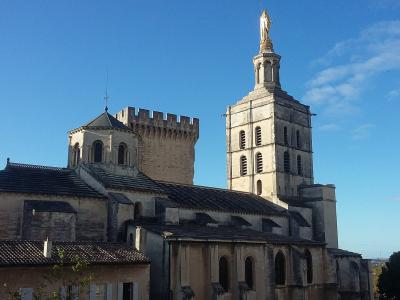
Cathédrale Notre-Dame des Doms
Avignon's Romanesque cathedral beside the Palais des Papes
Free Historic Architecture · Museums & Culture
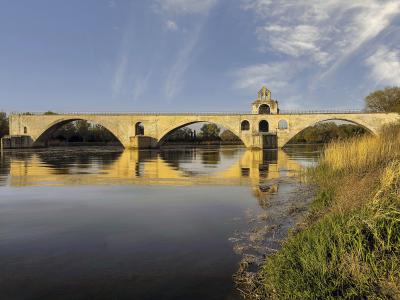
Pont Saint-Bénezet (Pont d'Avignon)
The famous broken bridge of the song, halfway across the Rhône
Bridges · Heritage Trails
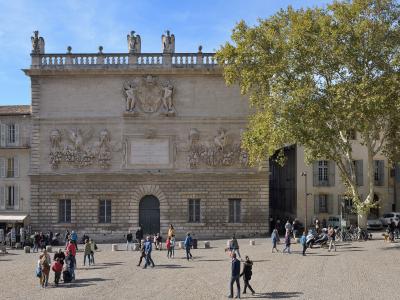
Musée du Petit Palais
Medieval and Renaissance art in the archbishops' palace
Historic Architecture · Museums & Culture
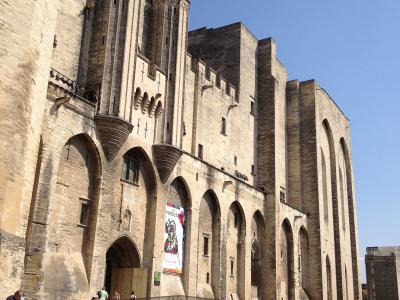
Palais des Papes
The vast Gothic palace of the 14th-century popes
Heritage Trails · History Museums
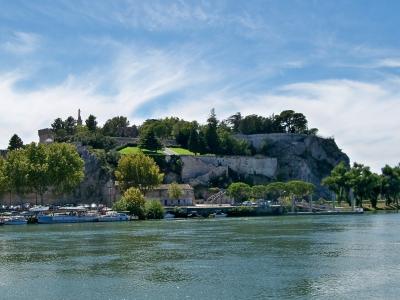
Rocher des Doms
Free Historic Architecture · Nature & Parks
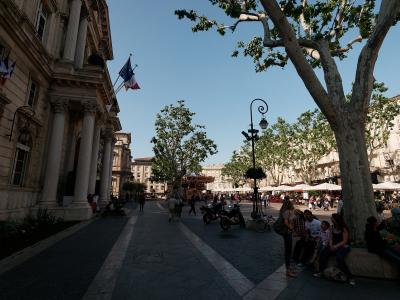
Place de l'Horloge
Avignon's lively main square, with the town hall and opera
Free City Centers · Historic Towns
Avignon by interest
The same sights, grouped by what you came for.
Planning a visit to Avignon
Good to know
- Currency
- EUR
- Language
- French
Quick Facts
Book your stay
Questions people ask
More places in Provence-Alpes-Côte d'Azur
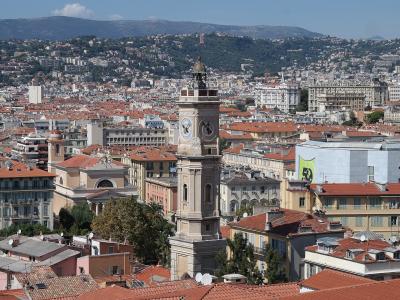
Provence-Alpes-Côte d'Azur
Nice
Capital of the French Riviera with Promenade des Anglais
Provence-Alpes-Côte d'Azur
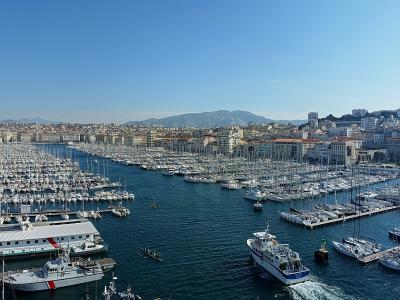
Marseille
France's oldest city and largest Mediterranean port
Provence-Alpes-Côte d'Azur
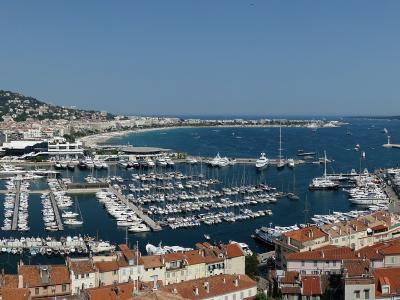
Cannes
Riviera glamour on La Croisette, home of the world's most famous film festival
Provence-Alpes-Côte d'Azur
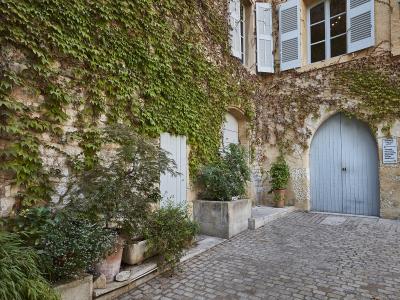
Aix-en-provence
Historic Provençal city known for fountains and Cézanne