







- Where
- Saignon, Provence-Alpes-Côte d'Azur
- Directions
- Directions
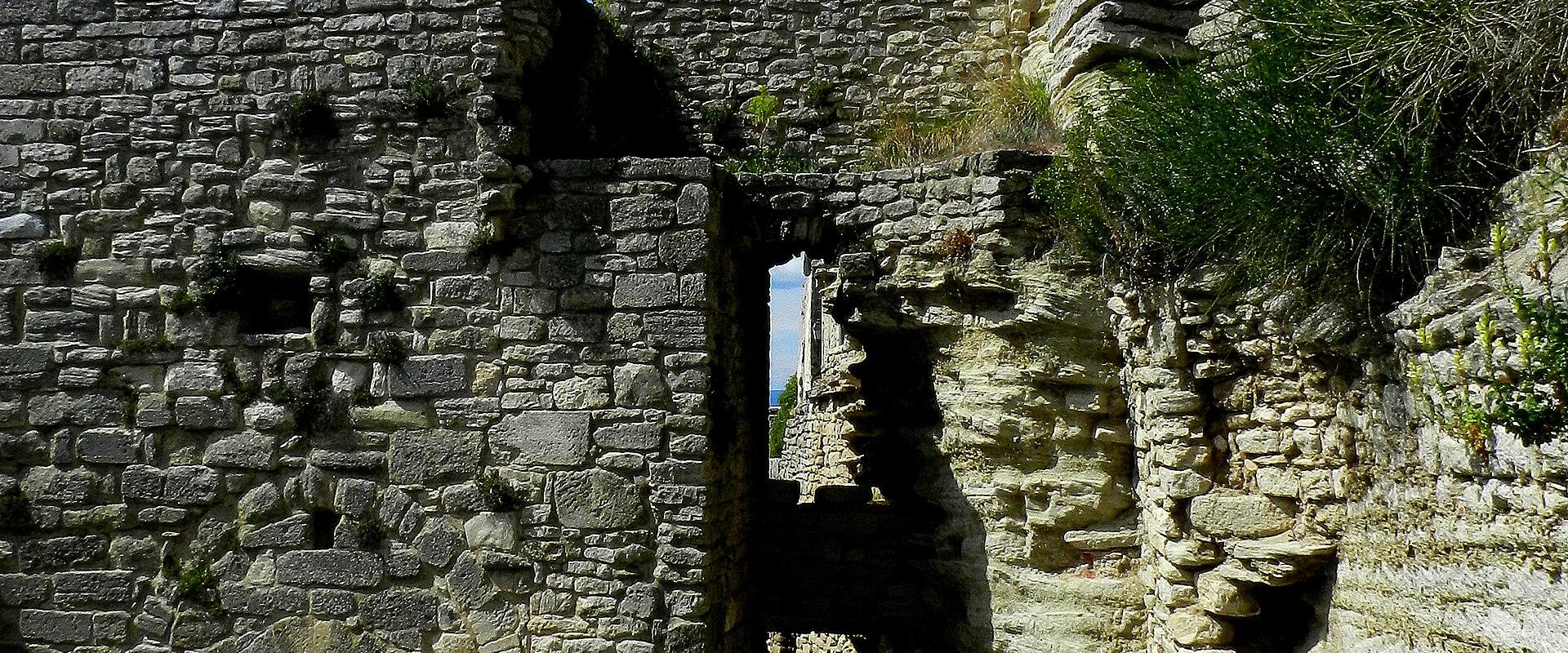
The medieval castle of Saignon has largely disappeared as a building, and what visitors find at Saignon is a village crowned by a great rock with the traces of its fortress. Saignon lies in the Luberon, a few kilometres from the market town of Apt, on the edge of a limestone cliff that overlooks the valley of the Calavon. The village grew in the shelter of a medieval castle, built by the local lords on the heights, and it was a place of some importance in the Middle Ages. Over the centuries the fortress fell into ruin, and the stones were reused for houses, so the rock, known as the Rocher de Bel Air or the Rocher de Saignon, now stands as the main reminder of the old stronghold.
A short, steep path leads up from the village to the rock, and it is the best excursion in the area. From the top, at about six hundred metres, the view opens in all directions: south across the Luberon massif, with its forests and ridges; north across the plain and the hills of the Vaucluse; and, on a clear day, in the distance to the great whaleback of Mont Ventoux, the giant of Provence, whose summit is often white with limestone or snow. The valley below is a patchwork of orchards, cherry trees, vines and lavender fields, and the stone houses of Saignon seem to cling to the slope beneath. Paths on the rock are uneven and exposed, so wear sturdy shoes, take care near the edges and avoid the heat of the day.
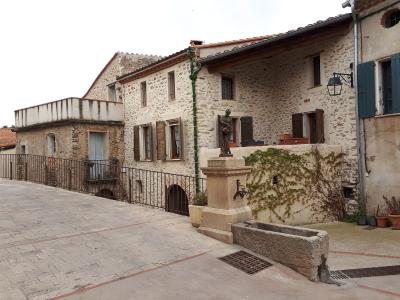
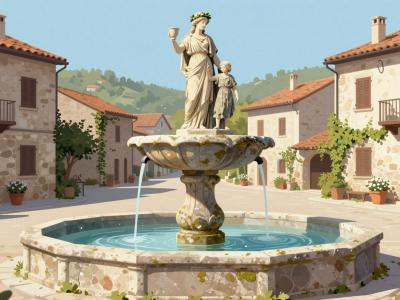
The village itself repays a slow walk. Narrow lanes run between houses of pale stone, with arched doorways, wooden shutters and small courtyards, and the Place de la Fontaine is the natural meeting point. The church of Notre-Dame de Pitié is a Romanesque building from the twelfth century, and a Romanesque church of Saint-Eusèbe stands a little outside, though visitors should ask locally about access, as small churches in the Luberon are often kept locked. Descriptions of a church of Saint-Étienne should be treated with caution.
Saignon is part of the Luberon Regional Natural Park, and several marked trails start nearby, leading through scrub, oak woods and cedar forest, to neighbouring villages such as Auribeau and Sivergues. Apt, a few minutes by car, has a famous Saturday market, a long tradition of candied fruit and, nearby, the ochre cliffs of Roussillon and Rustrel. Olive oil, honey and lavender products can be bought in the village.
The visit suits walkers, photographers and anyone who enjoys quiet hill villages. Late afternoon gives the best light, and summer is hot. A visit takes two to three hours, including the climb.
Categories
More photos coming soon
Nearby Attractions
Other places to visit in Saignon
Questions people ask
Quick Facts
Best Time to Visit
Early July to mid-August offers warm weather and ideal conditions for outdoor activities and sightseeing.