







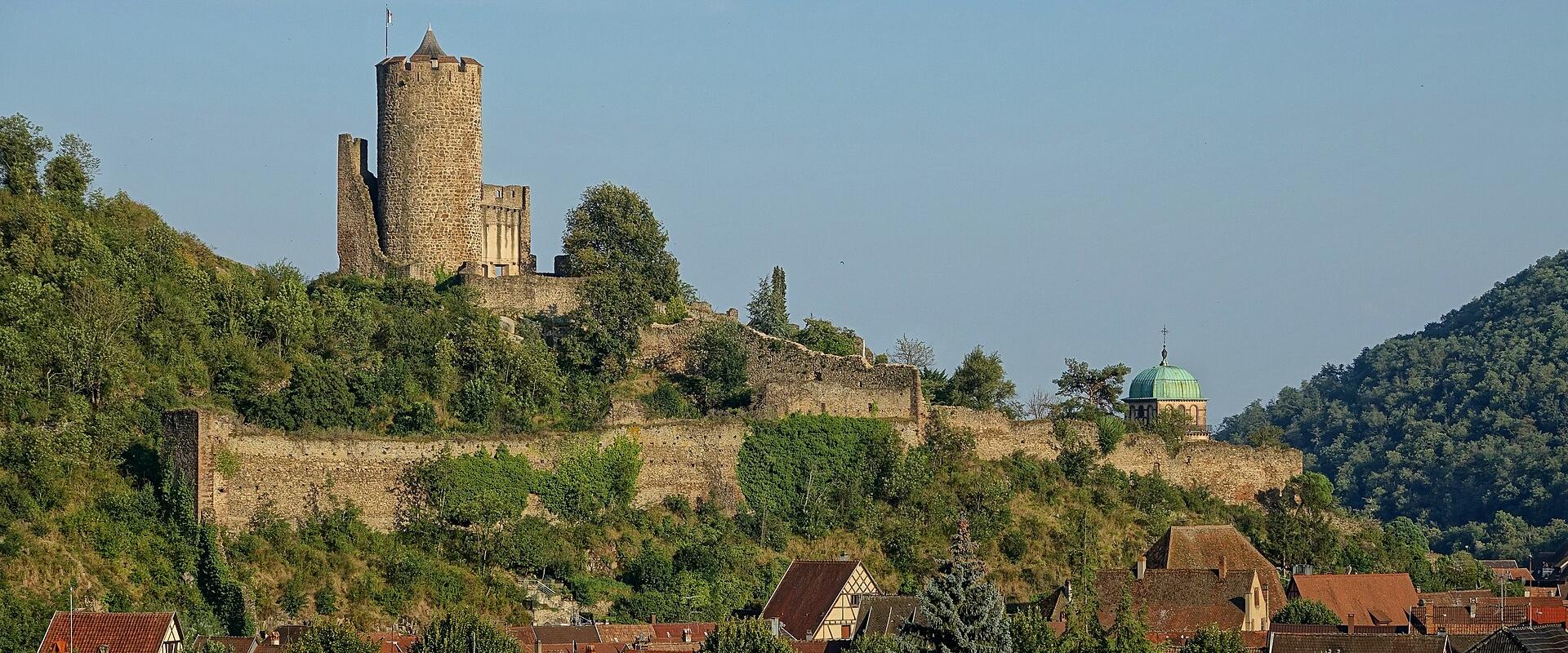
Château du Haut-Kaysersberg
Medieval imperial castle with 122-step tower views
- Admission
- Free admission
- Hours
- Open all year round
- Where
- Kaysersberg, Alsace
- Directions
- Directions
The ruined castle above Kaysersberg is where the town's name comes from, since Kaysersberg means the emperor's mountain, and the castle was built as an imperial fortress. It was put up in the early thirteenth century on a rocky spur above the town, at a time when the emperors of the Holy Roman Empire, the Hohenstaufen dynasty, were extending their control over Alsace and protecting the valley road that led from the plain into the Vosges. The town grew beneath it as a place under the emperor's protection, and over the centuries it became a prosperous winegrowing centre.
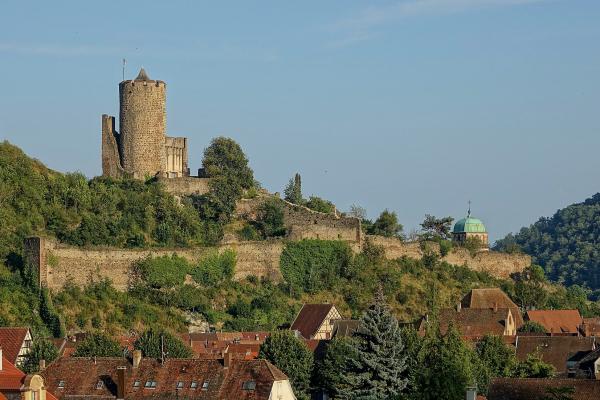
The remains stand high on the slope and are reached on foot by a path that leads from the old town up through the trees and vineyards. The climb is steep, so wear good shoes, and allow time to catch your breath. The most prominent part is the round keep, which stands within a ring of walls and towers and still holds the high ground. Visitors can enter the courtyard and then climb the stairs inside the tower to its top. The ascent involves well over a hundred steps, with narrow passages, and it ends on a platform with a wide view across the red roofs of the town, the winding river, the vineyards and the hills beyond. On a clear day, you can see far down the valley toward the plain of Alsace.
The ruins are not furnished or restored like a museum castle, so what they offer is stone, space and perspective. The walls show how the fortress was laid out to defend the approach and to dominate the settlement. The surrounding hillside is covered in vines, and the Vignoble de Kaysersberg produces Riesling, Gewurztraminer and other Alsace wines. A ferme-auberge in the area serves regional food, and the Musée du Vin d'Alsace gives context on local wine culture.
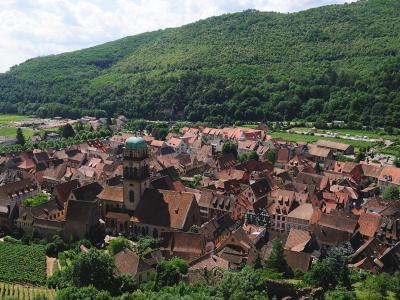
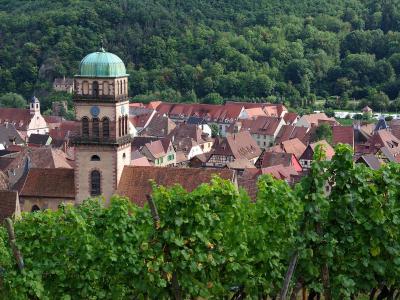
Kaysersberg is a pretty town in its own right. It is known as one of the most beautiful villages in France, with half-timbered houses, a fortified bridge dating from the sixteenth century and a Renaissance town hall. It is also the birthplace of Albert Schweitzer, the physician, philosopher and musician who won the Nobel Peace Prize, and his childhood home can be seen in the town. A walk up to the castle fits naturally into a visit to the village, and the best time is morning, before the heat and crowds.
It suits walkers, families with older children and photographers. Check local information for any seasonal changes to access, and be careful on steep steps in wet weather.
Categories
More photos coming soon
Hours & Fees
- Open
- Open all year round
- Admission
- Free admission
Hours and prices change, especially out of season. Check with the venue before you go.
Nearby Attractions
Other places to visit in Kaysersberg
Questions people ask
Quick Facts
Best Time to Visit
May through September offers pleasant weather ideal for hiking and exploring the vineyards.