







- Where
- Kaysersberg, Alsace
- Directions
- Directions
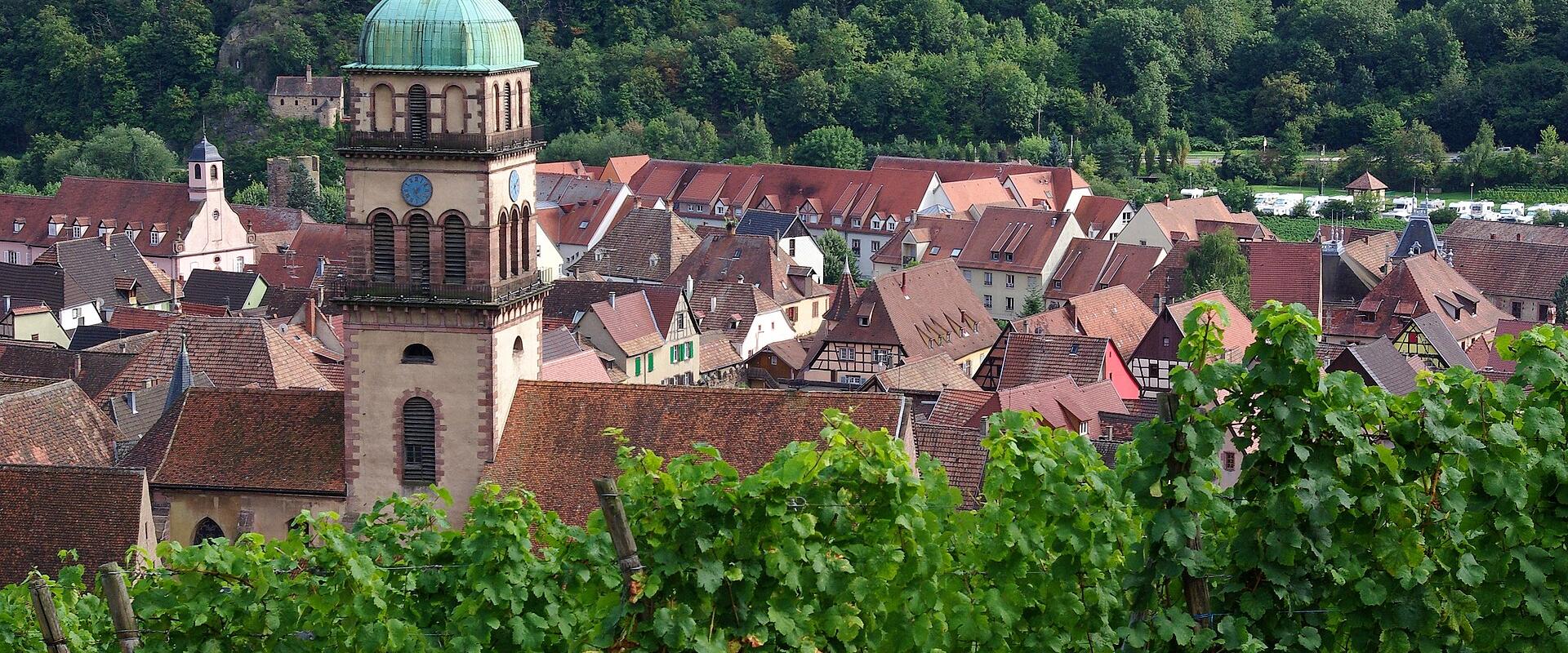
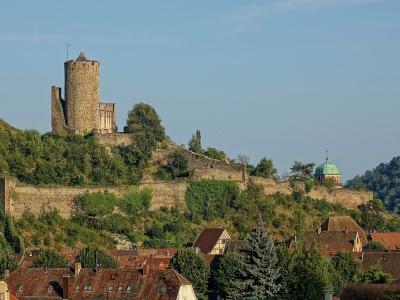
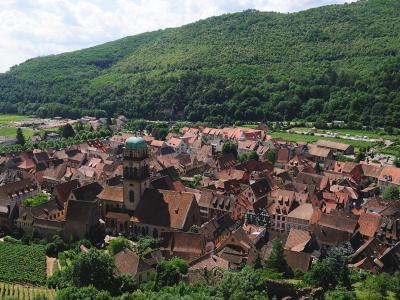
Kaysersberg is a village at the mouth of a valley in the Vosges, about thirteen kilometres north-west of Colmar, and its vineyards are among the finest in Alsace. The village, whose name means the emperor's mountain, was an imperial free town in the Middle Ages and belonged to the league of ten Alsatian towns known as the Decapole. It is built along a stream, the Weiss, which runs through its centre beneath a fortified stone bridge of the sixteenth century, and above it the ruins of a castle crown the hillside, with the vineyards spread around. It is classified among the Plus Beaux Villages de France and was voted the favourite village of the French in 2017.
The vineyards are on south- and east-facing slopes that are protected from the rain by the Vosges mountains, so that the climate is dry and sunny, one of the driest in France. The soils are a patchwork of granite, sandstone and limestone, which give the wines character and variety. The best-known site is the Schlossberg, the slope beneath the castle, which in 1975 was the first vineyard in Alsace to be classified as a Grand Cru. Its granite soil, rich in mica, and its steep terraces produce Rieslings of exceptional precision and minerality, and the wines can age for many years. Other varieties grown in the area include Gewurztraminer, Pinot Gris, Pinot Blanc and Pinot Noir, which is the only red variety of Alsace, and the producers also make the sparkling Crémant d'Alsace.
Visitors can taste the wines at family estates in and around the village, many of which have been run by the same families for generations. Cellar doors are usually open during the day, and some require an appointment. The Alsace Wine Route, a tourist road that passes through the villages along the foot of the Vosges, links Kaysersberg to its neighbours, and marked footpaths lead into the vineyards, with views of the Rhine plain and, on clear days, the Black Forest in the distance. The Château du Haut-Kaysersberg, a ruined castle of the thirteenth century, can be reached on foot from the village.
The village itself rewards a stroll. Its main street is lined with half-timbered houses, carved doorways and wrought-iron signs, and it leads from the church of Sainte-Croix, with its famous carved altarpiece, to the fortified bridge. Kaysersberg is the birthplace of Albert Schweitzer, the doctor, theologian and musician who won the Nobel Peace Prize in 1952, and his house is a museum. The Musée du Vin d'Alsace and local shops sell regional specialities, and in the evenings the winstubs, the traditional Alsatian taverns, serve dishes such as tarte flambée and choucroute. In the hills behind the village, ferme-auberges serve hearty meals to walkers.
The vineyards suit wine lovers, walkers and cyclists, and the best seasons are spring, when the vines are fresh, and autumn, when the harvest takes place and the leaves turn gold. Kaysersberg is very busy in summer and at Christmas, so a weekday or a morning visit is calmer. The village is about a twenty-minute drive from Colmar, and a car is the easiest way to explore the vineyards.
Categories
More photos coming soon
Nearby Attractions
Other places to visit in Kaysersberg
Questions people ask
Quick Facts
Best Time to Visit
May through September offers pleasant weather ideal for hiking and exploring the vineyards.