







- Where
- Lourdes, Midi-Pyrénées
- Directions
- Directions
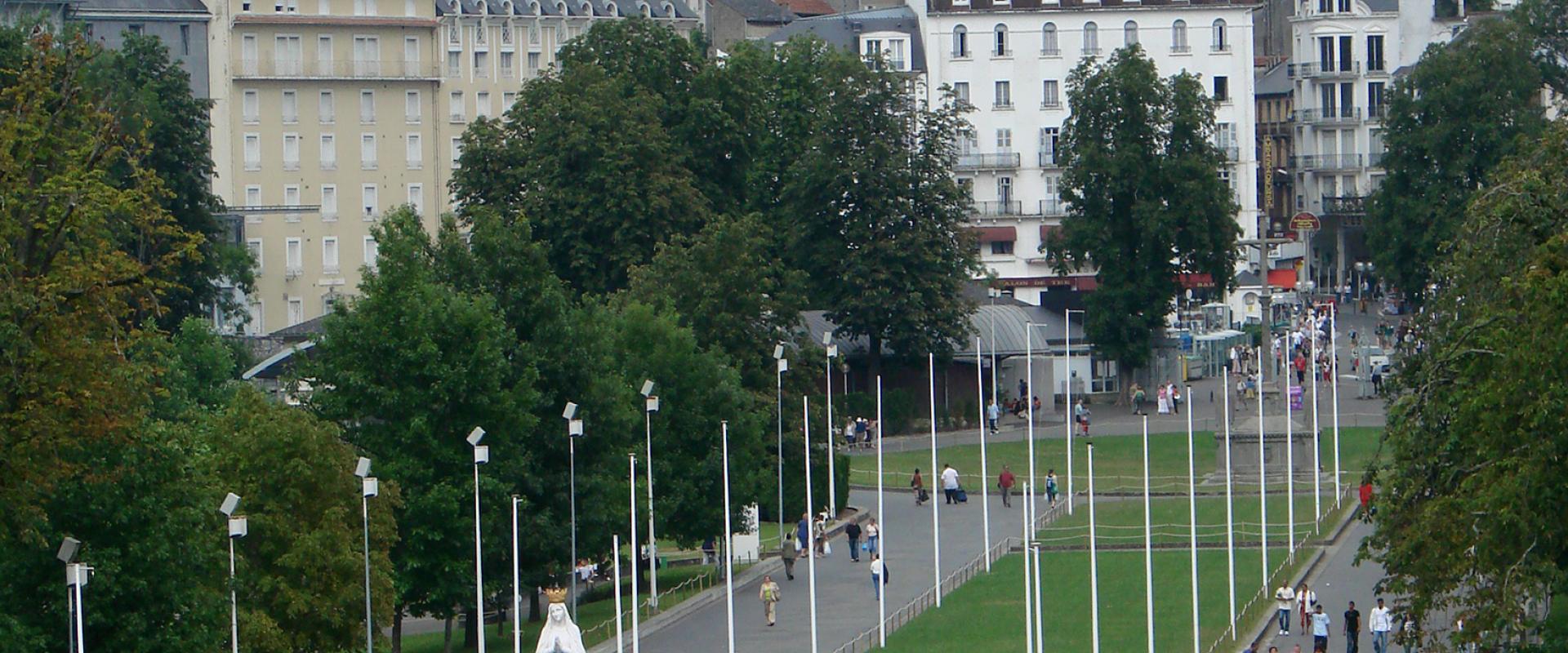
The Place du Rosaire, the Rosary Esplanade, is the great open space in front of the Sanctuary of Our Lady of Lourdes, and it is where the scale of the pilgrimage becomes visible. It is a wide, paved plaza with a long approach, framed by two curving ramps that sweep up to the facade of the Basilica of Our Lady of the Rosary, with the taller spire of the Basilica of the Immaculate Conception rising directly above. Standing at the far end of the esplanade, you see the three layers of the sanctuary in one view: the crypt, the Rosary basilica and the upper basilica, rising like a stepped monument.
The story behind it begins in 1858, when a young girl, Bernadette Soubirous, reported a series of visions of the Virgin Mary in a rocky grotto beside the river Gave de Pau. News spread quickly, a spring appeared at the Grotto of Massabielle, and pilgrims began to arrive in growing numbers. Churches were built on the rock above the grotto, and the sanctuary grew into one of the largest pilgrimage sites in the world, drawing millions of people each year, including many sick and disabled visitors who come hoping for healing or consolation.
The Basilica of Our Lady of the Rosary, built in the 1880s, is in the Romano-Byzantine style, with a dome, rounded arches and a rich interior. Its chapels around the nave are dedicated to the fifteen mysteries of the Rosary, the sequence of prayers that gives the church its name, and they are decorated with mosaics and paintings. The effect is of light, colour and gold, in contrast to the austere stone of the upper basilica, which is built in Gothic style. The two churches were designed together, so the lower one acts as a base for the upper. A large underground basilica, dedicated to Saint Pius X, was added in the twentieth century to hold great gatherings, and can be visited too.
The esplanade is the stage for the sanctuary's daily rituals. Each day there are Masses in several languages, and in the evening a candlelit procession winds across the square, with pilgrims carrying lights and singing the Ave Maria. There is also an afternoon procession of the Blessed Sacrament, in which the sick are blessed. The mood is quiet and respectful, and visitors of all beliefs are welcome as long as they respect the atmosphere.
Other things to see in Lourdes include the Musée des Apparitions, the Musée des Tissus et des Arts Décoratifs and walks along the Gave de Pau River. The Grotto of Massabielle lies just to the side.
The square is open at all times. It suits pilgrims, curious visitors and anyone interested in religious history. Dress modestly, expect crowds in summer, and check the daily programme for services.
Categories
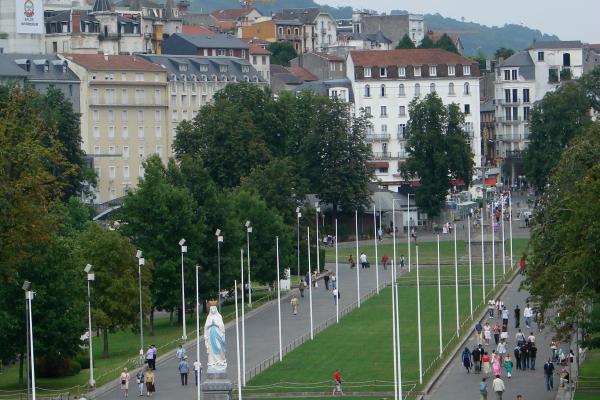
More photos coming soon
Nearby Attractions
Other places to visit in Lourdes
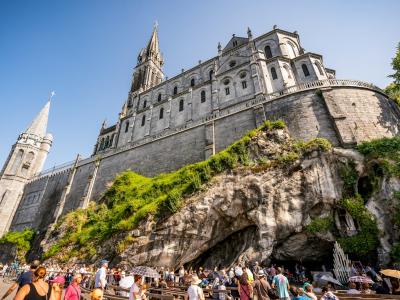
Basilica of St. Pius X (Lower Basilica)
Underground basilica holding 25,000 visitors
Churches · Guided Tours
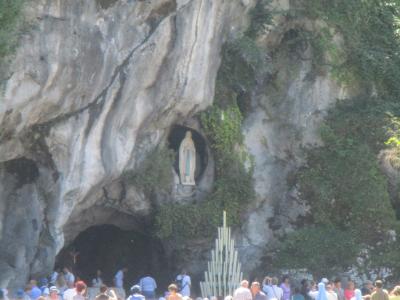
The Grotto of Massabielle
Site of Marian apparitions, free year-round
Free Guided Experiences · Historic Architecture
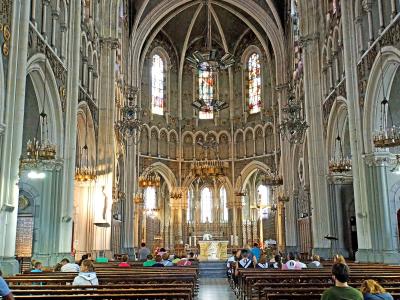
Basilica of the Immaculate Conception (Upper Basilica)
1858 apparition site and Marian shrine
Free Churches · Guided Tours
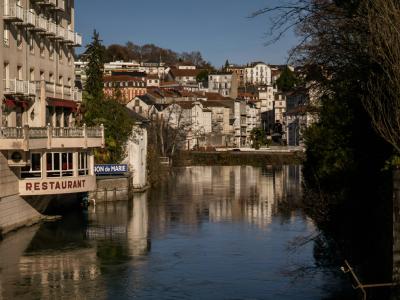
Gave de Pau River Walks
Scenic riverside greenway in historic Lourdes
Free Guided Experiences · Nature & Parks
Questions people ask
Quick Facts
Best Time to Visit
March to May and September to October offer mild weather and fewer crowds for optimal exploration.