Before You Go
France drives on the right and overtakes on the left. Drivers must be at least 18, and rental companies often set their own minimum age and charge extra for younger drivers. Licences issued in the EU and the UK are accepted for visitors. Drivers with licences from other countries should check whether an International Driving Permit is needed, and it is a sensible precaution in any case if the licence is not in French or another EU language.
Carry the vehicle registration document, proof of insurance and your licence. A rental car will have its papers in the glovebox. By law every car must also have a reflective high-visibility vest within reach of the driver and a warning triangle. Rental cars should come equipped, but check before setting off.
Speed Limits
General limits apply unless signs say otherwise:
- Motorways (autoroutes): 130 km/h, reduced to 110 km/h in rain.
- Dual carriageways with a central barrier: 110 km/h, or 100 km/h in rain.
- Two-way roads outside towns: 80 km/h by default, although some departments have restored 90 km/h on certain roads. Follow the signs.
- Built-up areas: 50 km/h, and many towns, including most of Paris, now use 30 km/h zones. The Paris ring road, the Périphérique, is limited to 50 km/h.
Speed cameras are common, both fixed and in unmarked cars, and fines are sent to the registered keeper, which for a rental means the bill arrives with an administration fee. Radar detectors are illegal.
Rules That Catch Visitors Out
- Priority to the right (priorité à droite): at junctions without signs or markings, traffic coming from the right has priority, even from a small side road. A yellow diamond sign means you are on a priority road; the same sign crossed out means the priority ends.
- Roundabouts: in most cases traffic already on the roundabout has priority, signalled by a "Vous n'avez pas la priorité" sign on the approach.
- Alcohol: the limit is 0.5 g of alcohol per litre of blood, and 0.2 g for drivers with a probationary licence.
- Phones: using a handheld phone while driving is banned, and so is wearing earphones or a headset.
- Children: under-10s must normally travel in an appropriate child seat.
Motorway Tolls
Most autoroutes are toll roads (péage). You take a ticket when you join and pay when you leave, or pay at fixed barriers on shorter sections. Bank cards are accepted at most booths. Avoid lanes marked only with an orange "t", which are reserved for electronic tags.
A few motorways now use barrier-free tolling, including the A79 in central France and parts of the A13 and A14 in Normandy. Cameras record the number plate and you pay online afterwards within the deadline shown on the signs. Toll roads are fast and well maintained, with regular service areas, while national (N) and departmental (D) roads are free and pass through towns.
Fuel and Charging
At the pump, diesel is "gazole" and unleaded petrol is "SP95-E10", "SP95" or "SP98". Fuel at supermarket stations is usually cheaper than on motorways. Many rural pumps are unattended outside opening hours and accept only cards with a chip and PIN; some foreign cards are declined, so fill up during the day when you can. Electric charging points are widespread on motorways and in towns, with several networks and payment systems.
Low-Emission Zones and Crit'Air Stickers
Many French cities have low-emission zones (ZFE). Inside them, vehicles must display a Crit'Air sticker showing their emissions class, and older vehicles may be banned at certain times. An attempt to abolish these zones was struck down by the Constitutional Council in May 2026, so the sticker is still required. Foreign-registered cars need one too. Order it only from the official site, certificat-air.gouv.fr, before your trip, as delivery by post takes time. Rental cars should already carry one.
Driving in Cities and Parking
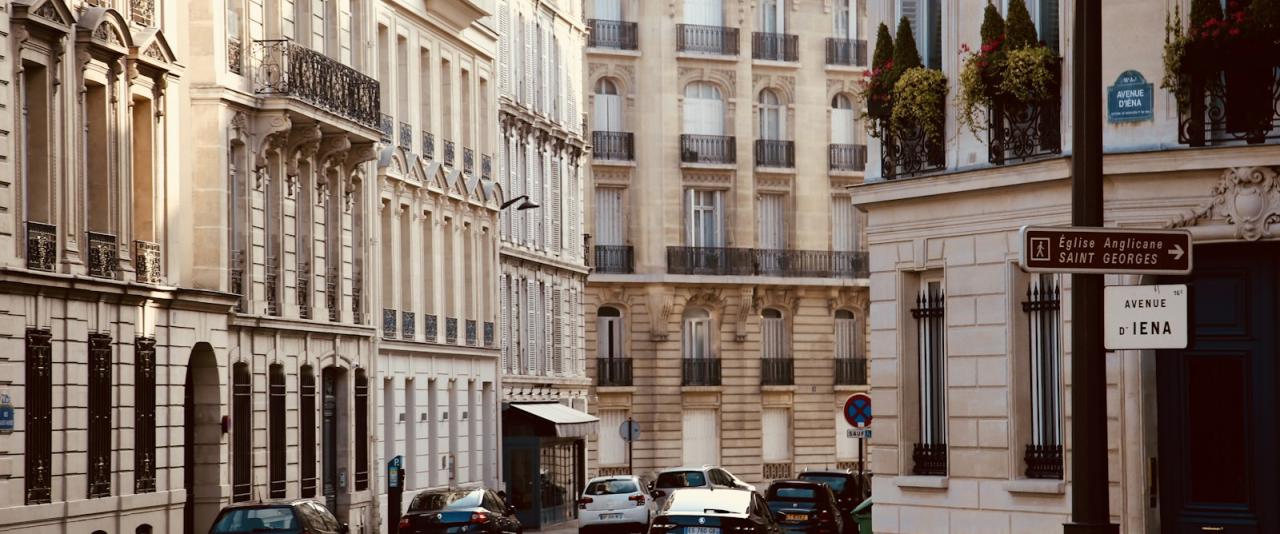
Driving in central Paris, Lyon or Marseille is slow and parking is expensive and scarce. Most visitors are better off collecting a car on the way out of a city, after arriving by train. In towns, parking is usually paid at machines or by app, and blue zones ("zone bleue") require a parking disc showing your arrival time. Village centres often have free car parks on the edge, which are easier than narrow streets.
In an emergency. The European emergency number 112 works everywhere. On motorways, orange emergency phones every two kilometres connect directly to the road operator, and breakdowns on autoroutes must be handled by the approved tow service. If you stop on the hard shoulder, put on the vest before getting out, place the triangle behind the car if it is safe, and wait behind the barrier.