







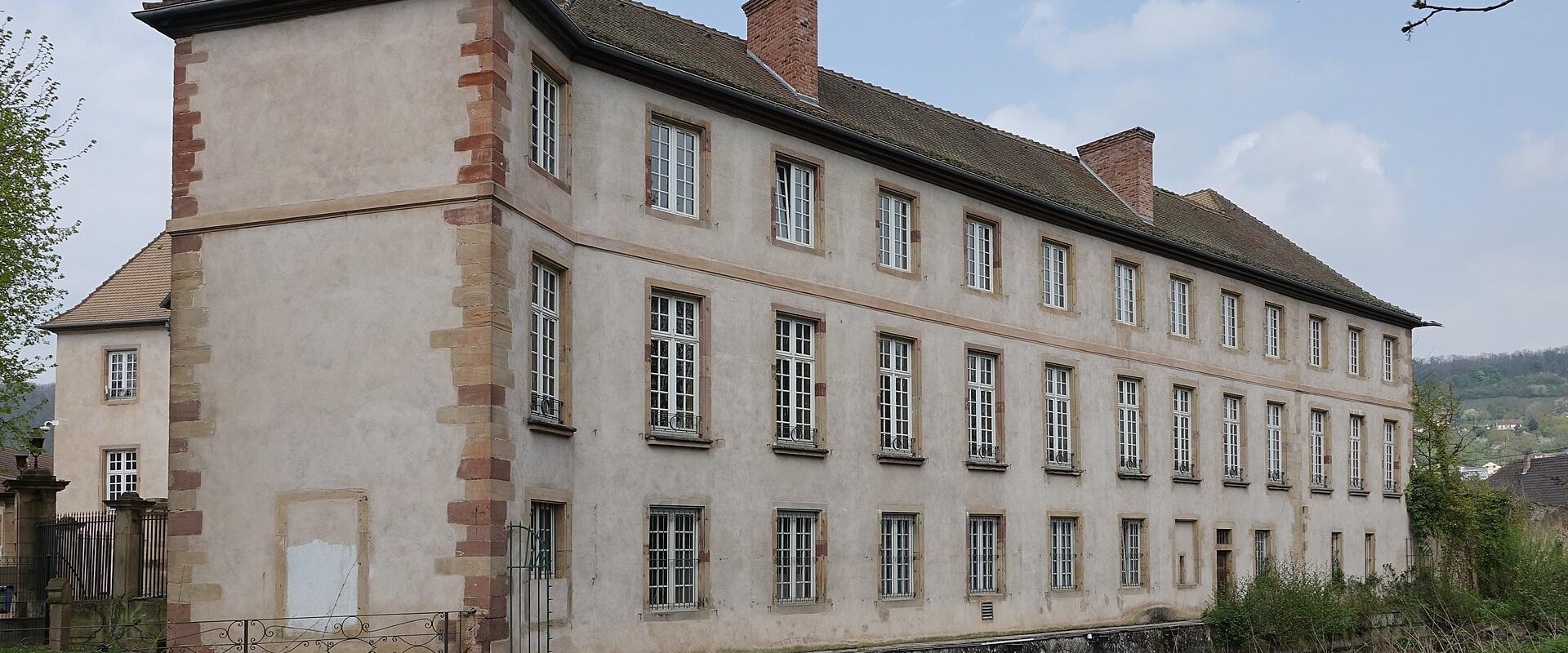
Mutzig sits at the entrance of the Bruche valley, where the river comes out of the Vosges and the land flattens into the Alsace plain. The setting explains most of its history. The valley road leads into the mountains and towards Lorraine, and the plain gives easy access to Strasbourg and the Rhine. On the slopes above the town, vineyards climb towards the forest, and the town lies on the Route des Vins d'Alsace. It is roughly twenty-five kilometres west of Strasbourg and only a few kilometres from Molsheim, which makes it easy to combine with a wider trip.
Archaeologists have found Palaeolithic tools in the area, and the town's name appears in documents in the tenth century. In 1308 Mutzig became part of the territory of the prince-bishops of Strasbourg. The bishops' presence here explains the Château des Rohan, a handsome building named after a family that produced several cardinals and bishops of Strasbourg. It now serves the town, and the old streets around it keep a few features from the time, including a fortified gate. The centre is small, with half-timbered houses, a main square and a market, and can be seen on foot in an hour or two.
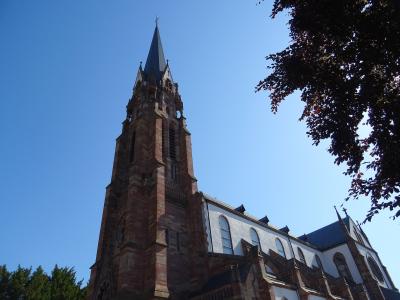
The Église Saint-Maurice is the main parish church. Unlike many Alsatian village churches, it is not medieval but a nineteenth-century building in neo-Gothic style, and reflects the confidence of a growing industrial town. It is worth a short stop, especially if you are interested in how Gothic forms were adapted in the 1800s.
Mutzig is best known for two industries. In the nineteenth century a weapons factory was established here, and that heritage gave the town a role in the military story of the region. Alongside it, the brewery that bears the town's name began to produce beer, and it grew to be one of the best-known brands of Alsace and eastern France. The brewery remains a major presence and an employer, and the beer is easy to find in local cafés.
The military heritage is much more visible just outside the town. After the Franco-Prussian War of 1870–71, Alsace passed to Germany, and the new authorities fortified the approaches to Strasbourg. On the hill north of Mutzig they built the Feste Kaiser Wilhelm II, begun in 1893 and named for the emperor. It was one of the largest fortifications of its time, with underground galleries, barracks, artillery positions, and it was meant to hold off an attack through the Bruche valley. The French took it over after 1918. Today it is looked after by a heritage association and opens for guided tours, mainly in the warm season. Check dates in advance, and take a warm layer, since the tunnels stay cool in summer.
The surroundings offer a lot for a short stay. Molsheim, close by, has a Renaissance old town and the Bugatti car works, while Obernai, a few kilometres south, is one of the best-preserved medieval towns in Alsace. Walkers can follow marked trails from Mutzig into the forests of the Vosges, with views back over the plain, and a visit to the Donon massif or the Mont Sainte-Odile is an easy day out. The wine villages along the foot of the hills offer cellar doors and restaurants serving choucroute, tarte flambée and Alsace wines.
Trains from Strasbourg run along the Bruche valley and stop at Mutzig, so a day trip without a car is possible, and the town works well as a calmer base than Strasbourg or Colmar. The best months are May to October, when the terraces are open and the vineyards are in full leaf, and September also brings the grape harvest. In December, the Christmas markets in nearby towns draw many visitors, and Mutzig itself is quiet but pleasant, with the benefit of lower accommodation prices.
Best time to visit
May to October is the best period, when the vineyards are green and the terraces are open. December has Christmas markets in neighbouring towns, and winter is quiet, though the fortress visits are seasonal.
What to see in Mutzig
Our picks first.
Mutzig by interest
The same sights, grouped by what you came for.
Planning a visit to Mutzig
Good to know
- Currency
- EUR
- Language
- French
Quick Facts
Book your stay
Questions people ask
More places in Alsace
Alsace
Strasbourg
European capital with Gothic cathedral and half-timbered houses
Alsace
Colmar
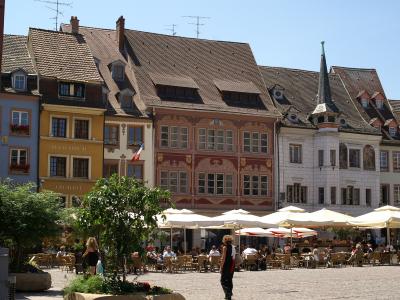
Colorful half-timbered town in the heart of Alsace
Alsace
Mulhouse
Industrial heritage city with world-class automotive and railway museums
Alsace
Riquewihr
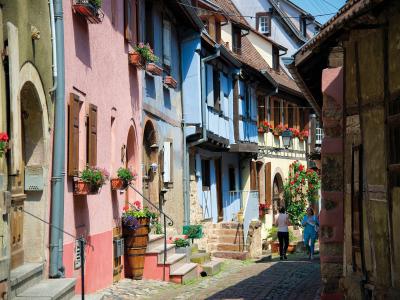
Medieval walled village on the Alsace Wine Route with Dolder tower