







- Where
- Paris, Île-de-France
- Directions
- Directions
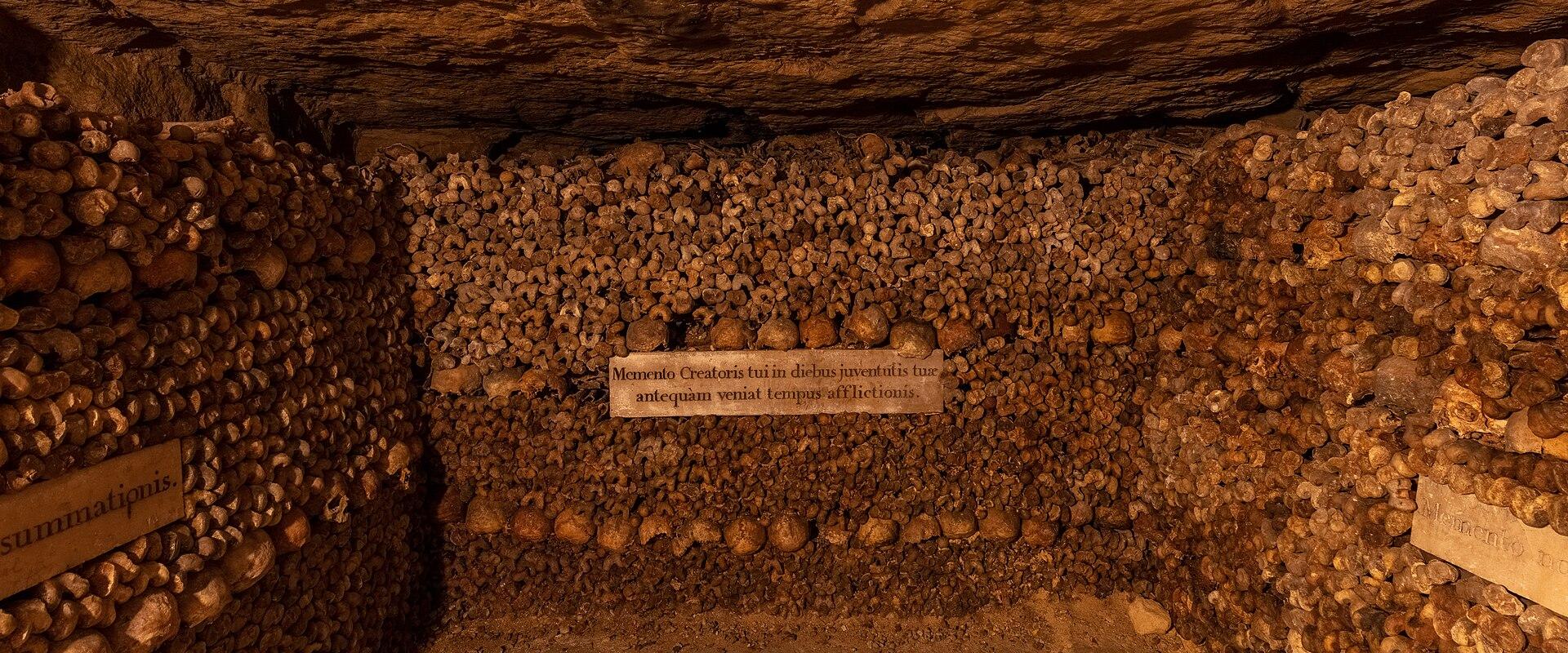
The Catacombs of Paris are an underground ossuary, a vast network of tunnels twenty metres below the streets of the fourteenth arrondissement, which contains the bones of several million Parisians, and they are among the most unusual places to visit in the city. The entrance is at Place Denfert-Rochereau, on the Left Bank, and the visit leads along a route of about one and a half kilometres, of which a part is an exhibition and the rest the ossuary itself.
The tunnels were not built for the dead. They are old quarries, from which for centuries the limestone was dug that built much of Paris, including parts of Notre-Dame and the Louvre, and which was extracted from under the southern outskirts of the city, so that the subsoil is honeycombed with galleries. In the eighteenth century the city had a different problem. The old cemeteries in the centre, in particular the Cemetery of the Innocents, had been used for centuries, and by the 1780s they were so overcrowded that they had become a danger to public health, with the walls of cellars giving way under the weight of the burials. The authorities decided to close the cemeteries and to move the bones to the disused quarries. From 1786, in a series of night-time processions, carts covered with black cloth carried the remains to their new home, and the work lasted until the nineteenth century. The inspector of quarries, Louis-Étienne Héricart de Thury, later arranged the bones in decorative patterns, with skulls and long bones stacked in walls, and added inscriptions and plaques that give the place its eerie but orderly character.
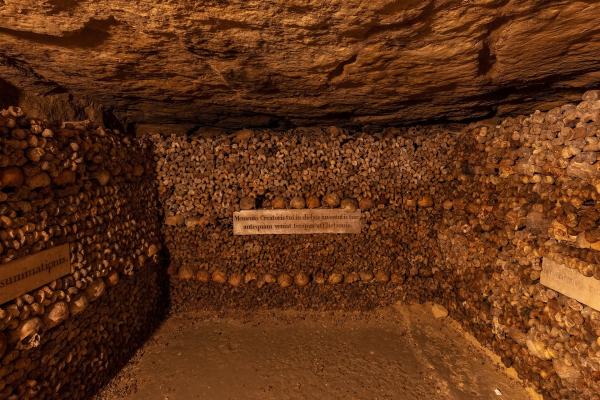
The visit begins with a descent of 131 steps down a spiral staircase, followed by a long walk through narrow galleries, and finally a climb of 112 steps back to the street. Along the way, inscriptions in stone carry verses and warnings, and the walls of bones stretch on either side. The temperature stays at 14 degrees Celsius all year, so bring a jacket. The floors are uneven and may be slippery, and the site is not suitable for visitors with reduced mobility, claustrophobia or heart problems. Young children must be accompanied. The number of visitors is limited, so book your ticket online in advance, because queues without a reservation can be very long. Large bags are not allowed, and no cloakroom is available. Do not touch the bones. The site has been under renovation, so check the information on the official website before you go.
It suits adventurous visitors and lovers of history, and the visit takes about forty-five minutes.
Categories
More photos coming soon
Nearby Attractions
Other places to visit in Paris
Eiffel Tower
324m iron lattice tower built for 1889 World's Fair
From €3.80 Historic Architecture · Towers
Montmartre and Sacré-Cœur
White basilica atop Montmartre hill
Free Guided Experiences · Historic Architecture
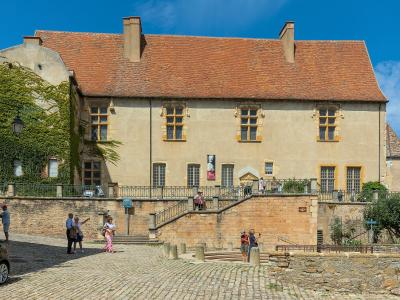
Cluny Museum (Musée de Cluny)
Medieval abbey and museum in Burgundy
From €8 Historic Architecture · Museums & Culture

The Louvre Museum
World's largest art museum in historic Paris palace
From €22 Guided Experiences · Historic Architecture
Questions people ask
Quick Facts
Best Time to Visit
April to June and September to October offer mild weather and fewer crowds for optimal exploration.