







- Admission
- Free admission
- Hours
- Daily 6:30 am to 10:30 pm; extended hours on major religious holidays
- Where
- Paris, Île-de-France
- Directions
- Directions
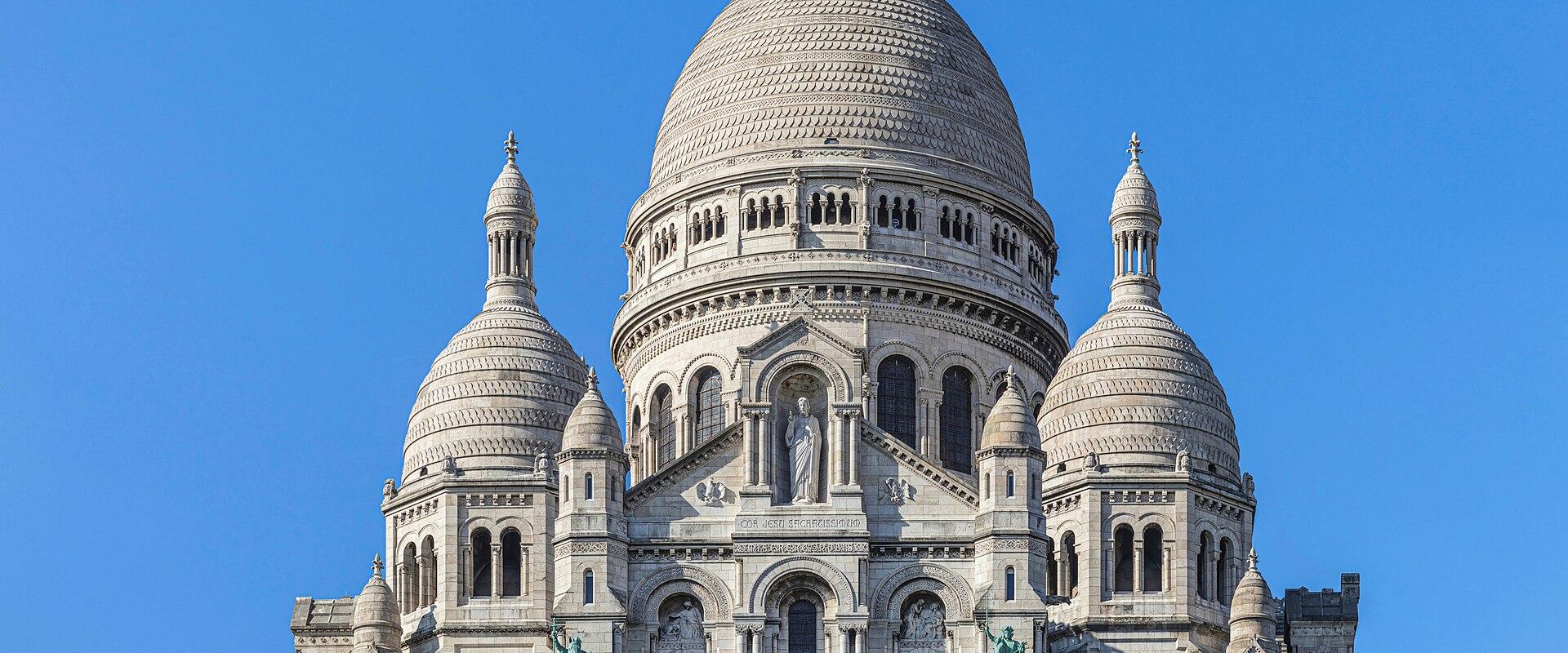
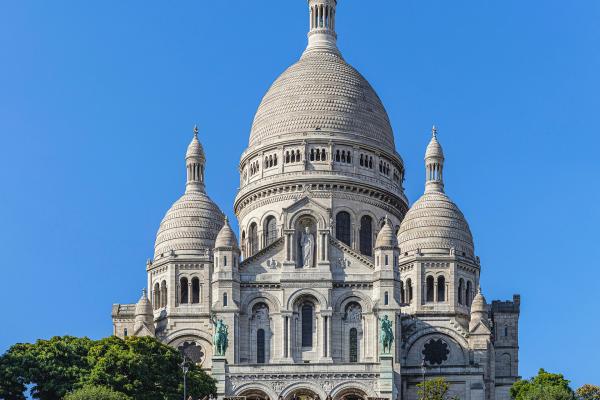
Montmartre is the hill on the northern edge of Paris, and its summit is the highest natural point in the city. The Basilica of Sacré-Cœur crowns it, its white domes visible from many parts of Paris. The church was built after the Franco-Prussian War and the Commune of 1871 as a national act of penance, a project voted by the National Assembly in 1873. Work began in 1875 to a Romano-Byzantine design by the architect Paul Abadie, and the church was finished in 1914 and consecrated in 1919 after the First World War.
The white colour comes from travertine quarried at Château-Landon, a stone that releases calcite when it rains and so stays pale as it weathers. Inside, the basilica is lit by a golden glow from the large mosaic in the apse, which shows Christ in majesty and is among the largest mosaics of its kind in the world. The bell called the Savoyarde, cast in 1891, is one of the heaviest in France. Perpetual prayer has been kept up in the church since the 1880s, so you will often find worshippers kneeling in the side aisles while visitors walk around. Entry to the basilica is free, and a small fee applies for the climb to the dome and the crypt. Quiet clothing and quiet voices are expected, and photography inside is restricted.
The climb up the dome has several hundred steps and ends on a gallery with one of the best views over Paris, which reaches as far as the distant suburbs on a clear day. Below the church, a series of terraces and stairways leads down to the Square Louise-Michel, and a funicular can carry those who do not want to climb.
Behind the basilica lies the old village of Montmartre, with its cobbled lanes, vines and small squares. Place du Tertre is the square where portrait painters set up their easels, and it is a lively place, though crowded in summer. In the late nineteenth and early twentieth centuries the hill was a centre of artistic life, with Toulouse-Lautrec, Modigliani and Picasso all working in studios here, and Vincent van Gogh living for a time in an apartment on Rue Lepic with his brother Theo. The Moulin Rouge is at the foot of the hill, in Pigalle. A wander through the back streets, away from the main stairs, shows a quieter, village side of the district.
Set aside two to three hours if you want to see the church, climb the dome and walk the lanes. Early morning gives a calm visit, and sunset gives the best light on the stone. The area is a short metro ride from the Canal Saint-Martin and the Eiffel Tower, and it suits both first-time visitors and people who want to see the city's artistic history.
More photos coming soon
Hours & Fees
- Open
- Daily 6:30 am to 10:30 pm; extended hours on major religious holidays
- Admission
- Free admission
Hours and prices change, especially out of season. Check with the venue before you go.
Nearby Attractions
Other places to visit in Paris
Eiffel Tower
324m iron lattice tower built for 1889 World's Fair
From €3.80 Historic Architecture · Towers
Cluny Museum (Musée de Cluny)
Medieval abbey and museum in Burgundy
From €8 Historic Architecture · Museums & Culture
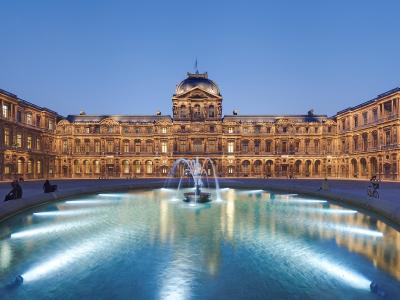
The Louvre Museum
World's largest art museum in historic Paris palace
From €22 Guided Experiences · Historic Architecture
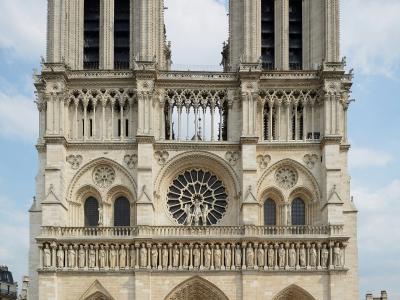
Notre-Dame de Paris
Historic Gothic cathedral with free entry
Free Historic Architecture · Churches
Questions people ask
Quick Facts
Best Time to Visit
April to June and September to October offer mild weather and fewer crowds for optimal exploration.