







- Admission
- Free entry
- Where
- Marseille, Provence-Alpes-Côte d'Azur
- Directions
- Directions
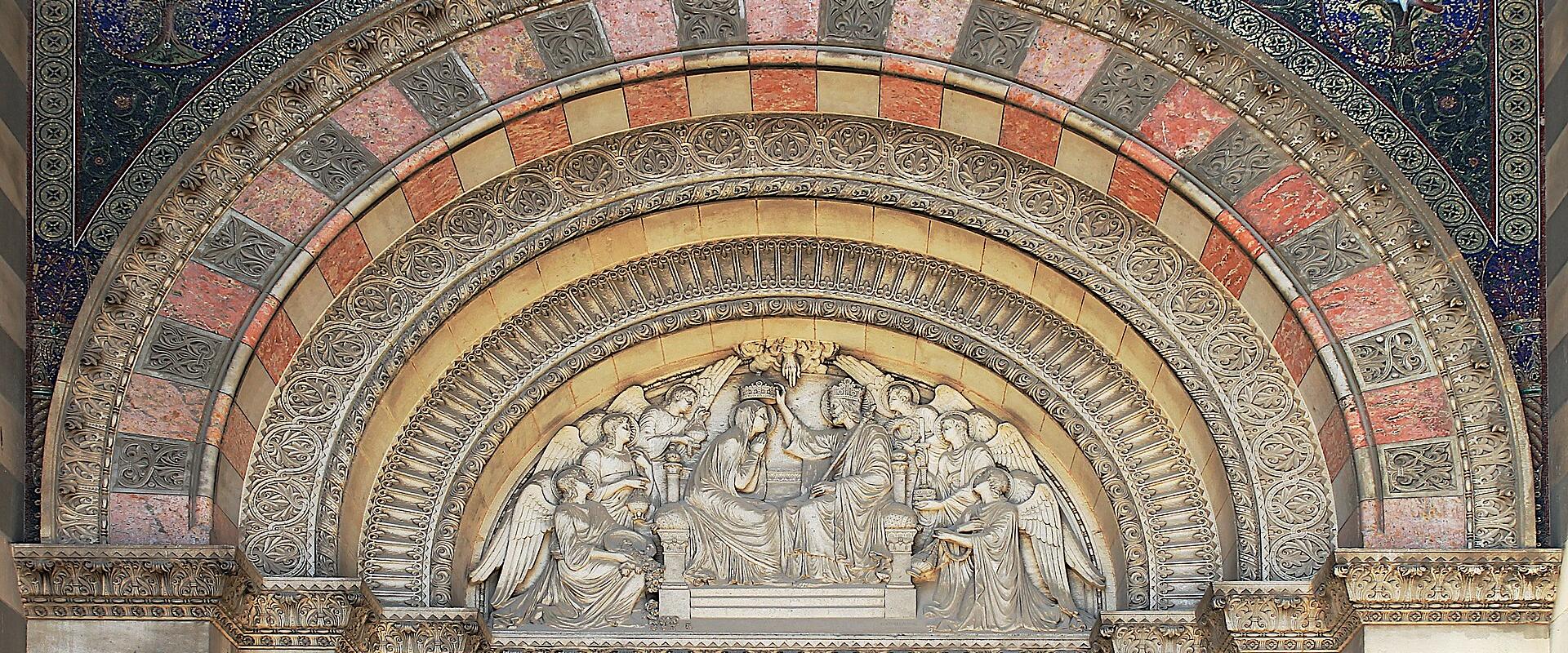
The Cathédrale de la Major is the great cathedral of Marseille, and it stands on a terrace beside the sea, just north of the Vieux-Port, near the MuCEM and Fort Saint-Jean. It is one of the largest churches built in France in the nineteenth century, and it is strikingly different from the cathedrals of the north. The building is in the neo-Byzantine style, with rounded domes, arches and bands of coloured stone, which recalls the churches of Constantinople and Ravenna and reflects the long connection between Marseille and the Mediterranean world and the East. It was built between 1852 and 1893, to designs by the architect Léon Vaudoyer, who died in 1872, and was carried on by Henri Espérandieu, who also designed the basilica of Notre-Dame de la Garde, and then others.
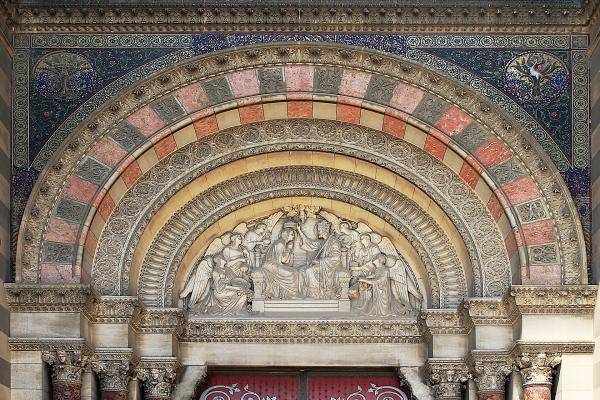
The exterior is distinguished by alternating courses of white and green stone, the white from the quarries of Cassis and the green from Florence, which gives the walls a striped look. The building is about 140 metres long, and its large central dome and smaller domes rise above the quarter of Le Panier. Two towers frame the main front. The size of the project was considerable, as the church was intended to show the importance of the city and the Church in the age of the Second Empire, and it replaced, or rather stands beside, an older cathedral.
That older cathedral, the Vieille Major, was a Romanesque church of the twelfth century, built on the site of an ancient temple, and parts of it survive beside the new building, which was constructed partly on its site. It is a small and ancient church, and it is worth a look if it is open, since it shows the layers of history on this hilltop, where Greek and Roman settlers built before the Christians.
Inside, the cathedral is spacious, with soaring arches, domes and half-domes, and a rich decoration of coloured marble and mosaic. Mosaics cover the apse and parts of the walls, with figures that glow with gold in the light that enters from windows around the domes. Statues, altars and side chapels line the aisles, and the floor is laid in marble in geometric patterns. Marble pulpits and a high altar of precious stone add to the richness. In the crypt are tombs of the bishops of Marseille.
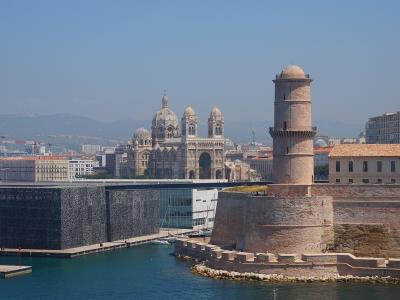
Entry is free. The cathedral is open daily except on Tuesdays, with longer hours in summer, and there are services, so some parts may be closed at times. A visit takes from twenty minutes to an hour. The esplanade in front of the church gives a good view of the sea, the Frioul islands, the harbour and the shapes of the MuCEM, the museum of the civilisations of Europe and the Mediterranean, connected by a footbridge to Fort Saint-Jean. The cathedral is a short walk from Le Panier and La Vieille Charité, and it suits anyone interested in nineteenth-century architecture or the story of the port.
Categories
More photos coming soon
Admission Fees
- Admission
- Free entry
Hours and prices change, especially out of season. Check with the venue before you go.
Nearby Attractions
Other places to visit in Marseille
MuCEM (Museum of European and Mediterranean Civilisations)
Anthropological museum in Marseille's historic Fort Saint...
Historic Architecture · Museums & Culture
Basilique du Sacré-Cœur
Unfinished 1920 basilica with modernist aesthetic
Free Architectural Landmarks · Churches
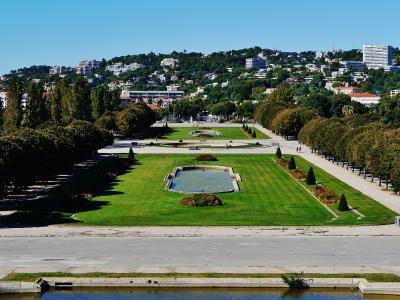
Parc Borély
Municipal park with gardens, lakes, and a castle
Free Gardens · Rivers & Lakes
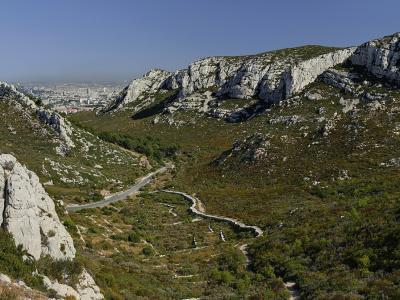
Calanques National Park
Europe's only land, sea, and urban national park
Free Beaches · Cliffs
Questions people ask
Quick Facts
Best Time to Visit
Late June to late August offers warm weather and ideal conditions for beach activities and sightseeing.