







- Where
- Chamonix, Rhône-Alpes
- Directions
- Directions
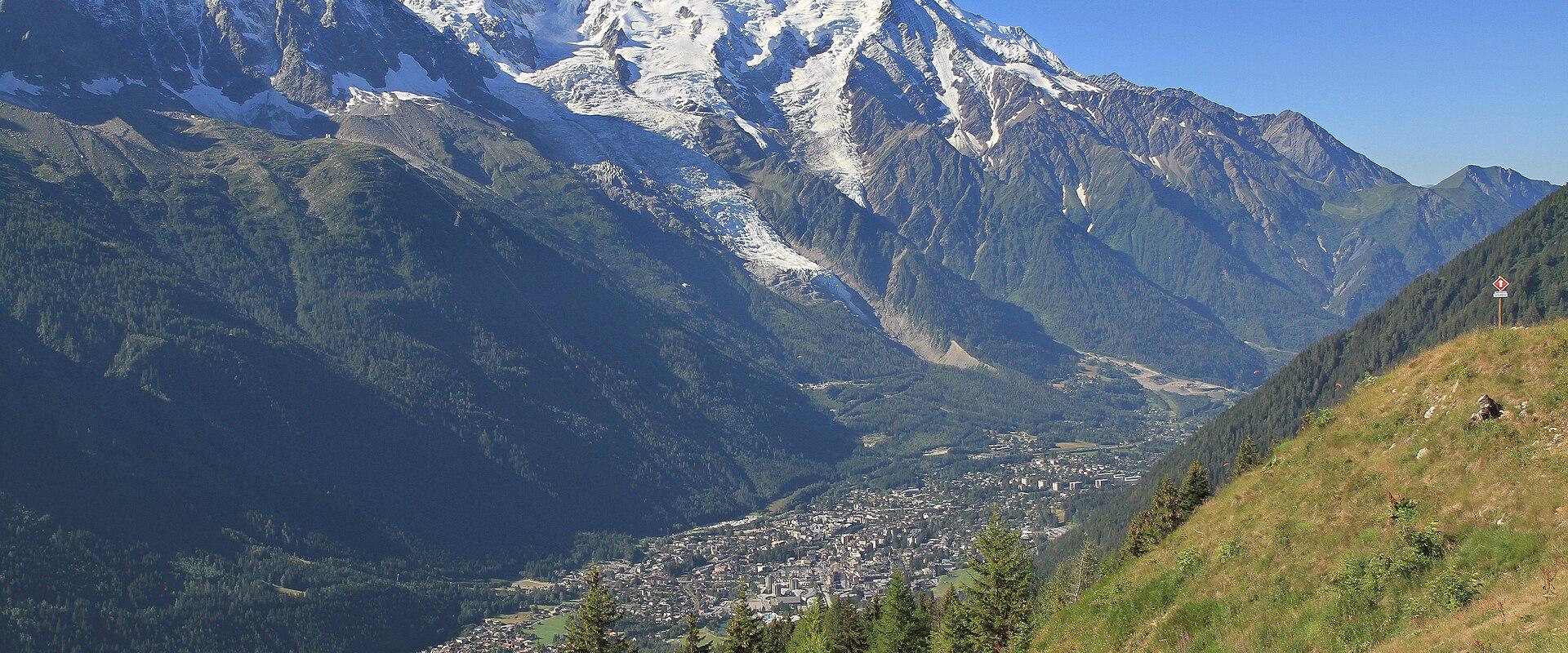
The Chamonix Valley runs for about twenty kilometres between the Aiguilles Rouges on one side and the Mont Blanc massif on the other, and it is the birthplace of modern mountaineering. At its head stands Mont Blanc, at 4,805 metres the highest summit in the Alps, flanked by granite needles, hanging glaciers and long rivers of ice. The valley is in the Haute-Savoie, close to the borders with Switzerland and Italy, and its main town, Chamonix, is a lively resort that has welcomed climbers, skiers and walkers for more than two centuries.
The valley's modern history begins in the eighteenth century. In 1741, two Englishmen, William Windham and Richard Pococke, travelled up to the Mer de Glace and wrote an account of what they saw, which drew the first curious travellers. In 1760, the Genevan scientist Horace-Bénédict de Saussure offered a reward to anyone who could find a way to the summit of Mont Blanc, and on 8 August 1786 two men from Chamonix, the crystal hunter Jacques Balmat and the doctor Michel-Gabriel Paccard, made the first ascent. This is regarded as the start of alpinism. In 1821, the local guides founded the Compagnie des Guides de Chamonix, among the oldest mountain guide companies in the world. The first Winter Olympic Games were held in Chamonix in 1924.
The valley's attractions are on a grand scale. The cable car to the Aiguille du Midi climbs from the town to a rocky spire at 3,842 metres in two stages, a ride that takes about twenty minutes and ends in a view across the whole Mont Blanc range, and from there another cable car crosses the glacier to the Italian side. The Montenvers railway, a rack train, climbs to the Mer de Glace, the longest glacier in France, and the Brévent cable car offers a close view of the whole massif from the opposite side of the valley. Walks of every level start from the villages, and the Tour du Mont Blanc, a long-distance trek of about 170 kilometres, circles the massif through three countries. In winter, the valley's ski areas, including Les Houches, Le Brévent, La Flégère and the Grands Montets at Argentière, attract skiers and snowboarders, and the high-mountain Vallée Blanche descent is a classic.
The Musée Alpin, in the town, is housed in a former grand hotel, the Chamonix Palace, and it shows the history of the valley through exhibits on early climbing equipment, geology, the growth of tourism and daily life in a mountain community. The town centre, with the Place du Triangle, the church, the market and the statue of Balmat and Saussure pointing at Mont Blanc, is lively, with shops and restaurants serving Savoyard dishes such as raclette, fondue and tartiflette.
The valley is easily reached from Geneva, about an hour away by road, and has a railway line. It is a year-round destination, with winter for skiing and summer for walking, climbing, paragliding and mountain biking. Weather in the mountains can change quickly, so dress in layers and check conditions before taking the cable cars. The valley suits everyone from keen climbers to families wanting a view, and it is busy in July, August and the winter holidays.
Categories
More photos coming soon
Nearby Attractions
Other places to visit in Chamonix
Chamonix Ski Resort
Ski resort at the base of Mont Blanc
Guided Experiences · Nature & Parks
Mer de Glace
Europe's largest glacier with an accessible ice cave
From €49.70 Museums & Culture · Nature & Parks
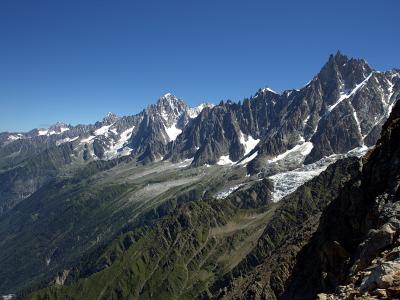
Aiguille du Midi
3842m summit with glass skywalk and Alpine views
From €43 Guided Experiences · Nature & Parks
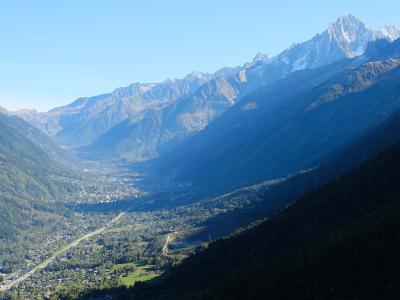
Les Houches
Village with Christ the King statue and Mont-Blanc Tramway
Guided Experiences · Nature & Parks
Questions people ask
Quick Facts
Best Time to Visit
Mid-June to mid-September offers warm weather and ideal conditions for hiking and outdoor activities.