







- Admission
- €13 individuals
- Hours
- Daily 9:30 am to 6:00 pm (last access 5:30 pm); closed May 1 and December 25
- Where
- Paris, Île-de-France
- Directions
- Directions
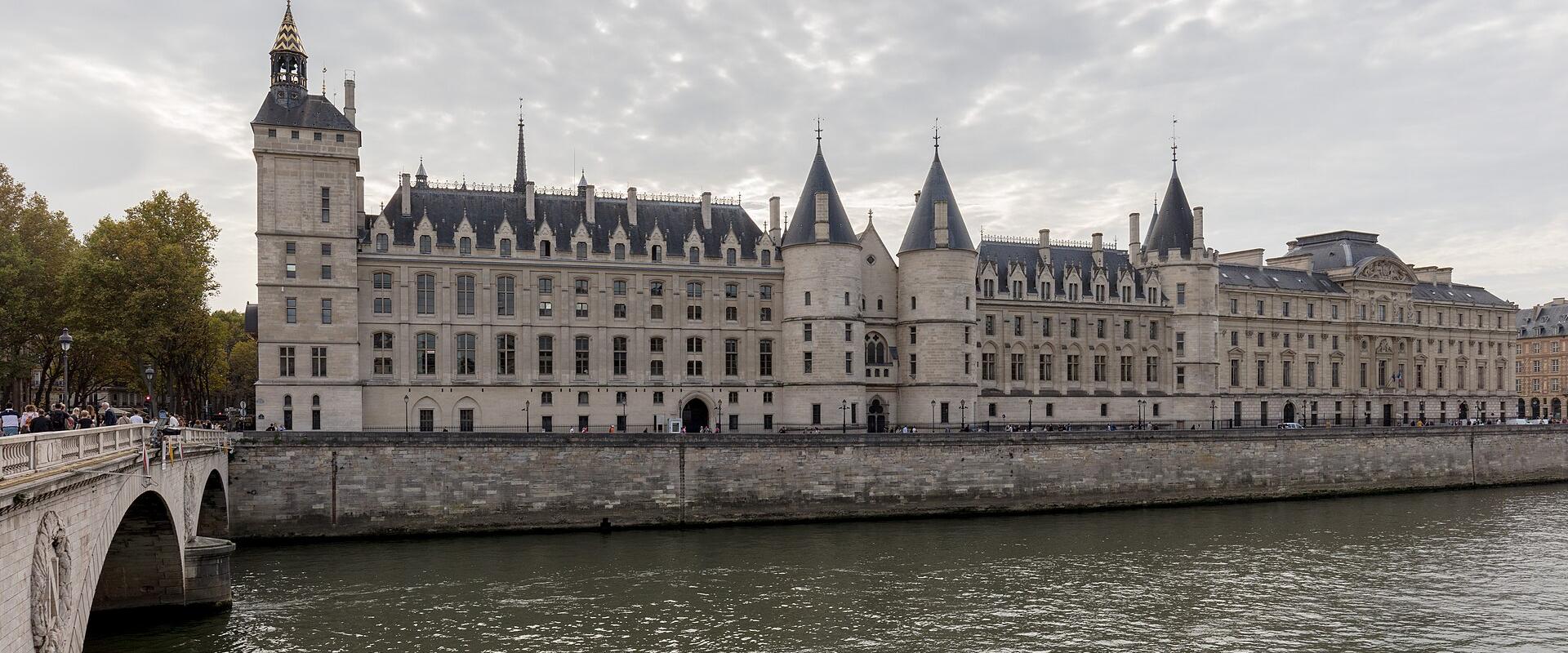
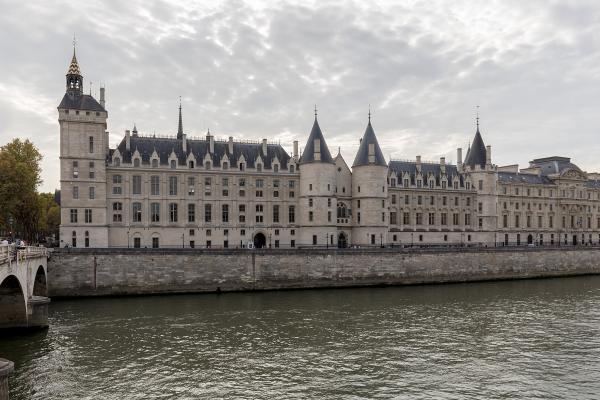
The Conciergerie stands on the Île de la Cité, in the centre of Paris, beside the Seine, and it is the surviving part of the medieval royal palace that once occupied the western end of the island. Its dark towers, rising above the quay with the clock tower on the corner, are among the oldest and most imposing in the city, and the building has a double reputation: as a masterpiece of Gothic architecture and as the antechamber of the guillotine during the Revolution. It is listed by UNESCO together with the banks of the Seine, and its interior is a powerful place to visit.
The palace was the residence of the kings of France from the tenth century until the fourteenth, and the buildings that remain were largely rebuilt in the early fourteenth century under Philip IV, called the Fair, who made it a grand seat of government. The surviving structures include the Salle des Gens d'Armes, a vast Gothic hall with four naves, rib vaults and thick columns, which served as the dining hall and meeting place for the king's household and is among the largest medieval halls still standing in Europe. In the 1360s, Charles V moved the royal residence to the Louvre and the Hôtel Saint-Pol, and the palace was given over to the Parlement, the court of justice, and to the administration of the building, whose keeper was called the concierge, which gave the place its name. Part of it became a prison. The tower on the corner of the quay houses the first public clock in Paris, installed in 1370.
During the Revolution, the Conciergerie became a place of detention for those awaiting trial before the Revolutionary Tribunal, which sat in the Palais de Justice nearby. Between 1793 and 1794, thousands of prisoners passed through its cells, and many were sent to the guillotine. Marie-Antoinette was held here for seventy-six days before her execution in October 1793, and a reconstruction of her cell and a chapel built on the site in the early nineteenth century commemorate her. Other prisoners included Charlotte Corday, who murdered Marat, and later Robespierre, who spent his last hours here before his own execution in 1794. The visit shows the cells, the courtyard where women prisoners were allowed to walk and the register of those condemned.
Visitors can choose between a self-guided tour with information in a number of languages and guided tours at set times. Allow about an hour. The Conciergerie is open daily, with last entry before closing, and it is closed on a few holidays. Combined tickets with the Sainte-Chapelle, which stands next door in the same Palais de la Cité complex and is famous for its stained glass, make a good day.
The island is surrounded by sights. Notre-Dame cathedral is a short walk to the east, and the Pont Neuf, the oldest standing bridge in Paris, lies to the west. The flower market on the Place Louis Lépine and the quays of the Seine are good for strolling. The Conciergerie suits history lovers and anyone interested in the French Revolution, and it is easily reached by Metro, RER and bus.
Categories
More photos coming soon
Hours & Fees
- Open
- Daily 9:30 am to 6:00 pm (last access 5:30 pm); closed May 1 and December 25
- Admission
- €13 individuals
Hours and prices change, especially out of season. Check with the venue before you go.
Nearby Attractions
Other places to visit in Paris
Eiffel Tower
324m iron lattice tower built for 1889 World's Fair
From €3.80 Historic Architecture · Towers
Montmartre and Sacré-Cœur
White basilica atop Montmartre hill
Free Guided Experiences · Historic Architecture
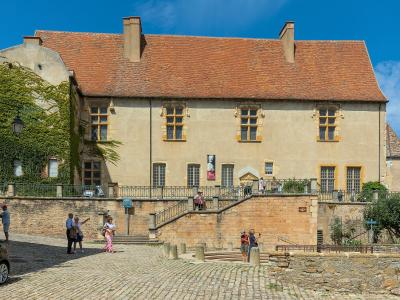
Cluny Museum (Musée de Cluny)
Medieval abbey and museum in Burgundy
From €8 Historic Architecture · Museums & Culture
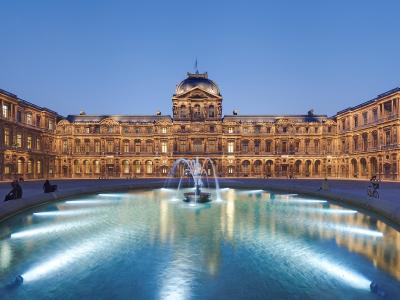
The Louvre Museum
World's largest art museum in historic Paris palace
From €22 Guided Experiences · Historic Architecture
Questions people ask
Quick Facts
Best Time to Visit
April to June and September to October offer mild weather and fewer crowds for optimal exploration.