







- Admission
- Free admission
- Where
- Lyon, Rhône-Alpes
- Directions
- Directions
The Croix-Rousse is the steep hill north of the Presqu'île in Lyon, between the Rhône and the Saône, and it was the centre of the city's silk industry for much of the nineteenth century. It still has the character of a village within the city, with its own markets, squares, cafés and independent shops, and a strong local identity. The name comes from a red stone cross that once stood at the top of the hill, and it is often shortened by local people to the Croix-Rousse or simply la Colline.
The hill was home to the canuts, the silk weavers, who worked in their own homes on large wooden looms. In 1801, Joseph Marie Jacquard, who was born in Lyon, invented a loom that used punched cards to control the pattern, which was a decisive step in the history of mechanisation and the ancestor of the modern programmable machine. The Jacquard loom was tall, and so the buildings of the Croix-Rousse were designed with very high ceilings of four metres or more, often with several floors of large windows, to give light and room for the looms. This is why the buildings of the hill look so tall and the streets so wide in places. The canuts also staged some of the first great workers' uprisings, in 1831 and 1834, when they rose against low pay, and the memory of those revolts is part of the identity of the hill.
The hill is also famous for its traboules, covered passages that run through buildings and courtyards and link one street to another, allowing weavers to carry silk across the hill without exposing it to rain. Several can be walked by the public, including the Cour des Voraces, a tall courtyard with a monumental stairway, and guided tours explain the history and show silk printing workshops. The Maison des Canuts, a small museum, shows a working loom and the history of the trade, and the Mur des Canuts, a huge trompe-l'œil mural painted on the side of a building, shows a street scene with realistic details. Many traboules are private, so be quiet and respect the residents.
The hill has a lively food culture. A market that is held along the Boulevard de la Croix-Rousse most mornings, except Monday, is among the best in Lyon, with local produce, and the bouchons, the traditional restaurants, serve regional dishes. The steep climb gives views over Lyon, and a metro line and a funicular ease the ascent.
The quarter suits those interested in industrial and social history, walkers and food lovers.
Categories
More photos coming soon
Admission Fees
- Admission
- Free admission
Hours and prices change, especially out of season. Check with the venue before you go.
Nearby Attractions
Other places to visit in Lyon
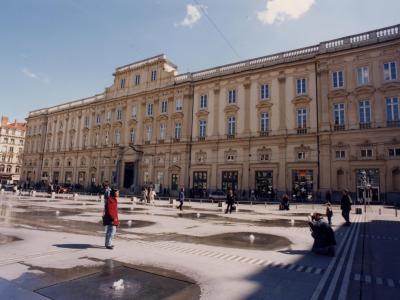
Musée des Beaux-Arts de Lyon
France's second-largest museum in a 17th-century abbey
Historic Architecture · Museums & Culture
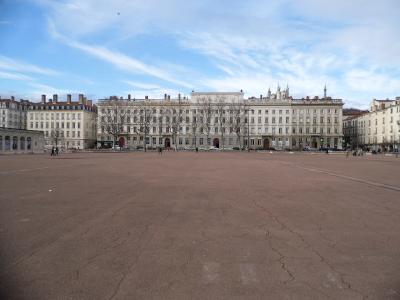
Place Bellecour
Europe's largest pedestrian square with red laterite paving
Free City Centers · Heritage Trails
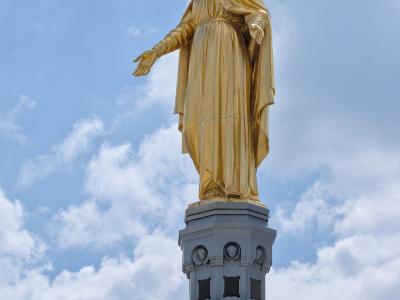
Basilica of Notre-Dame de Fourvière
19th-century basilica with panoramic Lyon views
Architectural Landmarks · Churches
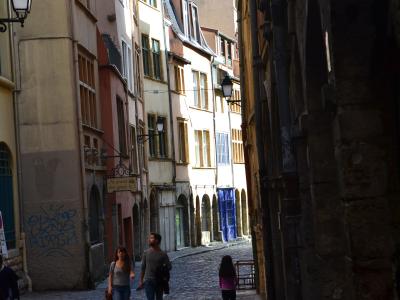
Vieux Lyon (Old Lyon)
UNESCO Renaissance district with hidden traboules
Guided Experiences · Historic Architecture
Questions people ask
Quick Facts
Best Time to Visit
May to June and September to October offer mild weather and ideal conditions for outdoor activities and sightseeing.