







- Hours
- 10:00–12:00 and 14:00–18:00
- Where
- Chalon-sur-saone, Burgundy
- Directions
- Directions
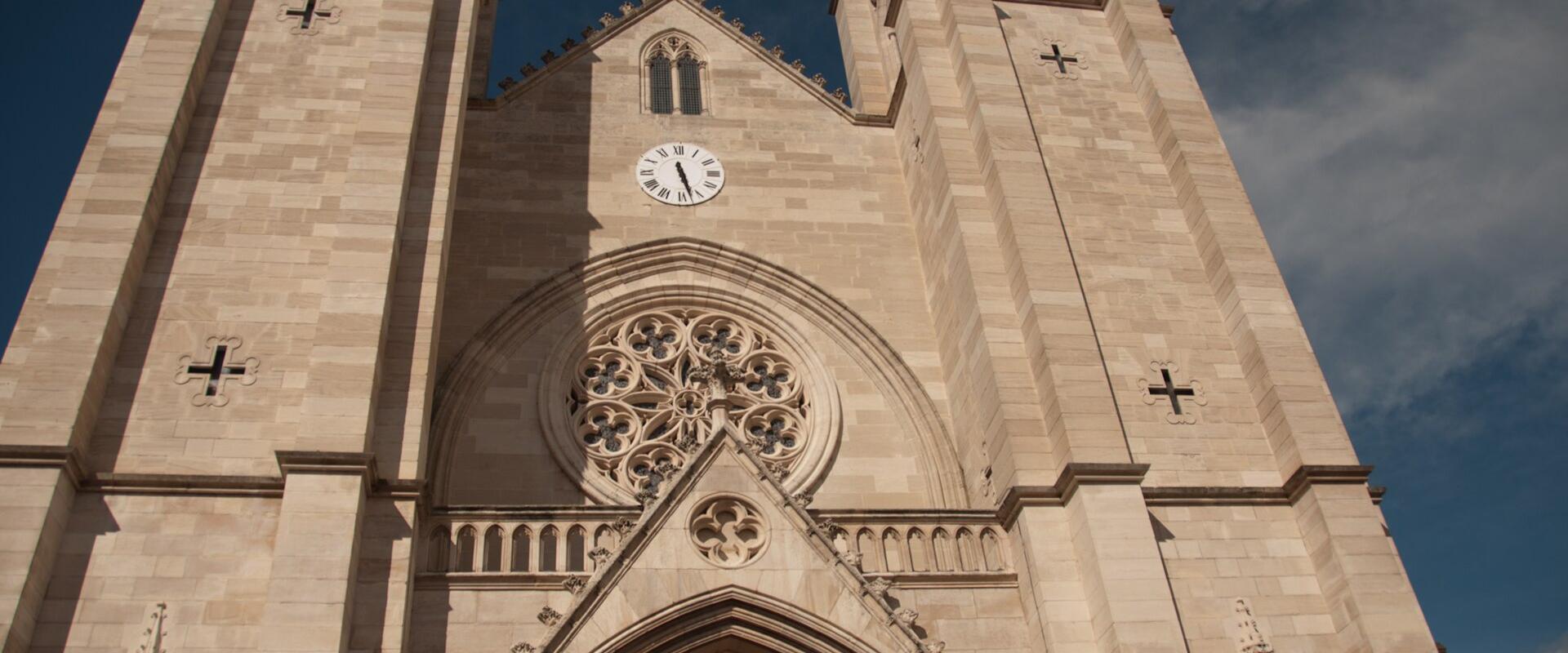
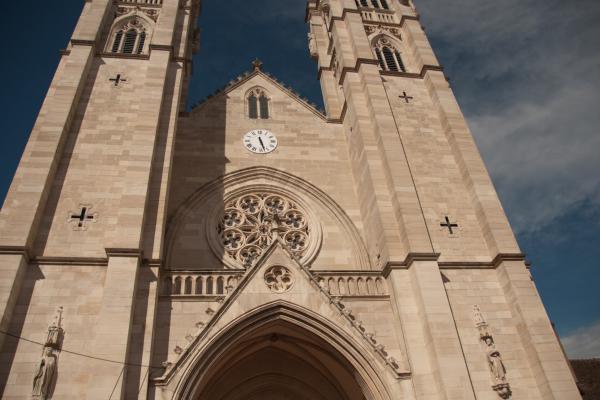
The cathedral of Saint-Vincent in Chalon-sur-Saône, which keeps the title of a church in everyday speech, is the old cathedral of the town, and with its cloister it holds a rare survival. Chalon lies on the river Saône in southern Burgundy and was a river port and crossroads from Roman times. The church dedicated to Saint Vincent has been here since at least the eighth century, and the building that stands today was begun in Romanesque style around 1090. Over the following centuries it was extended with Gothic elements, and in the nineteenth century a neo-Gothic façade was added, so it shows several periods. It was the seat of a bishop until 1801, when the diocese was suppressed in the reorganisation of the Church after the Revolution, and so it is often still called the cathedral.
Inside, the church has three naves, side chapels and a chevet without an ambulatory, with a mix of Romanesque and Gothic elements. Look at the Romanesque capitals, carved with foliage, animals and human figures, at the stained-glass window of the sixteenth century, and at a Brussels tapestry dating from 1510. A tactile model of the building is provided for visually impaired visitors, a thoughtful feature, and the church is arranged to be accessible.
The cloister is the unusual part of the visit. It is described as the only canonical cloister that survives in Burgundy and the Franche-Comté, that is, the cloister of the canons who served the cathedral, rather than that of an abbey of monks. Its outer walls are very old, and the three surviving galleries have bays with arches of the fourteenth century and rib vaults of the fifteenth. The fourth, north gallery was destroyed and has been rebuilt in a modern style, with sculptures by the artist Laetitia de Bazelaire placed among the arcades, which creates a dialogue between old and new. A garden in the middle of the cloister gives a quiet space in the middle of the old town.
The cloister is open in the morning and the afternoon, with a break at midday, and the site is accessible to visitors with reduced mobility. The church is free, while the cloister may have a small charge or guided tours, so check locally. A visit takes about an hour.
Chalon-sur-Saône is a good place to explore on foot. The old centre has timber-framed houses, narrow streets and small shops, and the quays of the Saône, with the old bridge and the island, are pleasant for a walk. Chalon was the birthplace of Nicéphore Niépce, who made the first permanent photograph in the 1820s, and the museum dedicated to him is a short distance from the centre. The Collégiale Notre-Dame, the Hôtel de Ville, the Musée des Beaux-Arts et d'Archéologie and the Marché de Chalon are also in the town. The town is known for its carnival in the spring. The cathedral and cloister suit those interested in medieval architecture and quiet corners.
Categories
More photos coming soon
Opening Hours
- Open
- 10:00–12:00 and 14:00–18:00
Hours and prices change, especially out of season. Check with the venue before you go.
Nearby Attractions
Other places to visit in Chalon-sur-saone
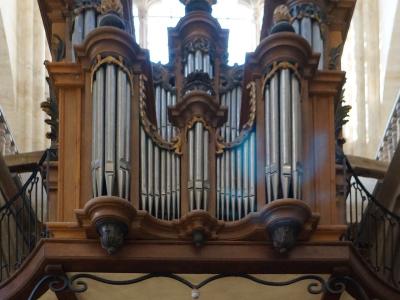
Collégiale Notre-Dame
12th-century collegiate church with 16th-century stained ...
Free Churches
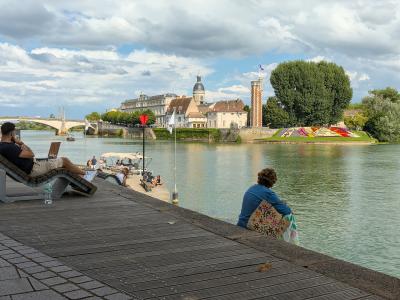
Quais de Saône
Riverfront quays along the Saône in Chalon
Historic Towns · Promenades
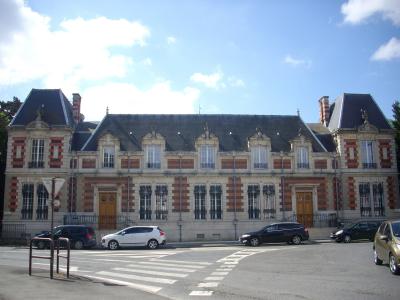
Marché de Chalon
Daily market in historic Chalon-sur-Saône
Free Urban Exploration
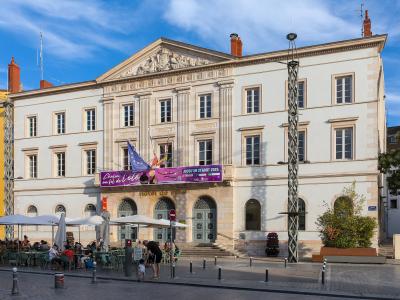
Hôtel de Ville (Town Hall)
19th-century neoclassical town hall
Historic Architecture
Questions people ask
Quick Facts
Best Time to Visit
Mid-June to mid-September offers warm weather and ideal conditions for outdoor activities and sightseeing.