Hôtel de Ville (City Hall)
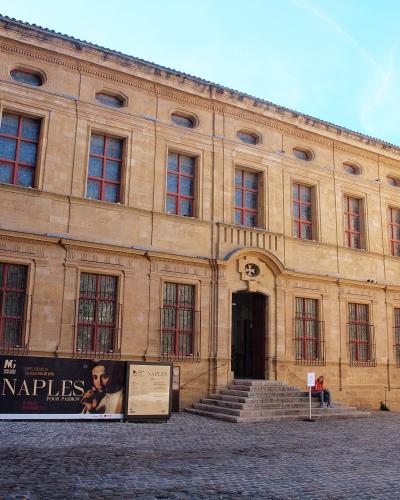
18th-century ochre stone town hall with Baroque facade
The Hôtel de Ville in Aix-en-Provence is a historic landmark dating back to 1741, serving as the city’s administrative center. Located in the heart of the city, it stands as a testament to Aix’s former status as the capital of Provence. The building features an Italianate facade with Baroque elements, including fruit garland decorations and cartouches. Constructed by architect Pierre Pavillon between 1655 and 1678, with assistance from sculptors Rambot and Fossé, the structure is built from ochre stone sourced from the Bibemus Quarry. A notable feature is the majestic carved wooden doorway adorned with lion heads.
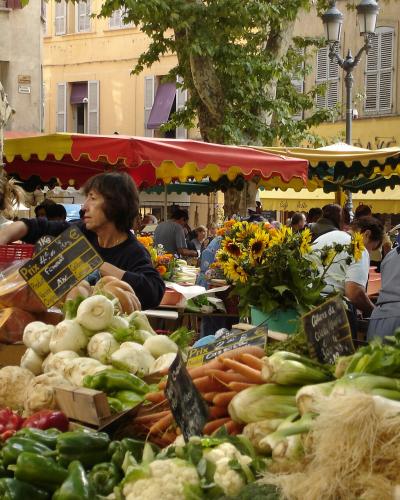
Visitors can explore the cobblestone courtyard and the adjacent Place de l'Hôtel de Ville, which showcases a mix of architectural styles. The square hosts a flower market on Tuesdays, Thursdays, and Saturdays, as well as an Old Book Fair on the first Sunday of the month. Nearby stands the Clock Tower, erected on Roman foundations in 1510, which houses an astronomical clock added in 1661. An 18th-century fountain is also situated in front of the city hall.
Entry to the Hôtel de Ville is free and open to the public when doors are open, though additional security measures are currently in place. The building remains the mandatory location for legal civil marriages in France, maintaining its role as a hub for administrative requests. The complex plan includes a front section bordering the square and a U-shaped inner courtyard leading to noble rooms. Visitors are advised to check local schedules for access, as hours may vary. The combination of historical architecture and vibrant public life makes this area a central point of interest for travelers exploring Aix-en-Provence.
Categories
More photos coming soon
Hours & Fees
Hours
Open to the public when doors are open
Admission
Free admission
Nearby Attractions
Other places to visit in Aix-en-provence
Frequently Asked Questions
Quick Facts
Best Time to Visit
March to May and September to November offer mild weather and fewer crowds for optimal exploration.