







- Admission
- €5 for visitors aged 18 and under
- Where
- Belfort, Franche-Comté
- Directions
- Directions
The Citadelle de Belfort sits on a rocky hill above the old town, guarding the Belfort Gap, the pass between the Vosges and the Jura that has been one of the great invasion routes into France. The site was fortified long before the present walls, but the form that visitors see today owes much to Vauban, Louis XIV's military engineer, who reinforced the citadel and the town defences in the late seventeenth century, after the region became French. His bastions, ditches and long stone curtain walls make the fortress a clear example of the classic seventeenth-century fortress.
The citadel's greatest moment came in the Franco-Prussian War. In the winter of 1870 and 1871, the town was besieged by Prussian forces for more than three months under the command of Colonel Pierre Philippe Denfert-Rochereau, and the garrison held out until the government in Paris ordered it to surrender. The defenders marched out with the honours of war, and as a result of the resistance Belfort and its surrounding territory remained French when Alsace and most of Lorraine passed to Germany. That story gives the town its pride and explains its identity.
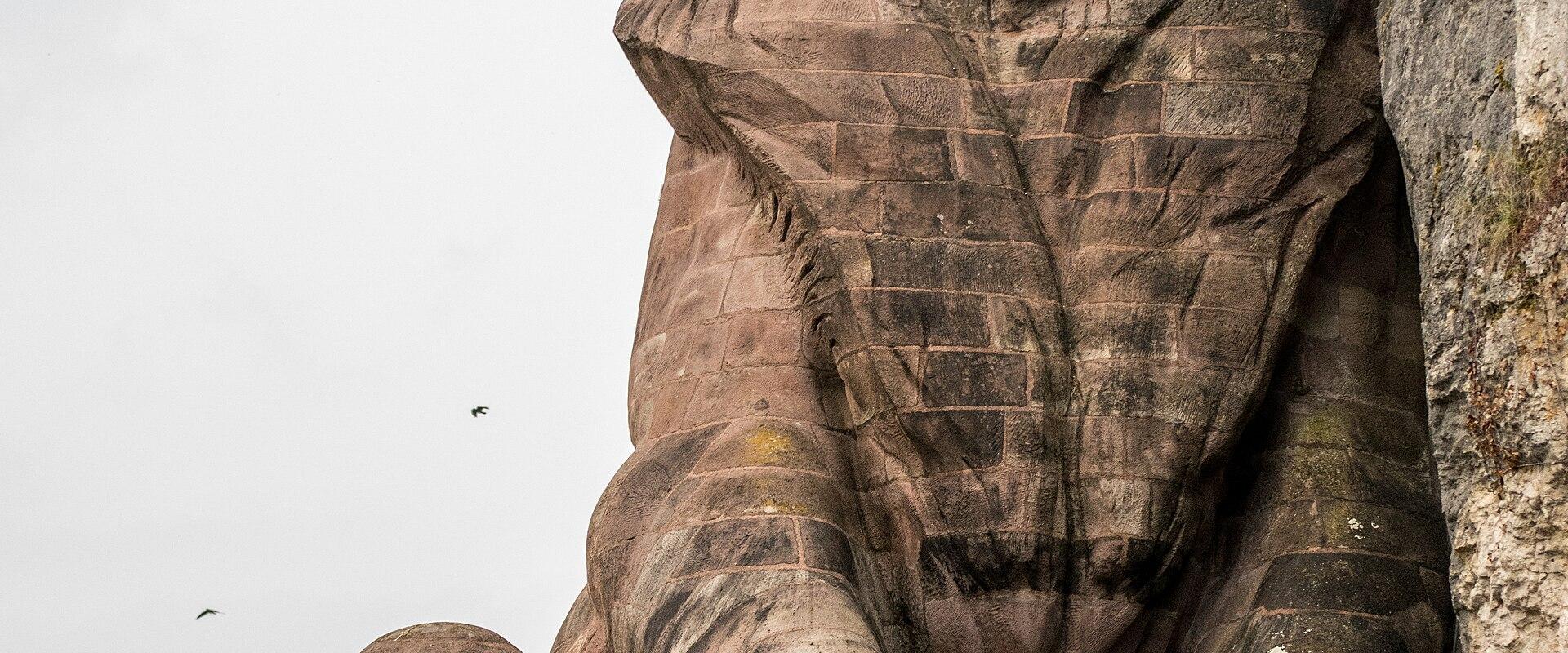
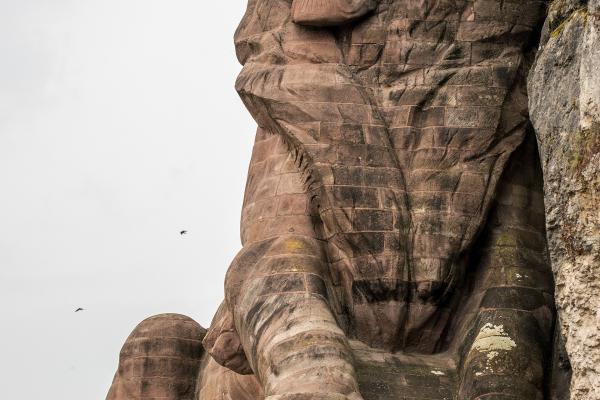
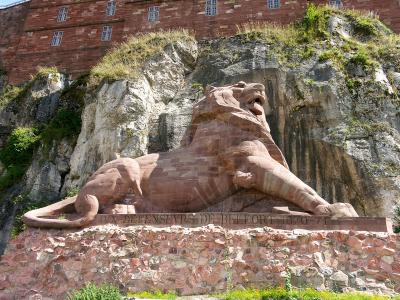
Below the walls, carved into the red sandstone cliff, is the famous Lion of Belfort, a monumental sculpture some twenty metres long made by Frédéric-Auguste Bartholdi, the sculptor of the Statue of Liberty in New York. The lion was completed in 1880 as a monument to the resistance of the siege, and its powerful, weary pose, suggesting defiance in defeat, is a symbol of the town. Seeing it from the foot of the rock and then climbing to the citadel above makes a satisfying route.
Inside the citadel, the history museum is arranged over three levels. The lowest level presents archaeological finds covering prehistory to the Middle Ages, showing the region as a crossroads. The ground floor is devoted to the sculptors Bartholdi and Camille Lefèvre, with sculptures, paintings and engravings, and the upper floor tells the civil and military story of Belfort, including the Vauban fortifications and the siege of 1870 and 1871 and the figure of Denfert-Rochereau. Outside the museum, the ramparts are open to walk along, with views over the old town, the Savoureuse river and the hills.
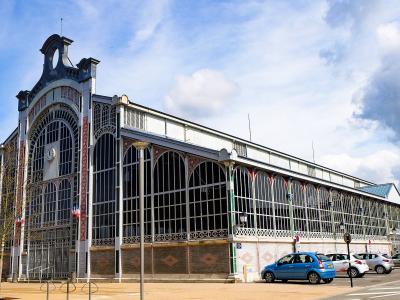
Belfort has other attractions. The Tour 41 – Musée d'Art moderne, Donation Maurice-Jardot, the covered market, the Théâtre de Belfort and the old streets around the Place d'Armes offer further interest, and every July the Eurockéennes music festival draws large crowds to a lake near the town. The citadel suits history enthusiasts and families, and it combines well with the lion and the old town in a half-day. Opening hours and admission change by season, and there are closures on some public holidays, so check the current information before going.
Categories
More photos coming soon
Admission Fees
- Admission
- €5 for visitors aged 18 and under
Hours and prices change, especially out of season. Check with the venue before you go.
Nearby Attractions
Other places to visit in Belfort
The Lion of Belfort
Bartholdi's unfinished sandstone lion
Guided Experiences · Historic Architecture
Marché Couvert
Historic covered market in Belfort's old town
Free Urban Exploration
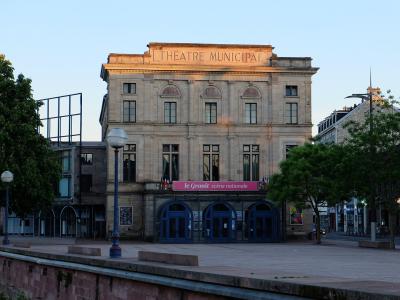
Théâtre de Belfort
Historic theater in Belfort, France
From €5 Museums & Culture
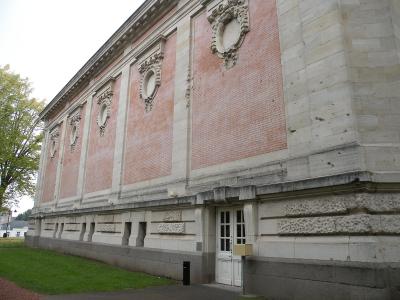
Tour 41 – Musée d'Art moderne, Donation Maurice-Jardot
France's oldest public museum, founded in 1694
Museums & Culture
Questions people ask
Quick Facts
Best Time to Visit
May to September offers mild weather and ideal conditions for outdoor activities and sightseeing.