







La Vieille Charité
17th-century Baroque hospice housing Mediterranean and Af...
- Where
- Marseille, Provence-Alpes-Côte d'Azur
- Directions
- Directions
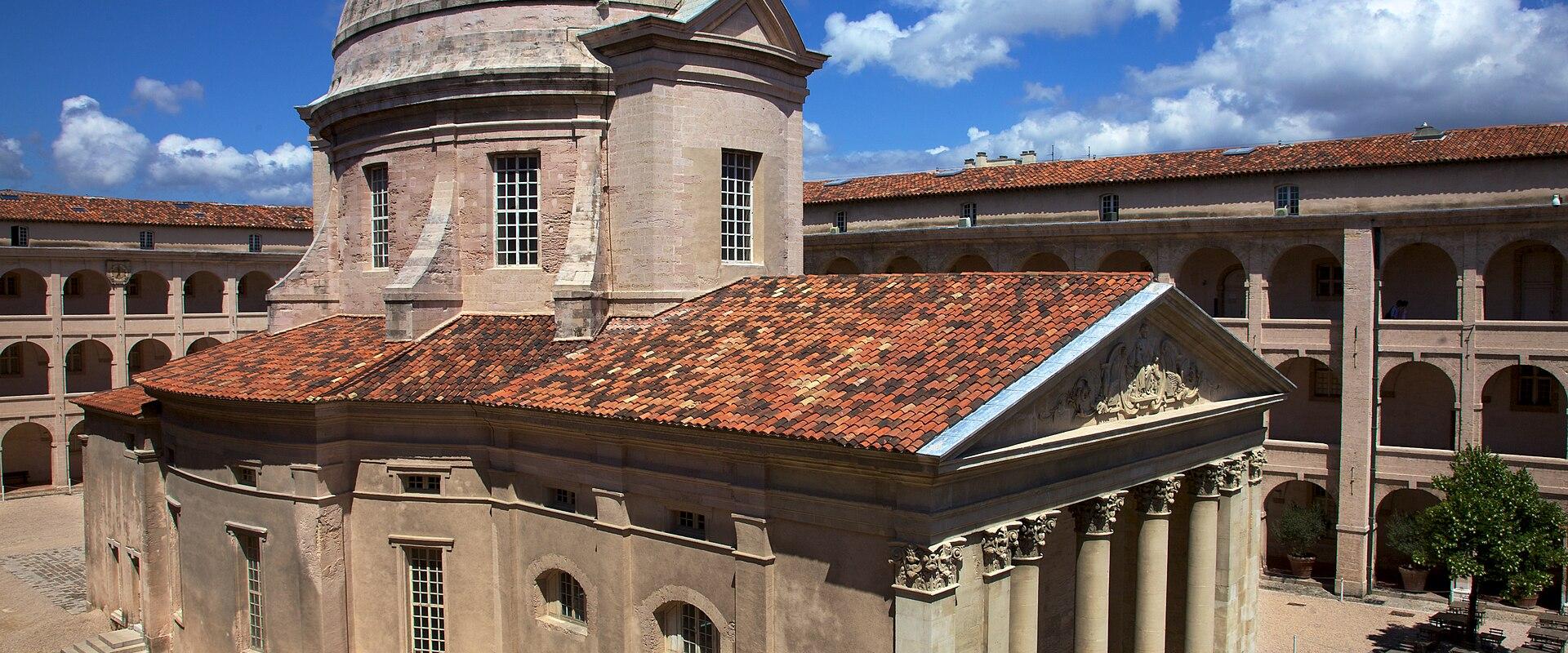
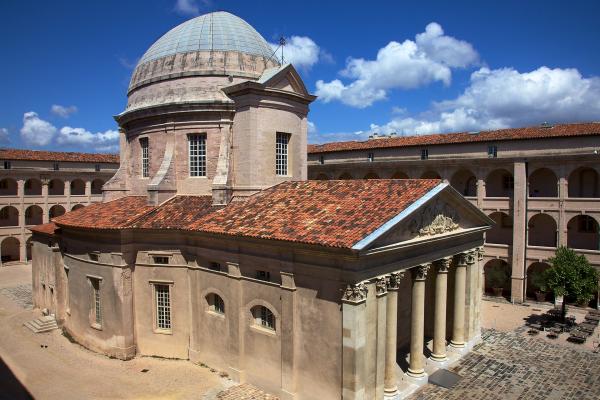
La Vieille Charité is one of the finest buildings in Marseille, a large Baroque complex in the Panier district, the oldest quarter of the city, built in the seventeenth century to shelter the poor. The idea came from a royal decree of 1640 that ordered the creation of institutions to house beggars and the destitute, and the city of Marseille took up the project in the 1670s. Work began in 1671 under the direction of the sculptor and architect Pierre Puget, who was a native of Marseille and one of the most renowned artists of the age, and it went on for decades, with later architects continuing the plan, until the mid-eighteenth century. The result is a quadrangle of long, three-storey wings in warm pink limestone, with open arcades facing a central courtyard, and in the middle of the courtyard stands a chapel with an oval dome, designed by Puget.
The chapel is the masterpiece. Its oval dome, topped by a lantern, rises above a front with columns and a pediment, and the design shows the influence of Italian Baroque, which Puget had studied in Rome. The courtyard is calm and harmonious, paved in stone, with the arcades creating a series of arches that rhythmically frame the light, and it is one of the most beautiful spaces in Marseille. Over the years, the building had many uses. It served as a hospice for the poor, then as a barracks and as lodging for displaced families, and by the early twentieth century, it had fallen into a poor state. In the decades after the Second World War, it was saved from demolition and restored, and it reopened as a cultural centre.
Today the Vieille Charité is a centre for museums and arts. It houses the Musée d'Archéologie Méditerranéenne, with its Egyptian and Mediterranean collections, and the Musée d'Arts Africains, Océaniens, Amérindiens, which shows masks, sculptures and objects from three continents. Temporary exhibitions are held in the halls, and the complex also includes a cinema, a bookshop and a restaurant or café. Visitors can wander through the courtyard, which is often free to enter, and look at the architecture, while museums charge for admission.
The building sits in the Panier, a hilly district of narrow lanes, steep stairs and brightly painted houses, which grew from the old Greek and Roman town, and it is surrounded by street art, small shops and cafés. The nearby Cathédrale La Major, the MuCEM and the Old Port are a short walk away, and the Basilique du Sacré-Cœur and Cours Julien are further. The Corniche Kennedy and the Calanques National Park lie to the south.
The complex is generally closed on Mondays and on certain holidays, so check before you go. It suits architecture lovers and museum visitors. Allow an hour for the courtyard and longer for the museums.
Categories
More photos coming soon
Nearby Attractions
Other places to visit in Marseille
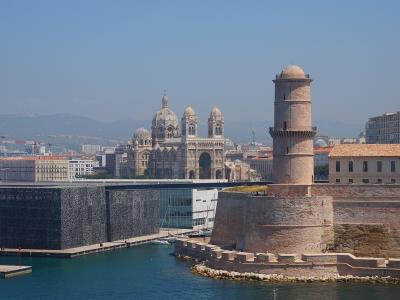
MuCEM (Museum of European and Mediterranean Civilisations)
Anthropological museum in Marseille's historic Fort Saint...
Historic Architecture · Museums & Culture
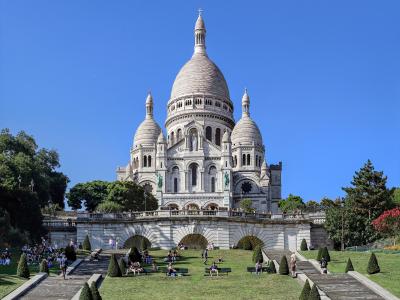
Basilique du Sacré-Cœur
Unfinished 1920 basilica with modernist aesthetic
Free Architectural Landmarks · Churches
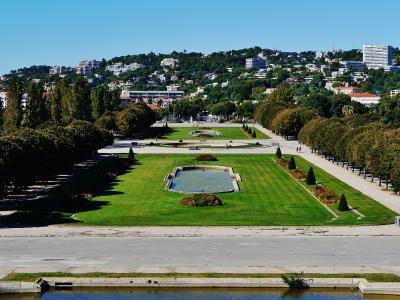
Parc Borély
Municipal park with gardens, lakes, and a castle
Free Gardens · Rivers & Lakes
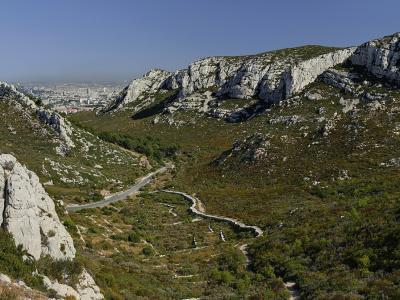
Calanques National Park
Europe's only land, sea, and urban national park
Free Beaches · Cliffs
Questions people ask
Quick Facts
Best Time to Visit
Late June to late August offers warm weather and ideal conditions for beach activities and sightseeing.