







- Where
- Sète, Languedoc-Roussillon
- Directions
- Directions
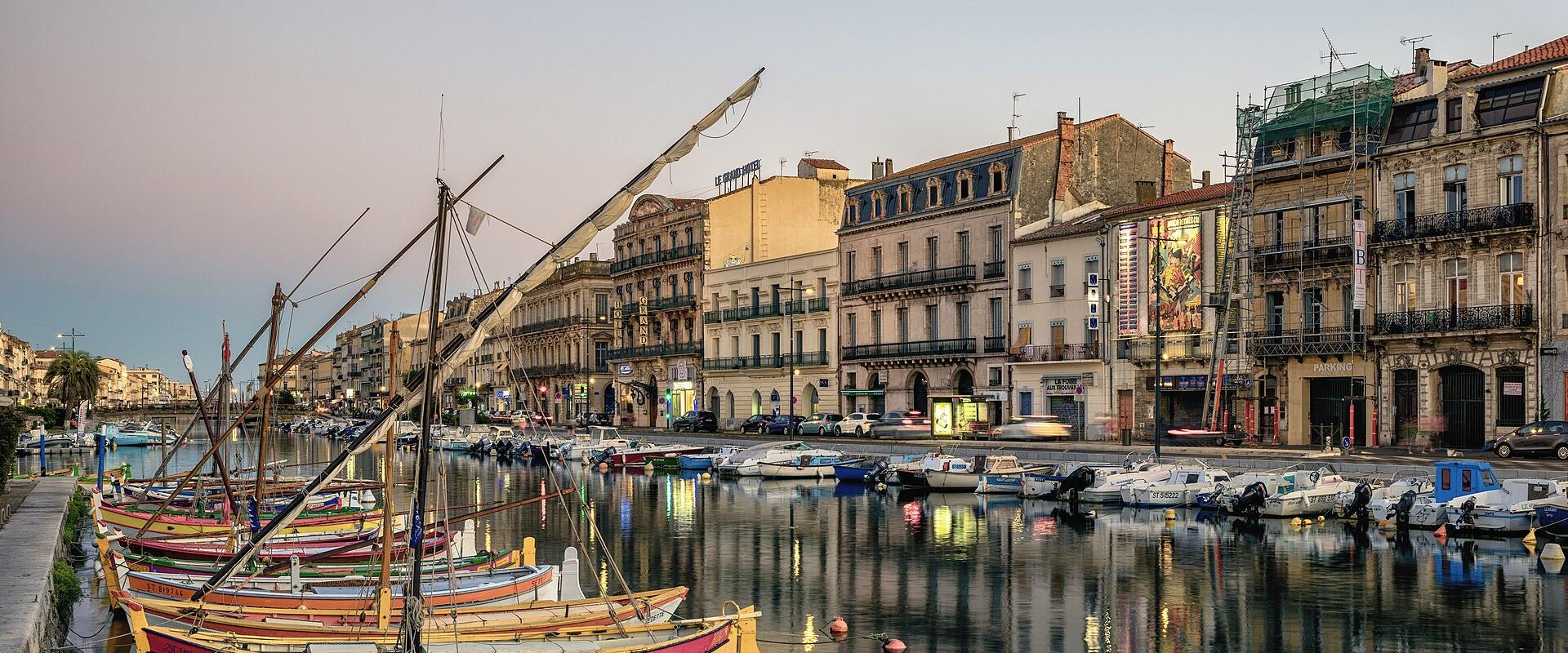
Sète is the largest Mediterranean fishing port in France, built on a narrow strip of land between the sea and the lagoon of Thau, and its fish market is the best place to see what that means. The town grew around its port in the seventeenth century, when the Canal du Midi was opened and needed an outlet to the sea, and today boats still go out from the quays and return with the day's catch. The market is part of the local life rather than a tourist show, and the stalls around the Halles de Sète, the covered market in the centre, are busy from early morning.
The fish on display varies with the season and the weather, and looking at it is a lesson in what lives in the Gulf of Lion. You can expect to see sea bass, gilt-head bream, red mullet, sardines, anchovies, squid, cuttlefish and octopus, together with shellfish such as clams, mussels, sea urchins in winter, and the oysters and mussels farmed in the Thau lagoon, which are among the best known in France. Fishmongers will clean and prepare your purchase on request. Alongside the fish stalls there are vendors selling vegetables and fruit from local growers, olives, cured meats, cheeses, bread and the specialities of the town.
Sète has a strong food tradition built on fish. The best-known dish is the tielle sétoise, a pie with a filling of octopus in a spicy tomato sauce, which is sold in bakeries and food shops across the town. Other local dishes include the bourride, a creamy fish stew thickened with aioli, the rouille de seiche, which is cuttlefish cooked with a garlic and pepper sauce, and the macaronade, a dish of pasta with meatballs and sauce. A visitor who wants to try the local cooking can follow a visit to the market with a meal at one of the quayside restaurants, many of which specialise in shellfish and grilled fish.
The best time to visit is the morning, when the choice is at its widest and the market is most animated. Prices and hours vary between stalls, and the market is not open at the same hours every day, so check locally. The visit itself is free, and a stroll along the stalls takes less than an hour, longer if you stop to taste.
The canals of the old town, which gave Sète the nickname of the Venice of Languedoc, run nearby, and in the summer the town holds its traditional water jousting tournaments. The Musée Paul Valéry, dedicated to the poet who was born in Sète, and the open-air Théâtre de la Mer on the seafront, are within reach. The market suits food lovers, photographers and anyone interested in the working life of a Mediterranean port.
Categories
More photos coming soon
Nearby Attractions
Other places to visit in Sète
Questions people ask
Quick Facts
Best Time to Visit
Late June to late August offers warm weather and ideal conditions for beach activities and sightseeing.