







- Admission
- €16 (€13 Wed)
- €13 Oct-Mar; Free for under 16s &
- Where
- Paris, Île-de-France
- Directions
- Directions
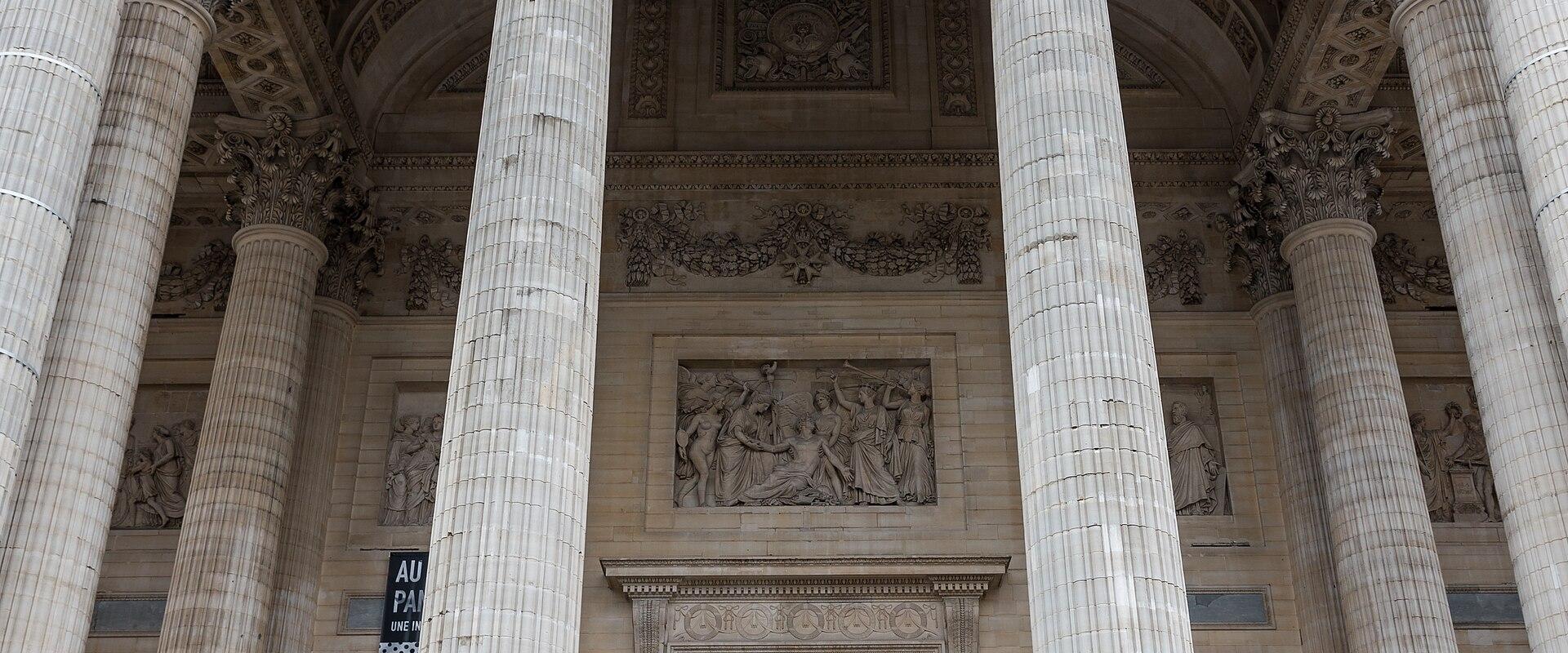
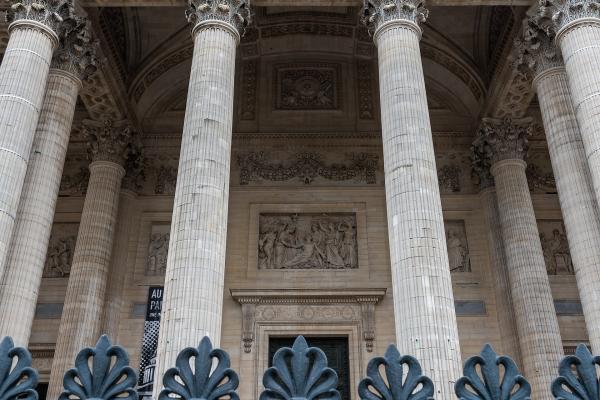
The Panthéon stands at the top of the Montagne Sainte-Geneviève, in the Latin Quarter of Paris, and its great dome, rising to about eighty-three metres, is one of the landmarks of the Left Bank. The building has had two lives. It began as a church, since in 1744 King Louis XV, who had fallen seriously ill at Metz, vowed that if he recovered, he would replace the ruined old abbey church of Saint Genevieve, the patron saint of Paris, with a splendid new one. The architect Jacques-Germain Soufflot was chosen, and work started in 1764, with the king laying the first stone. Soufflot drew on the Roman Pantheon and on the Gothic idea of height and light, and the result is a neoclassical church in the shape of a Greek cross, with a portico of Corinthian columns, a triangular pediment and a high dome. He died in 1780, and the building was completed by his pupil Jean-Baptiste Rondelet in 1790.
The French Revolution gave it a new purpose. In 1791 the Constituent Assembly decided to turn the church into a mausoleum for the great men of the nation, and the inscription on the pediment, Aux grands hommes la patrie reconnaissante, to the great men the grateful homeland, dates from that time. Over the following century the building changed function several times, serving as a church again under Napoleon and the Restoration, and as a secular mausoleum under the Republic. After the funeral of Victor Hugo in 1885, it became permanently a place of national memory.
The interior is vast and austere, with a nave lit by large windows and decorated with monumental paintings. A series of large canvases by the painter Pierre Puvis de Chavannes on the walls tells the life of Saint Geneviève, who is said to have rallied the Parisians when Attila's army threatened the city in the fifth century. Under the dome hangs a copy of the pendulum with which the physicist Léon Foucault demonstrated the rotation of the earth in 1851, in an experiment he carried out here. The crypt beneath the church holds the tombs of those honoured by the Republic. Among them are the writers Voltaire and Rousseau, whose tombs face each other, Victor Hugo, Émile Zola and Alexandre Dumas, the resistance leader Jean Moulin, the scientists Pierre and Marie Curie, the politician Simone Veil and the entertainer Joséphine Baker, who were honoured in more recent years.
The Panthéon is open daily, with hours that depend on the season, and a few closures on holidays. The ticket is sold at a fixed price, with reductions on certain days and free entry for young people and some other groups, so check the details and book online to avoid queues. The climb to the colonnade of the dome, which offers panoramic views of Paris, may be closed for renovation, so confirm before you go. Allow one to three hours. The nearest metro stations are Cardinal Lemoine and Maubert-Mutualité.
The church of Saint-Étienne-du-Mont, the Luxembourg Gardens and the Sorbonne are within a few minutes' walk. The Panthéon suits anyone interested in French history, architecture and ideas.
More photos coming soon
Admission Fees
- Admission
- €16 (€13 Wed); €13 Oct-Mar; Free for under 16s &
Hours and prices change, especially out of season. Check with the venue before you go.
Nearby Attractions
Other places to visit in Paris
Eiffel Tower
324m iron lattice tower built for 1889 World's Fair
From €3.80 Historic Architecture · Towers
Montmartre and Sacré-Cœur
White basilica atop Montmartre hill
Free Guided Experiences · Historic Architecture
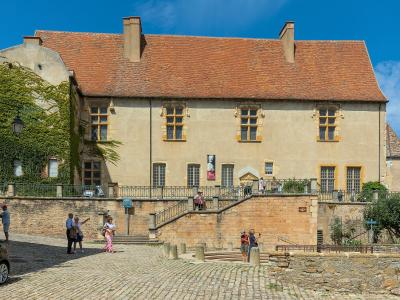
Cluny Museum (Musée de Cluny)
Medieval abbey and museum in Burgundy
From €8 Historic Architecture · Museums & Culture
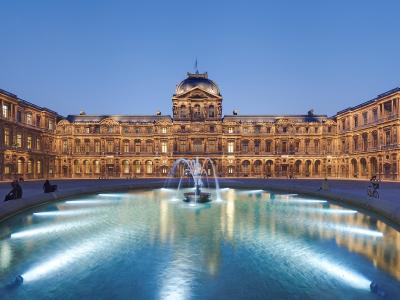
The Louvre Museum
World's largest art museum in historic Paris palace
From €22 Guided Experiences · Historic Architecture
Questions people ask
Quick Facts
Best Time to Visit
April to June and September to October offer mild weather and fewer crowds for optimal exploration.