







- Admission
- Free admission
- Hours
- 24/7
- Where
- Paris, Île-de-France
- Directions
- Directions
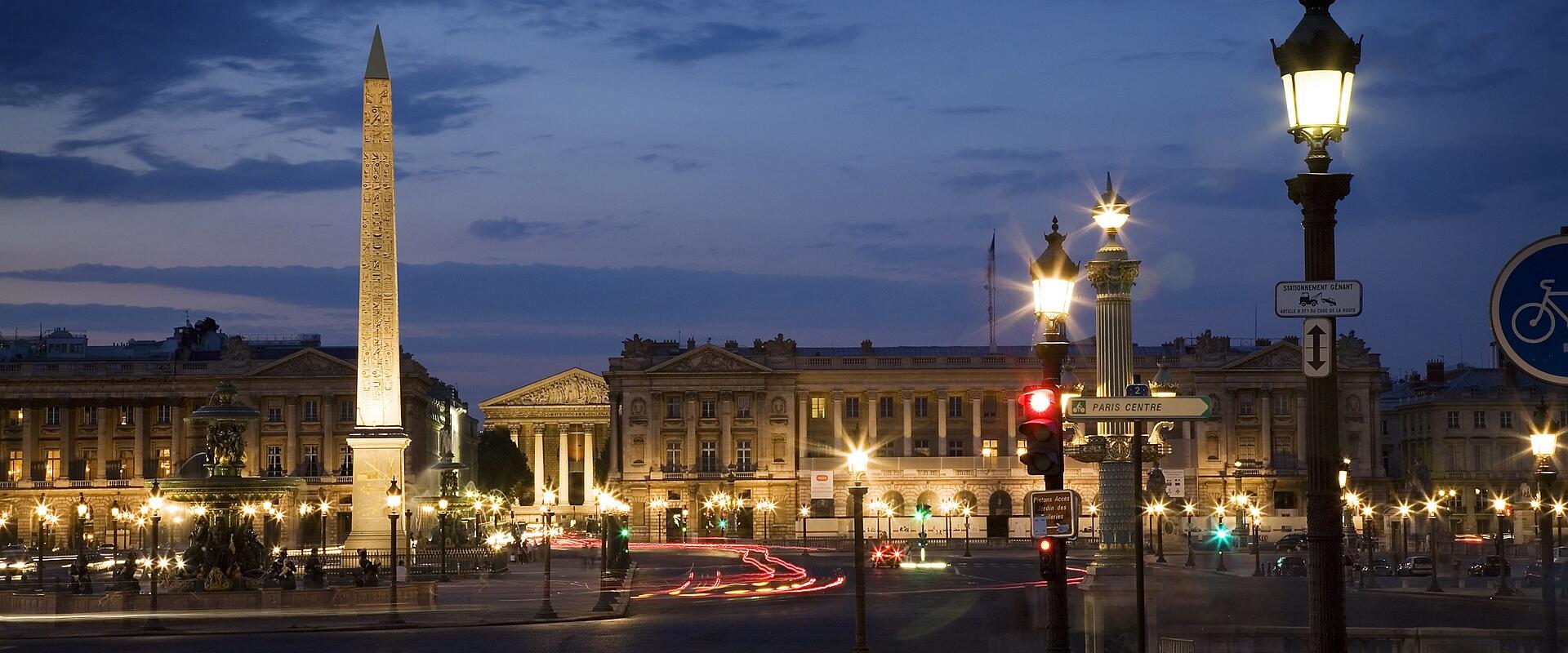
The Place de la Concorde is the largest square in Paris, an immense octagon at the foot of the Champs-Élysées and the entrance to the Tuileries Gardens, and it carries more layers of French history than almost any other open space in the capital. It was laid out in the middle of the eighteenth century by the architect Ange-Jacques Gabriel as a setting for an equestrian statue of Louis XV and called the Place Louis XV. Two grand stone buildings with colonnades facing the square, built by Gabriel in the 1760s, remain at the northern side: one is the Hôtel de la Marine, the former naval ministry, and the other is the Hôtel de Crillon, now a luxury hotel.
The square's fate changed with the Revolution. The statue of the king was pulled down, the square was renamed the Place de la Révolution, and a guillotine was set up at its centre. Between 1793 and 1795, more than a thousand people were executed here, among them Louis XVI, in January 1793, and Queen Marie Antoinette, in October of the same year, and later the revolutionary leaders Danton and Robespierre. After the Terror ended, the square was renamed Concorde, meaning harmony, in the hope of reconciliation, though it changed names more than once before the name finally stuck in 1830.
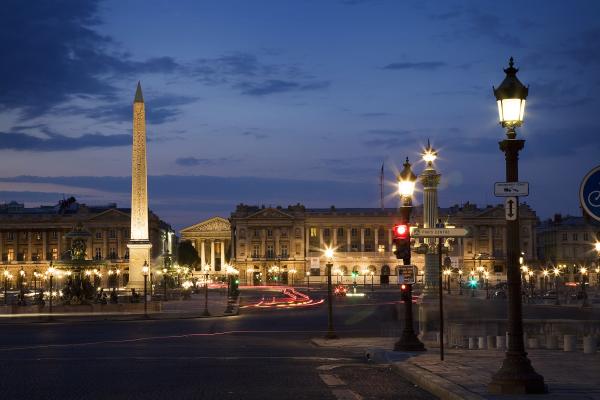
The present decoration comes mainly from the 1830s and 1840s, when the architect Jacques Ignace Hittorff redesigned the square. At its centre stands the obelisk of Luxor, a pink granite monolith more than three thousand years old, which came from the temple of Luxor in Egypt and was a gift from the viceroy Muhammad Ali to France. It was erected in 1836 after a complex operation, and its hieroglyphs celebrate the pharaoh Ramses II. Two fountains, inspired by those of Rome, flank it, one symbolising the seas and the other the rivers, with bronze figures, tritons and fish. At the corners of the octagon, eight statues represent the major cities of France: Lille, Strasbourg, Lyon, Marseille, Bordeaux, Nantes, Brest and Rouen.
From the middle of the square, the view along the axis is one of the great Parisian prospects: west up the Champs-Élysées to the Arc de Triomphe, east through the Tuileries to the Louvre, north to the Madeleine church and south across the Seine to the Palais Bourbon. The traffic is heavy, so crossing needs care, but the broad pavements and the fountains are pleasant places to pause.
Nearby are the Jardin des Tuileries, the Orangerie, the Arc de Triomphe du Carrousel and many other attractions. The square is free and open at all times. It suits walkers and photographers, and it is most beautiful at dusk when the lights come on.
Categories
More photos coming soon
Hours & Fees
- Open
- 24/7
- Admission
- Free admission
Hours and prices change, especially out of season. Check with the venue before you go.
Nearby Attractions
Other places to visit in Paris
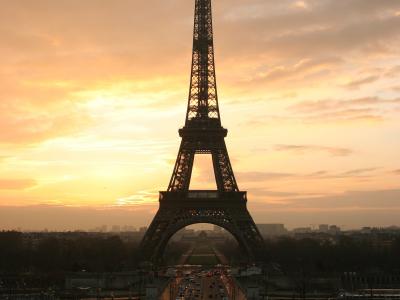
Eiffel Tower
324m iron lattice tower built for 1889 World's Fair
From €3.80 Historic Architecture · Towers
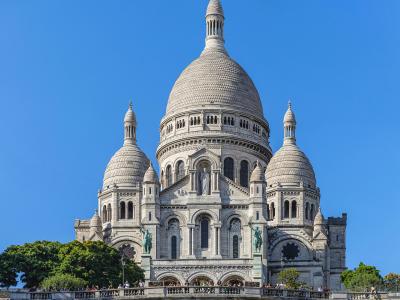
Montmartre and Sacré-Cœur
White basilica atop Montmartre hill
Free Guided Experiences · Historic Architecture
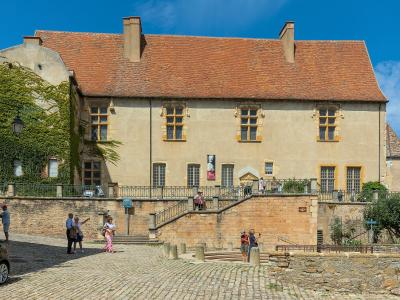
Cluny Museum (Musée de Cluny)
Medieval abbey and museum in Burgundy
From €8 Historic Architecture · Museums & Culture
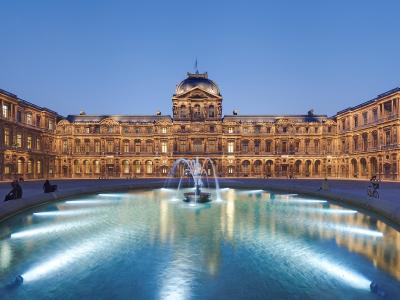
The Louvre Museum
World's largest art museum in historic Paris palace
From €22 Guided Experiences · Historic Architecture
Questions people ask
Quick Facts
Best Time to Visit
April to June and September to October offer mild weather and fewer crowds for optimal exploration.