







- Admission
- Free
- Hours
- Open 24 hours a day, 7 days a week
- Where
- Arbois, Franche-Comté
- Directions
- Directions
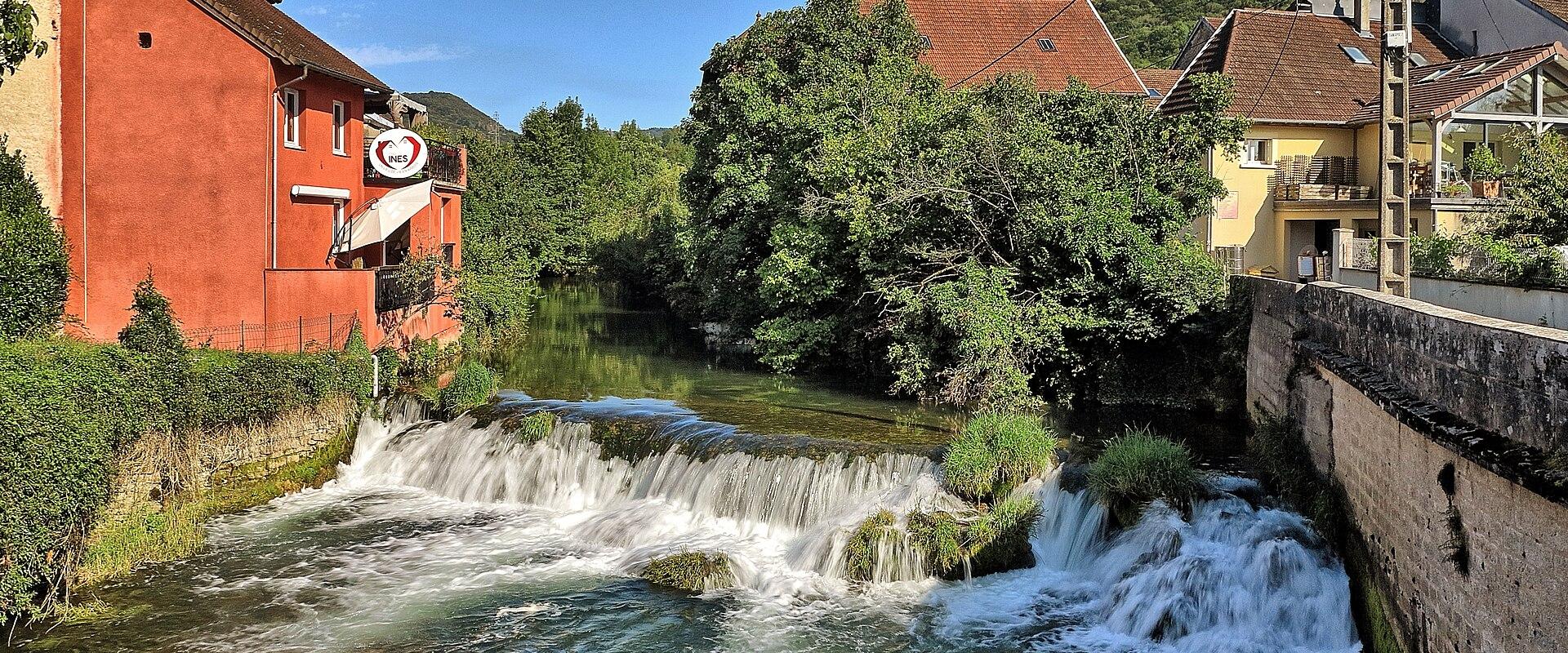
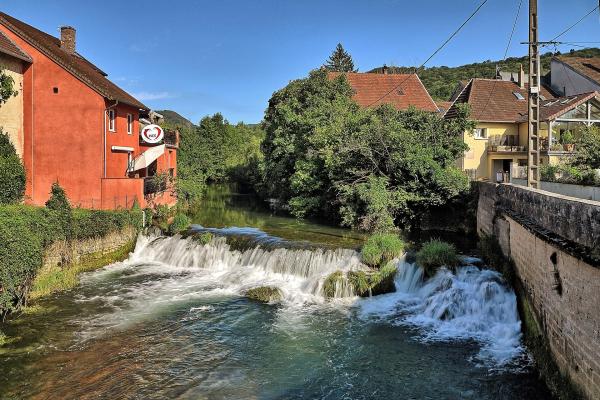
The Cuisance is the small river that runs through the town of Arbois, in the Jura, and its bridge in the old centre is among the prettiest spots in the town. The river is short, only a few kilometres long, but it is lively. It rises from a spring at the head of a reculée, one of the deep, steep-sided valleys that cut into the edge of the Jura plateau, at Les Planches-près-Arbois, a few kilometres upstream, where it emerges from a cave at the foot of a high cliff and tumbles over a waterfall. From there it flows down through the vineyards to Arbois, where it passes under the old bridges and between the houses of the old town on its way toward the plain of the Bresse. The water is clear and fast, and the sound of it is part of the atmosphere of the town.
The bridge, which is also called the Pont des Capucins, is an old stone structure of arches that crosses the river near the centre, a short walk from the town hall square. Its date is usually given as the seventeenth century, and the name recalls a convent of Capuchin friars that once stood nearby. From the bridge you see the river framed by houses whose upper floors lean out over the water, with balconies, galleries and window boxes, and the old mills and tanneries that once used the power of the water. A fragment of an older arch of paved stone can be seen nearby, a reminder that there has been a crossing here for a very long time. The scene is photogenic in the morning light, and on a quiet evening it has a romantic feeling that is often mentioned by visitors.
The Cuisance is part of the story of the town and of its best-known resident. Louis Pasteur grew up in Arbois, where his father ran a tannery on the banks of the river, and the family house, which is preserved as a museum and stands next to the water, retains the laboratory in which he carried out experiments on fermentation, including the study of wine, in the 1860s and 1870s. The river that powered the tannery is therefore linked to the beginnings of modern microbiology.
The bridge can be visited at any time of the day or night, and there is no charge. It is part of a short walk through the town that begins at the Place de l'Hôtel de Ville and takes in the church of Saint-Just, with its onion-shaped bell tower, and the Musée du Vin et du Pays Arboisien in the Château Pécauld, which tells the story of Jura wine, with its famous vin jaune, vin de paille and the red grapes Poulsard and Trousseau. The Parc de la Combe and the Château des ducs de Bourgogne are close, and a path leads along the river upstream. A trip to the source, the Reculée des Planches, with its waterfall and caves, makes a good half-day outing.
The bridge suits walkers, photographers and wine lovers, and it is best at the end of the afternoon.
Categories
More photos coming soon
Hours & Fees
- Open
- Open 24 hours a day, 7 days a week
- Admission
- Free
Hours and prices change, especially out of season. Check with the venue before you go.
Nearby Attractions
Other places to visit in Arbois
Château des ducs de Bourgogne
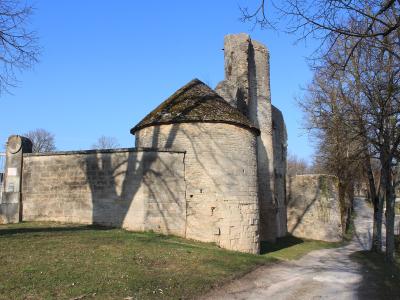
13th-century fortress ruins in Arbois
Historic Architecture
Musée du Vin et du Pays Arboisien
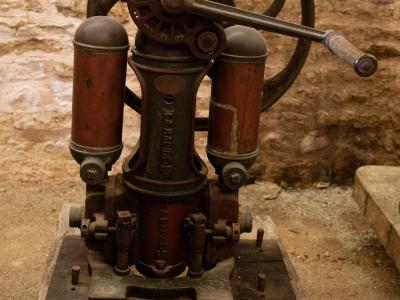
Château Pécauld museum tracing 1,000 years of Jura viticu...
Food & Wine · Historic Architecture
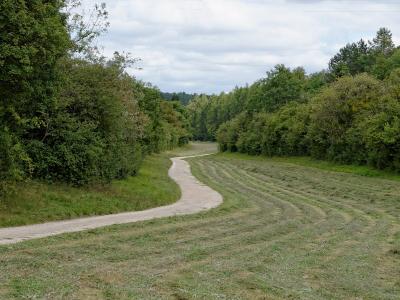
Parc de la Combe
Historic park in Arbois wine town
Nature & Parks
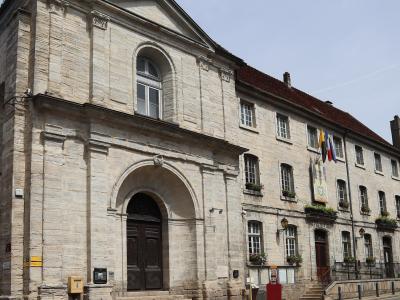
Place de l'Hôtel de Ville
Town hall square in the Jura wine capital
Historic Towns · Squares
Questions people ask
Quick Facts
Best Time to Visit
Late June to early September offers warm weather and ideal conditions for vineyard exploration and wine tasting.