



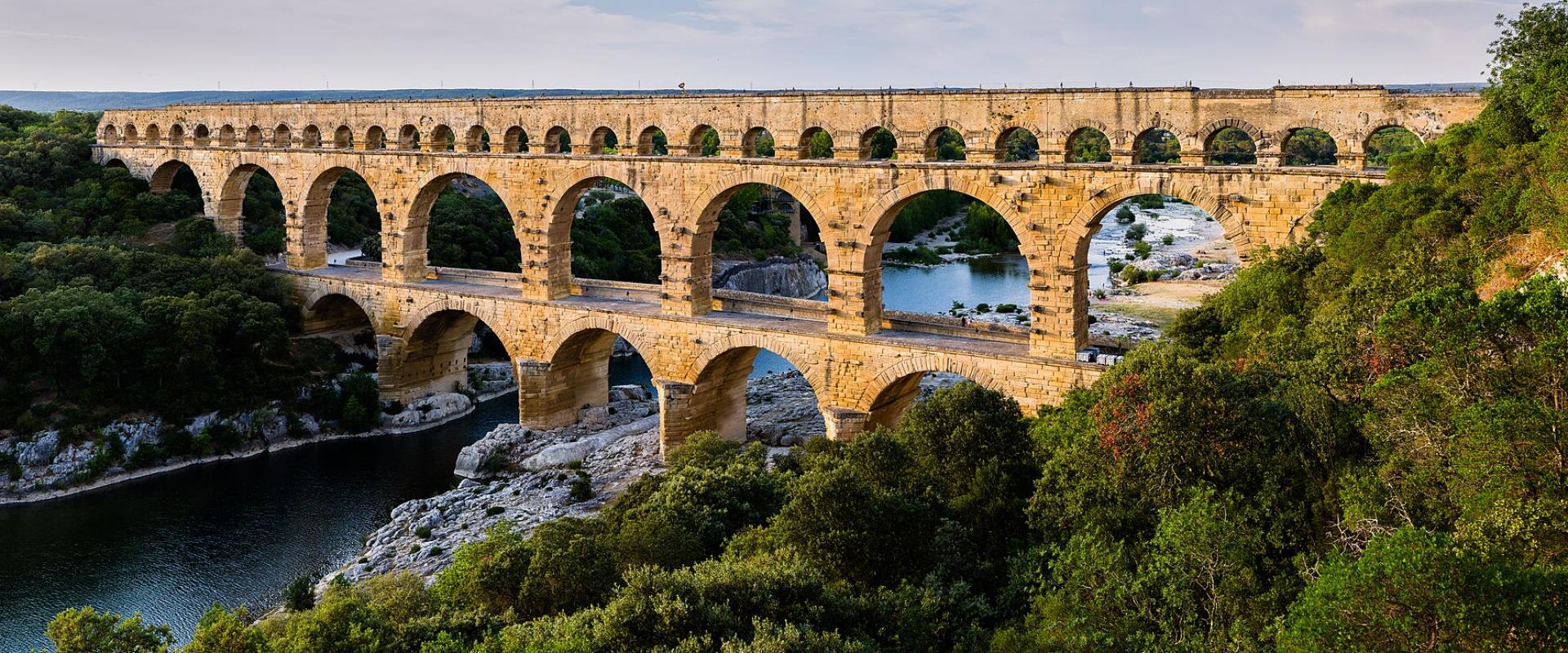
Pont du Gard
2,000-year-old Roman aqueduct bridge
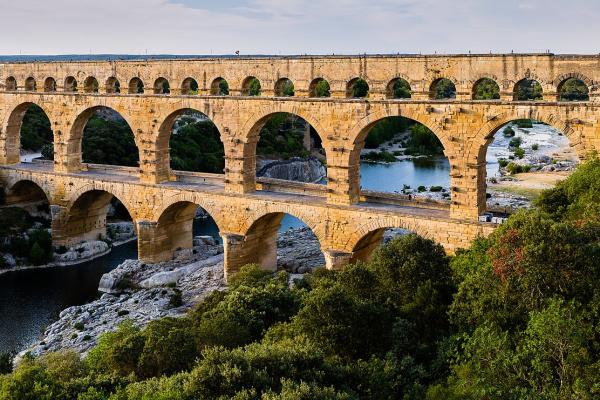
The Pont du Gard is a 2,000-year-old Roman aqueduct bridge located in Vers-Pont-du-Gard, near Uzès, France. Recognized as a UNESCO World Heritage Site since 1985, it is the highest of the Roman Empire’s aqueducts, standing 50 meters high and 275 meters long. The site spans 165 hectares and draws over 800,000 visitors annually.
The site is open year-round from 8:00 AM to 8:00 PM, with parking prohibited after midnight. It is pedestrian-only, allowing walkers and cyclists. The site is fully accessible to people with reduced mobility, offering dedicated parking, easy pathways, and free wheelchair loans. General access to the site is free; entrance fees apply only to parking, educational areas, guided tours, and workshops. The "Essential Pass Up Offer" grants free entry to museum spaces, excluding a €9 parking fee.
Cultural venue hours vary by season, typically running from 9:00 AM to 7:00 PM in spring/autumn and 9:00 AM to 8:00 PM in summer. The ticket office closes as early as 5:00 PM in winter months, so visitors are advised to arrive at least 50 minutes before closing. The monument is illuminated at dusk from May 15 to September 20, 2026. A sound and light show occurs from July 4 to August 30, 2026, at 10:30 PM.
Key features include a museum, cinema, family-friendly activities, and guided tours to the top of the aqueduct. The site also hosts seasonal events, such as summer evening light shows with video mapping, concerts, and workshops. For specific details on opening hours and admission, visitors are directed to the official website (pontdugard.fr). This landmark offers a profound insight into Roman engineering and remains a major cultural attraction in the Provence region.
Categories
More photos coming soon
Hours & Fees
Hours
Site open year-round 08:00-20:00. Cultural venue: 09:00-19:00 (spring/autumn) or 09:00-20:00 (summer
Admission
Free general access; fees apply for parking, tours
Nearby Attractions
Other places to visit in Uzes

Frequently Asked Questions
Quick Facts
Best Time to Visit
May to June and September to October offer mild weather and fewer crowds for optimal exploration.