







- Admission
- Free entry
- Hours
- Daily 10:00 to 18:30
- Where
- Paris, Île-de-France
- Directions
- Directions
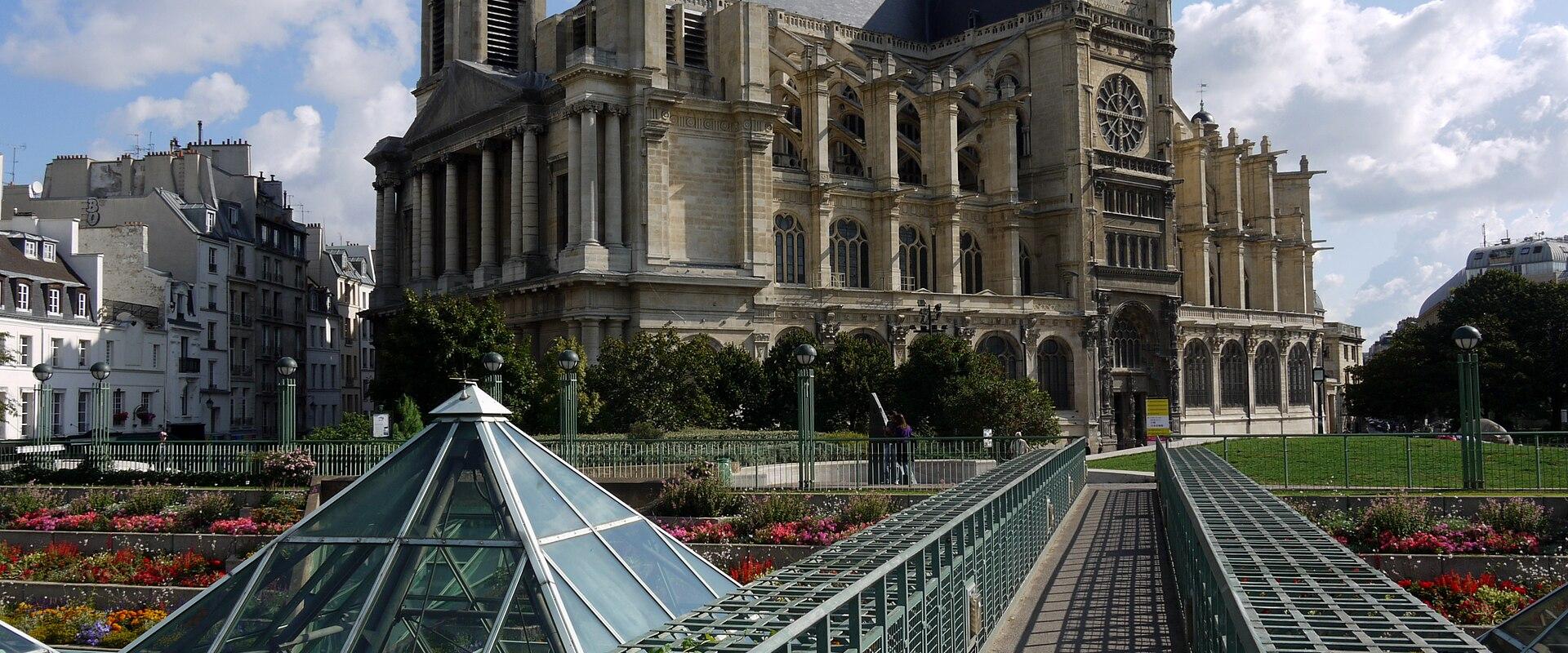
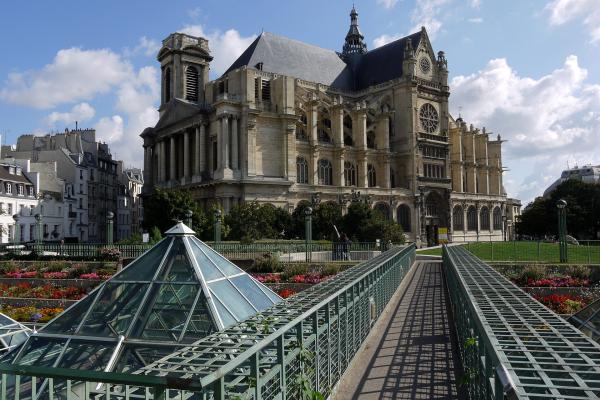
The Église Saint-Eustache is one of the great churches of Paris, a vast building that stands at the edge of the Les Halles district, in the first arrondissement, and rivals Notre-Dame in size. It is about a hundred metres long and thirty-three metres high inside, the second largest church in the city after the cathedral, and it was built over a century, from 1532 to 1632, at a time when architecture was changing from Gothic to Renaissance. The result is a rare combination: the plan, the soaring nave and the flying buttresses are Gothic, while the details, such as the columns, the capitals and the decoration, follow the classical vocabulary of the Renaissance.
The church was built on the site of a chapel for the great market that stood here, Les Halles, the central market of Paris for eight centuries, and it was the parish church of the merchants and of the royal court, which lived nearby in the Louvre. Its parishioners included many famous figures. The playwright Molière was baptised here in 1622, and Cardinal Richelieu in 1585, and the composer Jean-Philippe Rameau is buried in the church. In 1778, the funeral of Mozart's mother, who had died while the young composer was in Paris, was held at Saint-Eustache. The church also saw many great ceremonies, including the funerals of important figures of the court.
Inside, the visitor is struck by the height and the light. The nave rises on tall columns to vaulting that echoes that of Notre-Dame, and the choir has a ring of chapels, each decorated by different artists. The painted decoration includes works by artists of the seventeenth and nineteenth centuries, and the stained glass, some of it from the seventeenth century, adds colour. A modern note is provided by a work by the American artist Keith Haring, a triptych altarpiece called The Life of Christ, which he made in 1990, shortly before his death, and which gives the church a surprising contemporary touch. Outside, near the entrance, a large stone head and hand by the sculptor Henri de Miller, called L'Écoute, symbolising listening, has become a landmark of the square.
The church is famous for its music. Its great organ, with about eight thousand pipes, is one of the largest in France, and recitals are given on Sunday afternoons, drawing music lovers from around the world. The choir sings at Mass, and concerts are held in the nave, taking advantage of the acoustic. Entry to the church is free, and it is open daily, though visitors should be quiet during services.
The church stands in a lively part of the city. The Forum des Halles, a modern shopping centre built on the site of the old market, is next door, the Centre Pompidou and the Louvre are a short walk away, and the Jardin du Palais Royal and the Conciergerie can be reached on foot. The Rue Montorgueil, a pedestrian market street lined with cafés and food shops, runs close by. The church suits architecture and music lovers and anyone seeking a quiet space in the middle of Paris. Allow half an hour to an hour.
Categories
More photos coming soon
Hours & Fees
- Open
- Daily 10:00 to 18:30
- Admission
- Free entry
Hours and prices change, especially out of season. Check with the venue before you go.
Nearby Attractions
Other places to visit in Paris
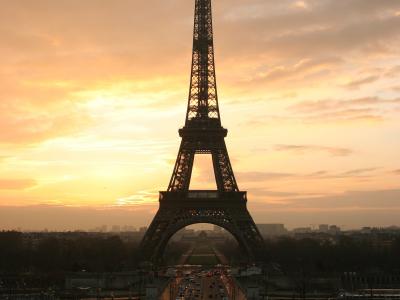
Eiffel Tower
324m iron lattice tower built for 1889 World's Fair
From €3.80 Historic Architecture · Towers
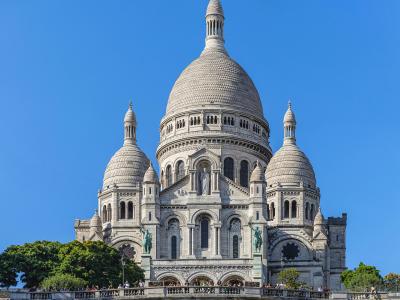
Montmartre and Sacré-Cœur
White basilica atop Montmartre hill
Free Guided Experiences · Historic Architecture
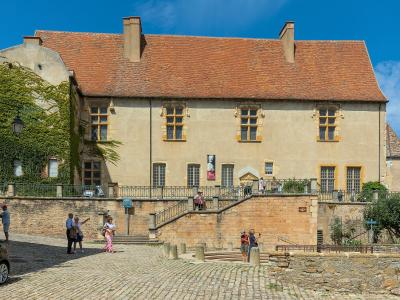
Cluny Museum (Musée de Cluny)
Medieval abbey and museum in Burgundy
From €8 Historic Architecture · Museums & Culture
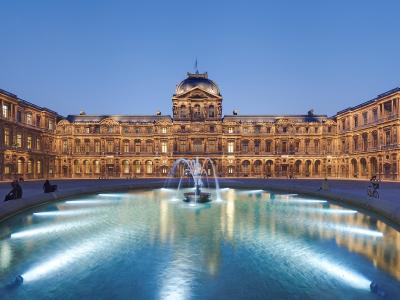
The Louvre Museum
World's largest art museum in historic Paris palace
From €22 Guided Experiences · Historic Architecture
Questions people ask
Quick Facts
Best Time to Visit
April to June and September to October offer mild weather and fewer crowds for optimal exploration.