







- Admission
- Free admission
- Hours
- Daily 8:30 am to 7:45 pm (or 7:30 pm); Organ recitals Sundays 11:30 am-12:05 pm
- Where
- Paris, Île-de-France
- Directions
- Directions
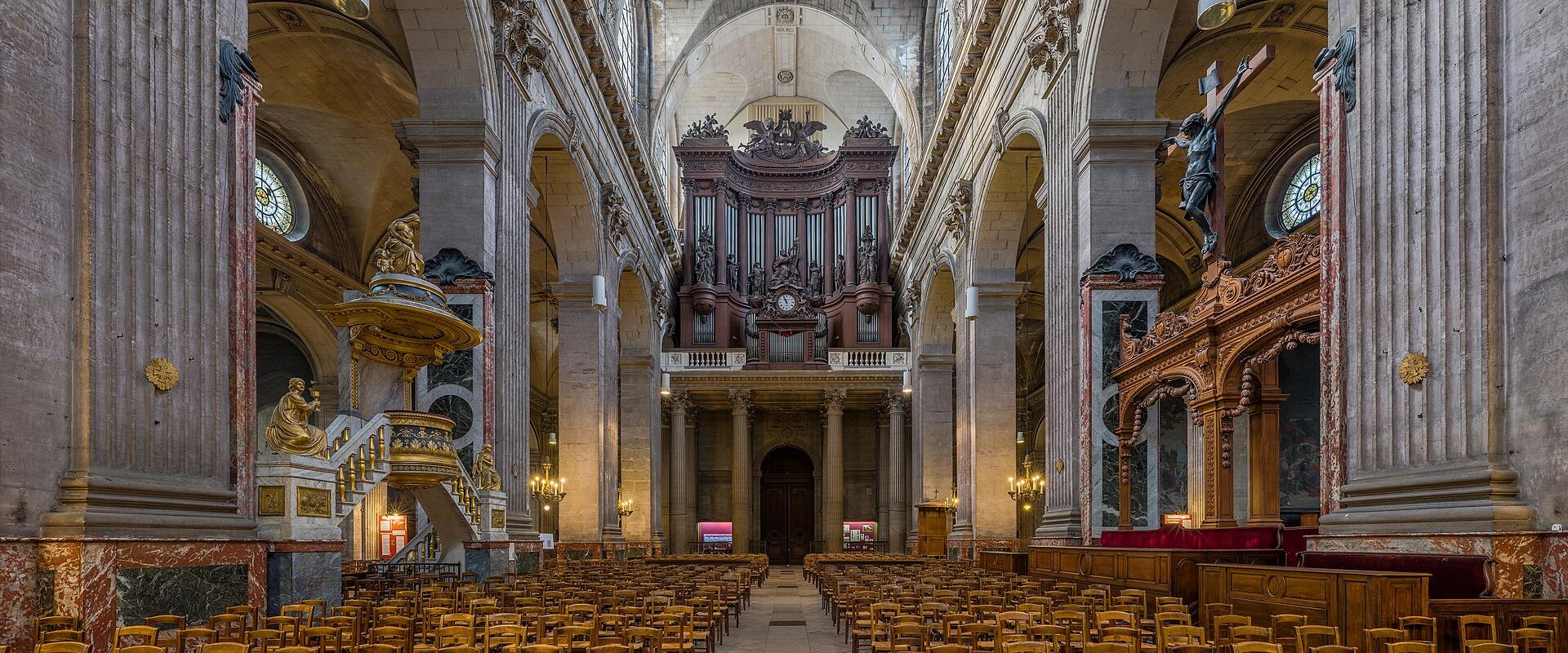
The church of Saint-Sulpice stands on a quiet square in the sixth arrondissement of Paris, near the Luxembourg Gardens, and it is the second largest church in the city after Notre-Dame. Its construction was begun in 1646 on the site of an older church, and it took more than a century to build, with several architects working in turn, which explains why the building shows a mixture of styles. The great west front, added in the 1730s by Giovanni Servandoni, has two storeys of classical columns and two towers, but the towers do not match: the north tower was left unfinished, and its plain stone contrasts with the more elaborate south tower, which gives the facade its odd, lopsided look.
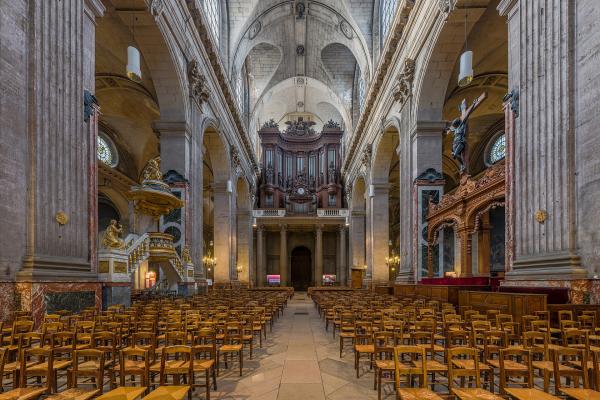
The interior is vast and solemn, with plain stone walls and high vaults. The most famous works of art are the murals by Eugène Delacroix in the Chapelle des Saints-Anges, painted between 1855 and 1861 and among the master's last great works. They show Jacob wrestling with the angel and Heliodorus being driven from the Temple, in rich colours and with great energy, and they remain a place of pilgrimage for lovers of painting. The church also holds a huge organ, with a case dating from the eighteenth century and an instrument rebuilt by Aristide Cavaillé-Coll in 1862, which is one of the most celebrated organs in France and is used for regular concerts and for the Sunday services, where visitors can hear it. Many famous organists have played here.
A scientific curiosity is set into the floor of the transept: the gnomon, a brass line running across the floor to a marble obelisk, installed in the 1740s on the orders of the parish priest, Languet de Gergy. A beam of sunlight entering through a small opening in a window falls on the line at noon, and its position through the year allowed the clergy to fix the date of the spring equinox, and so the date of Easter. This meridian line gained a modern reputation through popular fiction, though the clergy's purpose was strictly practical.
Outside, the Place Saint-Sulpice has a graceful fountain from the 1840s, the Fontaine des Quatre-Évêques, with statues of four seventeenth-century preachers, and the square's cafés make a pleasant place to rest. In the surrounding streets, you find elegant shops, the Luxembourg Gardens a short walk away, and many other sights of Paris, such as the Eiffel Tower, the Louvre and the Marché d'Aligre, are within reach by metro.
Entry is free, and the church is open daily. It suits art lovers, music lovers and curious visitors. Keep quiet during services and check the times of organ concerts.
Categories
More photos coming soon
Hours & Fees
- Open
- Daily 8:30 am to 7:45 pm (or 7:30 pm); Organ recitals Sundays 11:30 am-12:05 pm
- Admission
- Free admission
Hours and prices change, especially out of season. Check with the venue before you go.
Nearby Attractions
Other places to visit in Paris
Eiffel Tower
324m iron lattice tower built for 1889 World's Fair
From €3.80 Historic Architecture · Towers
Montmartre and Sacré-Cœur
White basilica atop Montmartre hill
Free Guided Experiences · Historic Architecture
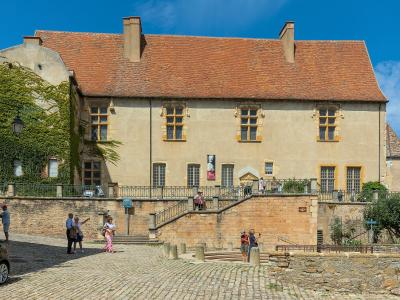
Cluny Museum (Musée de Cluny)
Medieval abbey and museum in Burgundy
From €8 Historic Architecture · Museums & Culture
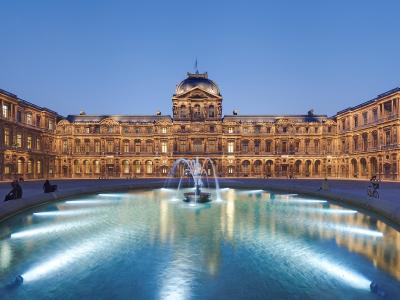
The Louvre Museum
World's largest art museum in historic Paris palace
From €22 Guided Experiences · Historic Architecture
Questions people ask
Quick Facts
Best Time to Visit
April to June and September to October offer mild weather and fewer crowds for optimal exploration.