







- Where
- Poitiers, Aquitaine
- Directions
- Directions
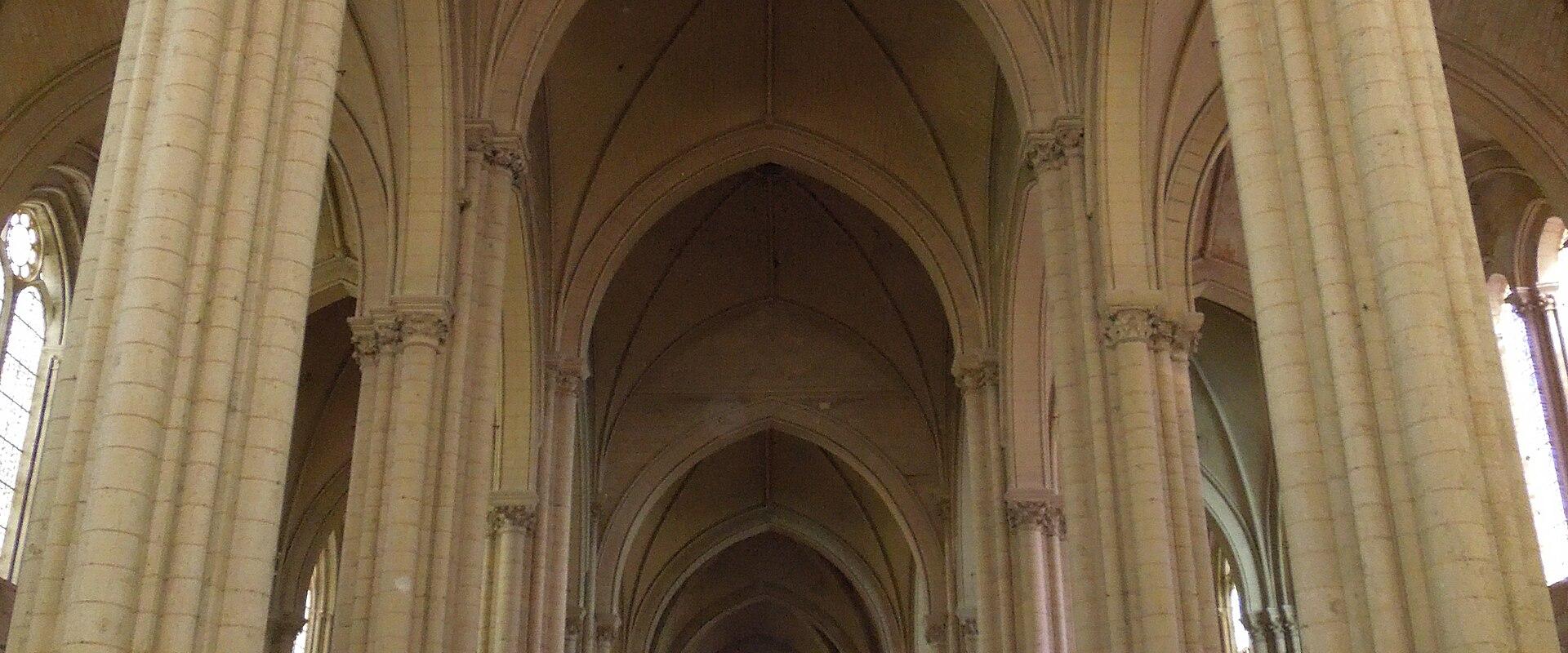
The Cathédrale Saint-Pierre de Poitiers, also known as the Basilica of Saint-Pierre, is the largest medieval monument in Poitiers and the seat of the city's archbishop. It stands at the eastern edge of the old town on a rise overlooking the Boivre valley, and its massive west front, with two unequal towers, is the first thing you see on the approach. The cathedral gives a clear picture of how the Plantagenet kings of England, who held the region in the twelfth century, built in the west of France.
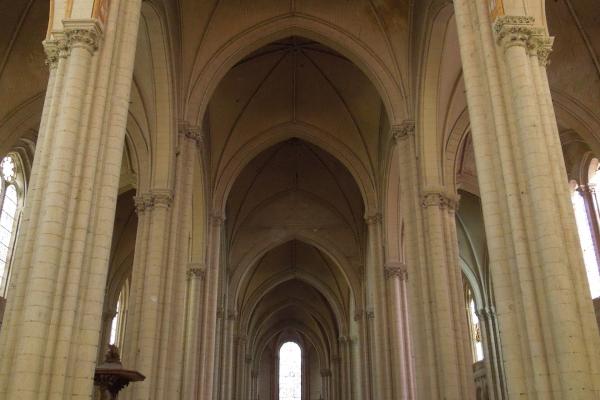
The church was begun in 1162 under Henry II of England and his wife Eleanor of Aquitaine, who was the Duchess of Aquitaine and who often resided at Poitiers. It replaced an earlier cathedral, and construction continued through the thirteenth century and into the fourteenth, with the west front completed later still. The style is known as Angevin or Plantagenet Gothic, a regional approach that stands apart from the Gothic of the Île-de-France. Its hallmark is the use of domed, bulging vaults, in which the ribs rise from the capitals in a sweeping curve, and the effect is of a broad, calm space.
The key feature of the interior is its form as a hall church. The nave and aisles are of almost equal height, so that the whole interior is one vast space, which is nearly ninety metres long. There are no clerestory windows high above the nave, and the light enters from the windows in the outer walls, creating a soft, even illumination. The stone has a pale golden tone that enhances the effect. In the apse, the oldest stained glass in the cathedral includes a twelfth-century Crucifixion window, one of the oldest in France, which preserves rich blues and reds and shows the Romanesque style of glass painting. The wooden choir stalls, dating from the thirteenth century, are among the earliest surviving Gothic stalls in France.
The organ, one of the masterpieces of eighteenth-century French organ building, was made in the 1780s by François-Henri Clicquot, of the famous family of organ builders, and its case and pipes fill the west end. It is regularly used for concerts and services, and a recital here is a good way to hear the acoustic of the nave.
Poitiers has many other medieval monuments close by. The Baptistère Saint-Jean, one of the oldest Christian buildings in France, dating from the fourth century, is a short walk from the cathedral, and the Église Notre-Dame-la-Grande is famous for the sculpted Romanesque facade. The Musée Sainte-Croix covers art and archaeology, and the Rue de la Tranchée and the old streets are good for strolling. The cathedral suits history and architecture lovers and anyone interested in the Plantagenet period. Allow about an hour, and check the opening times, since services take priority.
Categories
More photos coming soon
Nearby Attractions
Other places to visit in Poitiers
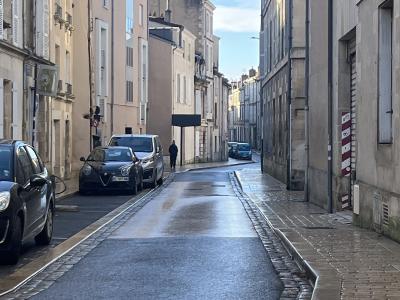
Rue de la Tranchée
Historic Poitiers street near Eleanor of Aquitaine's palace
Urban Exploration
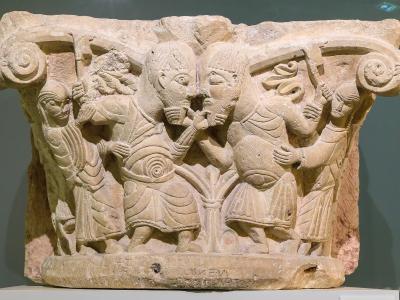
Musée Sainte-Croix
Poitiers' largest museum of regional archaeology
Historic Architecture · Museums & Culture
Église Saint-Jean
4th-century Christian monument with Gothic frescoes
Architectural Landmarks · Churches
Questions people ask
Quick Facts
Best Time to Visit
Mid-June to mid-September offers warm weather and ideal conditions for outdoor activities and sightseeing.