







- Where
- Bonifacio, Corsica
- Directions
- Directions
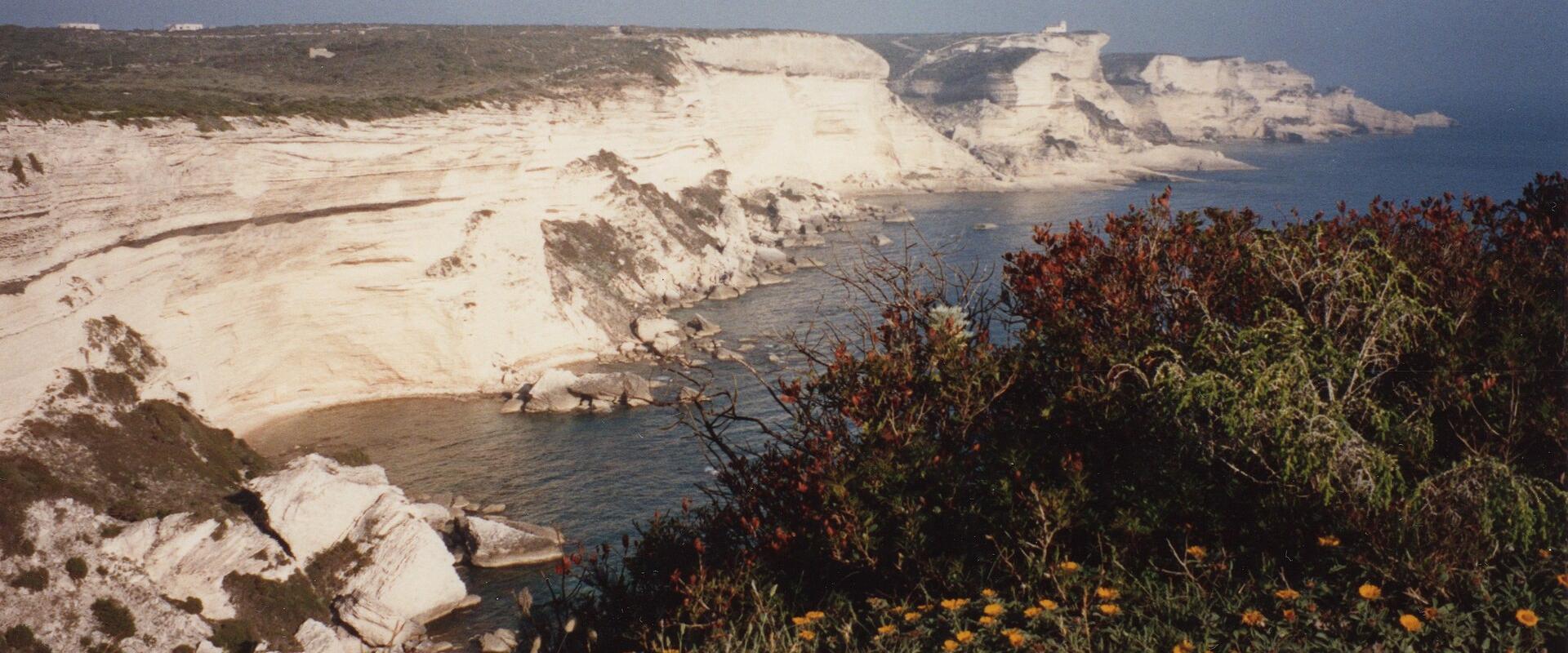
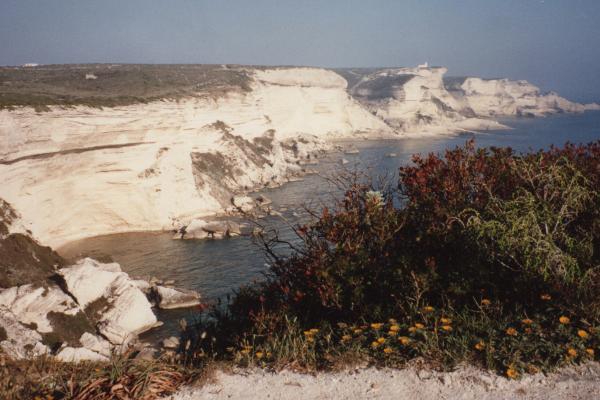
The cliffs of Bonifacio form a long wall of white limestone on the far southern tip of Corsica, and they are among the most dramatic coastal formations in the Mediterranean. They rise about 70 metres straight out of the sea, and on their summit stands the old town of Bonifacio with the walls and houses of the citadel, perched so close to the edge that some buildings seem to overhang the void. The rock is a pale, almost white limestone, of the Miocene period, and the waves have eaten away the base of the cliffs, hollowing out notches and caves at the waterline and leaving overhangs above. Locally the cliffs are known as the Sceppi.
The cliffs also form a frontier of sorts, between the open Mediterranean to the west and the waters of the Tyrrhenian Sea to the east, in the Strait of Bonifacio, which separates Corsica from Sardinia by about twelve kilometres. On a clear day, the coast of Sardinia can be seen across the water, with its low hills and its own cliffs, and the strait is known for strong winds and currents that have caused many shipwrecks. The waters on both sides are protected as part of the nature reserve of the Bouches de Bonifacio, created to safeguard the rich marine life and the seabirds that nest on the rocks.
There are several ways to enjoy the cliffs. The paths along the cliff top, starting from the citadel, give a view along the coast, with the sea a deep blue-green far below, and the best sights are at the Cap Pertusato lighthouse, at the southern edge of the island, which can be reached on foot in about an hour from the town. At the end of the day, the light turns the rock warm and gold. From the water, a boat tour, leaving from the port, shows the cliffs from below, with their overhangs, sea caves and the town seemingly hanging above. One of the sites on the cliff is the Grain de Sable, a solitary pillar of eroded rock that stands apart from the main wall. The long staircase of the king of Aragon descends the cliff from the citadel to the sea, with nearly two hundred steps cut into the rock.
Be careful near the edge. The rock is soft and the cliff top can crumble, so keep to the marked paths and stay behind barriers, and do not walk close to the overhangs, which can be unstable. The wind can be strong, and in summer it is hot with little shade, so bring water and a hat.
The cliffs suit walkers, photographers and boat lovers. The Citadelle de Bonifacio, the Collégiale Saint-Antoine, the Porte d'Aval and the Old Port are nearby, and prehistoric sites and sea caves are in the surroundings.
Categories
More photos coming soon
Nearby Attractions
Other places to visit in Bonifacio
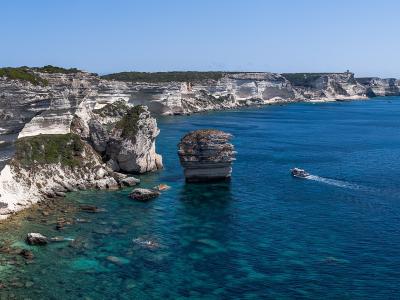
Citadelle de Bonifacio
Medieval citadel with limestone cliffs and historic stair...
Free Cliffs · Fortresses
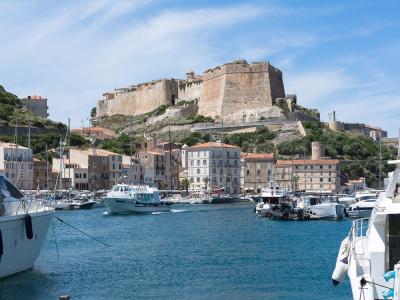
Old Port (Vieux Port)
Fjord-like harbor carved into white limestone cliffs
Harbors · Heritage Trails
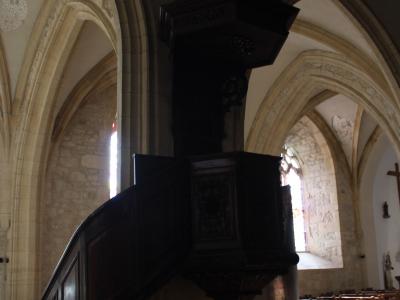
Collégiale Saint-Antoine
13th-century collegiate church in Bonifacio
Free Historic Architecture
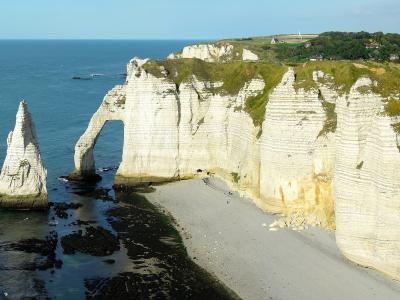
Porte d'Aval
Historic gateway to Bonifacio's Old Town
Historic Architecture · Urban Exploration
Questions people ask
Quick Facts
Best Time to Visit
Late June to late August offers warm weather and ideal conditions for beach activities and boat tours.