







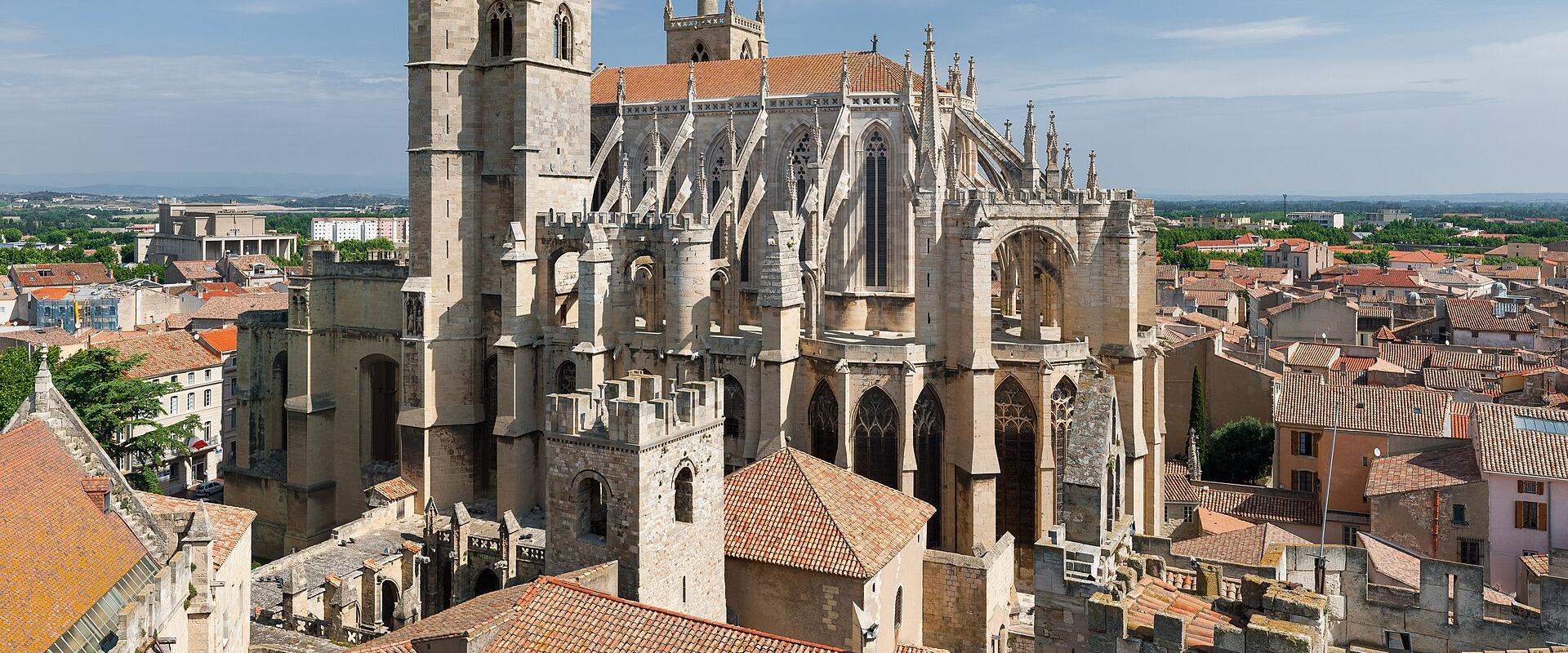
Cathédrale Saint-Just et Saint-Pasteur
Unfinished High Gothic cathedral with vaults over 40m
- Admission
- 15-day pass tickets are available
- Where
- Narbonne, Languedoc-Roussillon
- Directions
- Directions
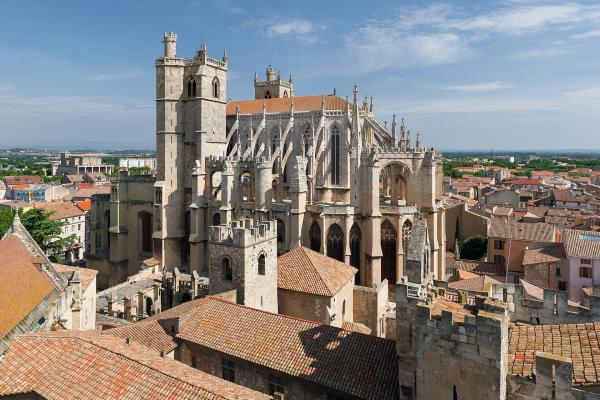
Narbonne was the first Roman colony in Gaul, founded in 118 BC, and for centuries it was one of the great cities of the Mediterranean coast. Its cathedral, dedicated to the child martyrs Saint Just and Saint Pasteur, is a monument to the ambitions of its archbishops in the Middle Ages, and it is unfinished. The high choir, begun in 1272, is a masterpiece of the High Gothic style in the south of France, with vaults rising more than forty metres above the floor, making it one of the tallest in the region. The nave that should have followed was never built.
The reason is partly political and partly practical. To extend the church to the west, the builders would have had to pull down a section of the old Roman city walls, which were still serving as part of the town's defences, and the town's consuls refused to allow it. The cathedral thus remained a magnificent choir and transept with a temporary closing wall, and the surviving ensemble has an impressive and slightly strange scale. Visitors who enter the church feel the height immediately, and the soaring proportions of the choir, with its tall windows, are impressive.
Within the choir you will find a number of treasures. The axial chapel dedicated to Our Lady of Bethlehem contains a polychrome stone altarpiece, and the other chapels hold altarpieces, paintings and tombs from various periods. The Treasury displays liturgical objects, ivory carvings, goldsmiths' work and a collection of tapestries. Organs, choir stalls and stained glass contribute to the sense of richness, although the cathedral remains light and uncluttered. The cloister, reached from the church, is a calm space that offers a view back to the walls of the choir.
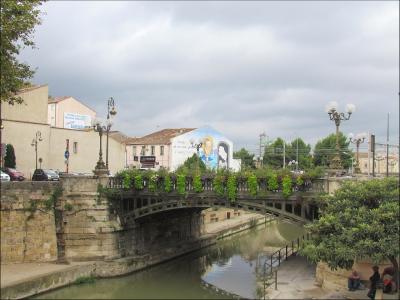
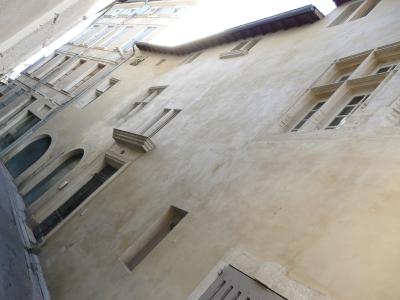
The cathedral is part of a larger complex. Next to it is the Archbishops' Palace, an enormous fortified building that dominates the Place de l'Hôtel de Ville, and the combination of church and palace shows how important the archbishops were in the political life of the Languedoc. Elsewhere in Narbonne you can walk along the Canal de la Robine, an extension of the Canal du Midi that crosses the city and is lined with cafés and a covered market, the Halles. The Horreum, an underground Roman storeroom, and sections of the Via Domitia, the oldest Roman road in Gaul, are among the sights that recall the city's Roman past, and the Hôtel de Bernis is a further point of interest.
The cathedral is a good stop for those interested in Gothic architecture and the medieval history of Languedoc. Visiting hours vary through the year and the cathedral may close for ceremonies, so check before visiting. Allow an hour or so for the cathedral, and consider combining it with the palace and the canal for a half-day in the city. The building is more rewarding in good light, when sunshine falls through the high windows into the choir.
Categories
More photos coming soon
Admission Fees
- Admission
- 15-day pass tickets are available
Hours and prices change, especially out of season. Check with the venue before you go.
Nearby Attractions
Other places to visit in Narbonne
Questions people ask
Quick Facts
Best Time to Visit
April to June and September to October offer mild weather and fewer crowds for optimal exploration.