







Musée de la Tapisserie de l'Apocalypse
Largest surviving medieval tapestry in the world
- Hours
- Adjusted based on heat warning levels (yellow, orange, red)
- Where
- Angers, Pays de la Loire
- Directions
- Directions
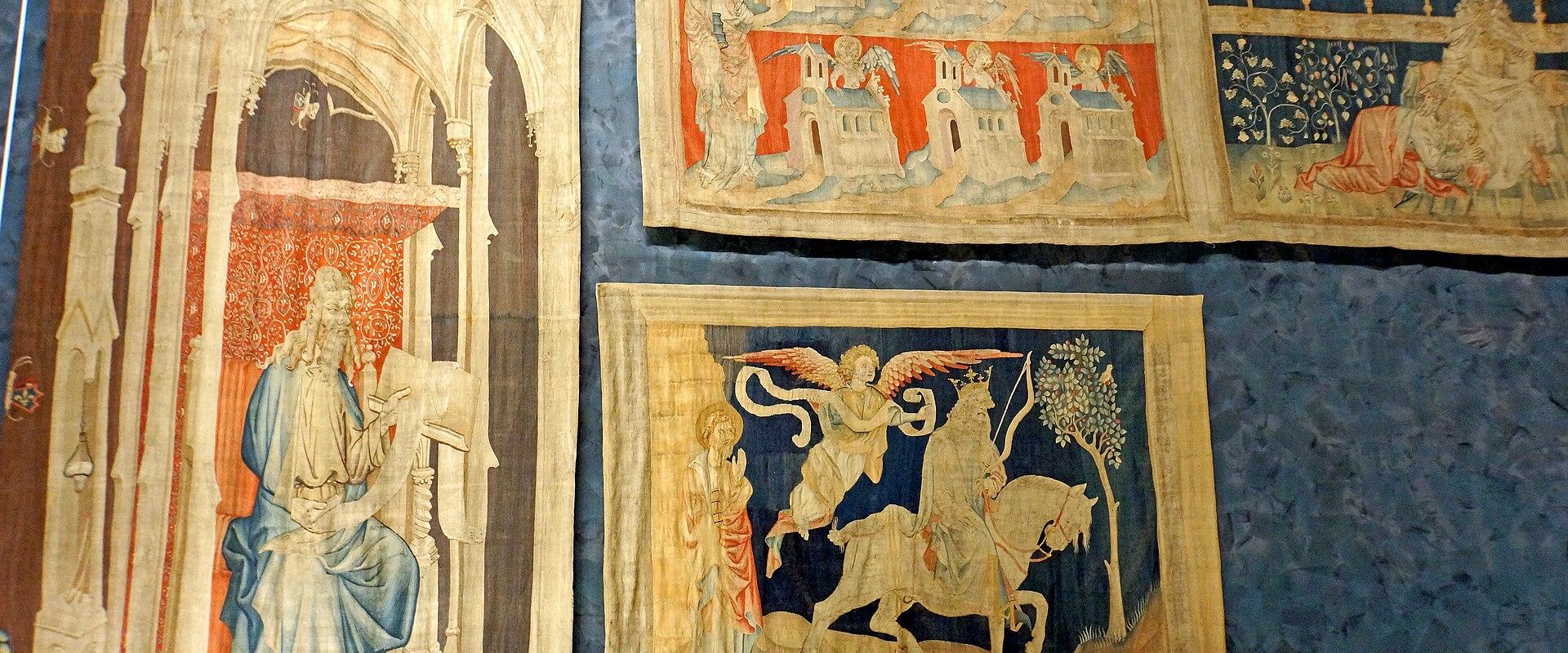
The Apocalypse Tapestry at Angers is the largest surviving medieval tapestry in the world, and it is displayed in a purpose-built gallery inside the Château d'Angers, a fortress of black schist and white tuffeau stone with seventeen heavy towers. The tapestry was commissioned in about 1375 by Louis I, Duke of Anjou, the brother of the French king, and woven in Paris over the next few years in the workshop of Nicolas Bataille, using designs by the painter Hennequin de Bruges, also known as Jean Bondol, who based his compositions on illuminated manuscripts of the Book of Revelation. The work was a statement of princely wealth and ambition, and it was among the most expensive projects of its time.
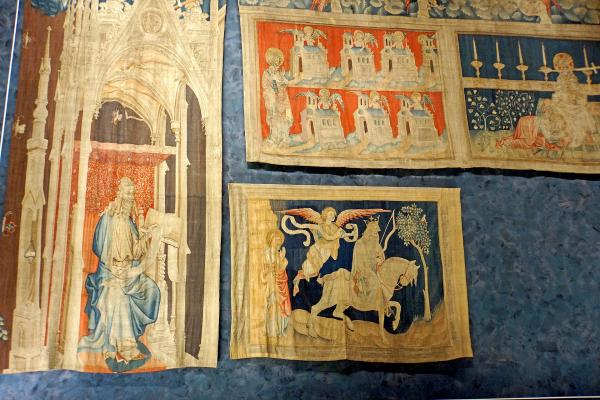
The tapestry illustrates the vision of Saint John in the last book of the New Testament, and it was conceived on a huge scale. It originally comprised six great sections, with a total length of about a hundred metres and a height of some six metres, and each section was divided into scenes that appeared in two rows against alternating red and blue backgrounds. Today around seventy scenes survive, and about half of the original area is preserved. The figures are nearly life-size, and they include angels with trumpets, horsemen, seven-headed dragons, a woman clothed with the sun and the great beast from the sea. The story is told in a way that resembles a medieval comic strip, with each scene introduced by a figure of a reader seated under a canopy.
After the duke's death, the tapestry passed through several hands. In 1480 it was bequeathed to the cathedral of Angers by King René, and it was used on feast days to decorate the church. Later neglect and cutting caused serious losses, and in the nineteenth century it was found in a poor condition and carefully repaired and restored. In 1954 the present gallery opened to show the work in conditions that protect it, and since then the lighting has been kept low, since wool and dyes are sensitive to light. In 1938, the painter Jean Lurçat came to Angers to see it and was inspired to revive the art of tapestry in France, an influence that led to the creation of the museum devoted to his work, the Musée Jean Lurçat et de la Tapisserie Contemporaine, in the old hospital nearby.
The château itself deserves time, with its ramparts, gardens and chapel. The Cathédrale Saint-Maurice, the Musée des Beaux-Arts d'Angers, the Quartier Saint-Aubin and the Place du Ralliement are within a short walk.
Allow an hour for the gallery and another for the château. It suits history lovers and art lovers. Expect low light, and check the opening hours before your visit.
Categories
More photos coming soon
Opening Hours
- Open
- Adjusted based on heat warning levels (yellow, orange, red)
Hours and prices change, especially out of season. Check with the venue before you go.
Nearby Attractions
Other places to visit in Angers
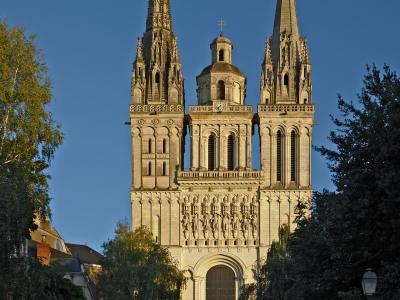
Cathédrale Saint-Maurice
12th-century Gothic cathedral with stained glass
Historic Architecture · Museums & Culture
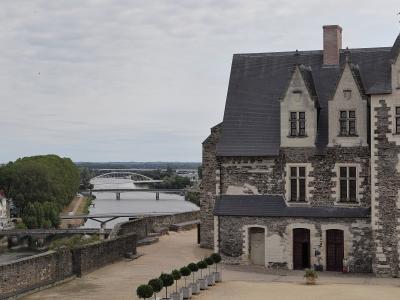
Château d'Angers
Medieval fortress housing the Apocalypse Tapestry
From €11 Castles · Gardens

Quartier Saint-Aubin
Free historic tower with panoramic city views
Guided Experiences · Historic Architecture
Musée Jean Lurçat et de la Tapisserie Contemporaine
Jean Lurçat’s Le Chant du Monde in a 12th-century hospital
From €6 Historic Architecture · Museums & Culture
Questions people ask
Quick Facts
Best Time to Visit
Mid-June to mid-September offers warm weather and ideal conditions for outdoor activities and sightseeing.