







- Where
- Carcassonne, Midi-Pyrénées
- Directions
- Directions
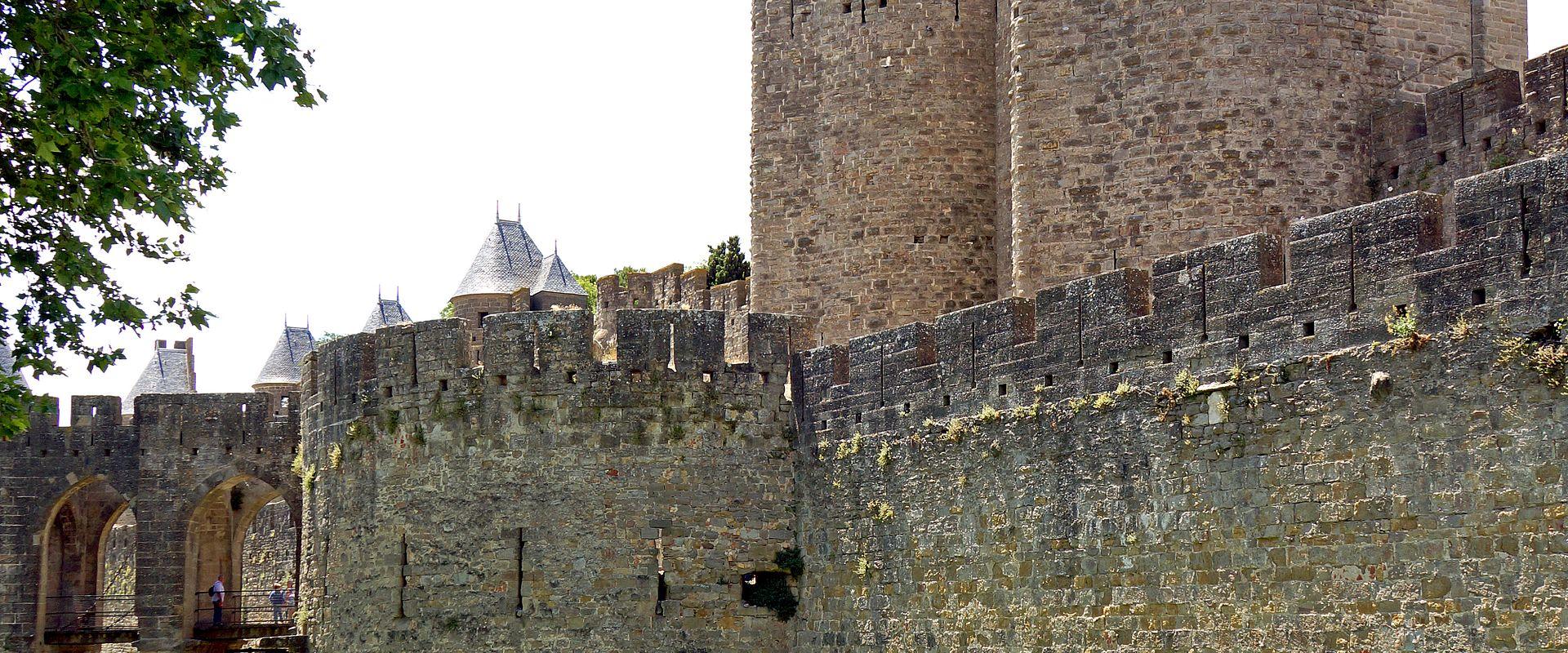
The Porte Narbonnaise is the main gate of the Cité de Carcassonne, the fortified hilltop town in the Aude, and it stands on the eastern side of the walls, facing the road that once led to Narbonne. It is one of the best-known parts of the great fortress of Carcassonne, a UNESCO World Heritage Site. Most visitors to the Cité pass through this gate, since it is the usual route from the car parks and the lower town.
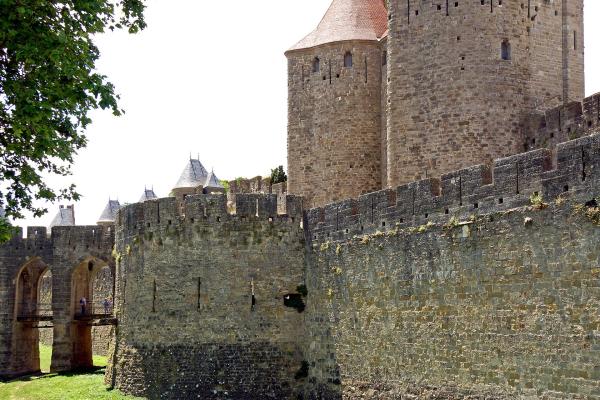
The gate was built in the late thirteenth century, when the French crown, having taken control of the area after the Albigensian Crusade, strengthened the outer walls of the Cité under Philip III and Philip IV. It is a strong defensive structure, designed as a complex rather than a simple opening. Two tall round towers, with thick walls and arrow slits, flank the passage, and the passage is protected by a series of obstacles, including a ditch crossed by a bridge that could be raised, a portcullis and heavy doors. Above the entrance, a projecting parapet with openings, a machicolation, allowed defenders to drop stones and boiling liquids on any attackers who reached the gate. Further defences were provided by a barbican, a walled outwork in front of the gate that forced attackers to approach in a narrow, exposed space.
The present look of the gate owes much to the nineteenth-century restoration directed by the architect Eugène Viollet-le-Duc, who rebuilt the roofs of the towers with pointed slate caps and added wooden galleries, called hourds, to the top of the walls. Some of these choices are debated today, since critics argue that they reflect the architect's ideas rather than the medieval originals, but they gave the Cité the fairy-tale silhouette that has made it famous. Carvings and statues are set above the doorway, and in the passage you can look at the arrangement of the doors and the slots for the portcullis.
Passing through the gate takes you into the lanes of the Cité, which are full of shops, restaurants and houses, and up toward the Château Comtal, the castle at the centre of the fortress, and the Basilica of Saint-Nazaire. Between the two rings of walls lies a walkway, the lices, from which you can see how the defences fit together, and the walls themselves can be explored on guided tours.
The gate is part of the public streets, so it is open at all times and free to pass through, though the best light is in the morning or late afternoon. It is a short walk from the Pont-Vieux and the lower town, the Bastide Saint-Louis, and the Canal du Midi is not far. The gate suits anyone planning a visit to the Cité and is a good place to start to understand how a medieval fortress was defended.
Categories
More photos coming soon
Nearby Attractions
Other places to visit in Carcassonne
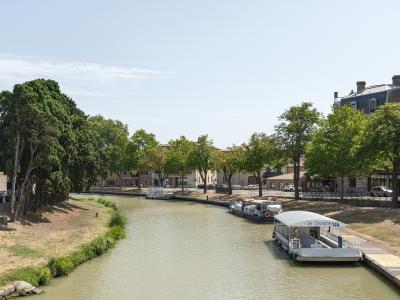
Canal du Midi
UNESCO site with Fresquel aqueduct and locks
Heritage Trails · Historic Towns
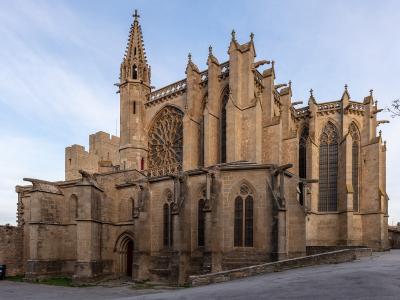
Basilica of Saint-Nazaire
Romanesque and Gothic basilica inside the Cité of Carcassonne
Free Churches · Heritage Trails
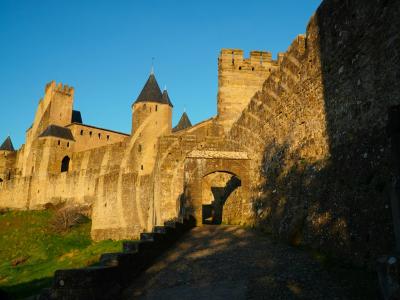
Cité de Carcassonne (The Medieval Fortress)
Double-walled medieval fortress in southern France
Fortresses · Heritage Trails
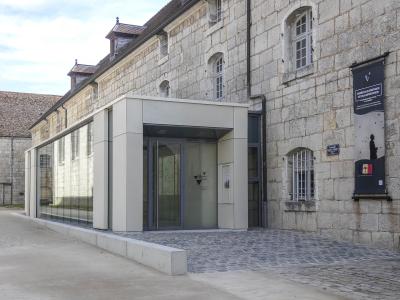
Musée de la Résistance et de la Déportation
Museum of Resistance and Deportation in Carcassonne
History Museums
Questions people ask
Quick Facts
Best Time to Visit
Early July to late August offers warm weather and ideal conditions for outdoor activities and sightseeing.