







- Where
- Quimper, Brittany
- Directions
- Directions
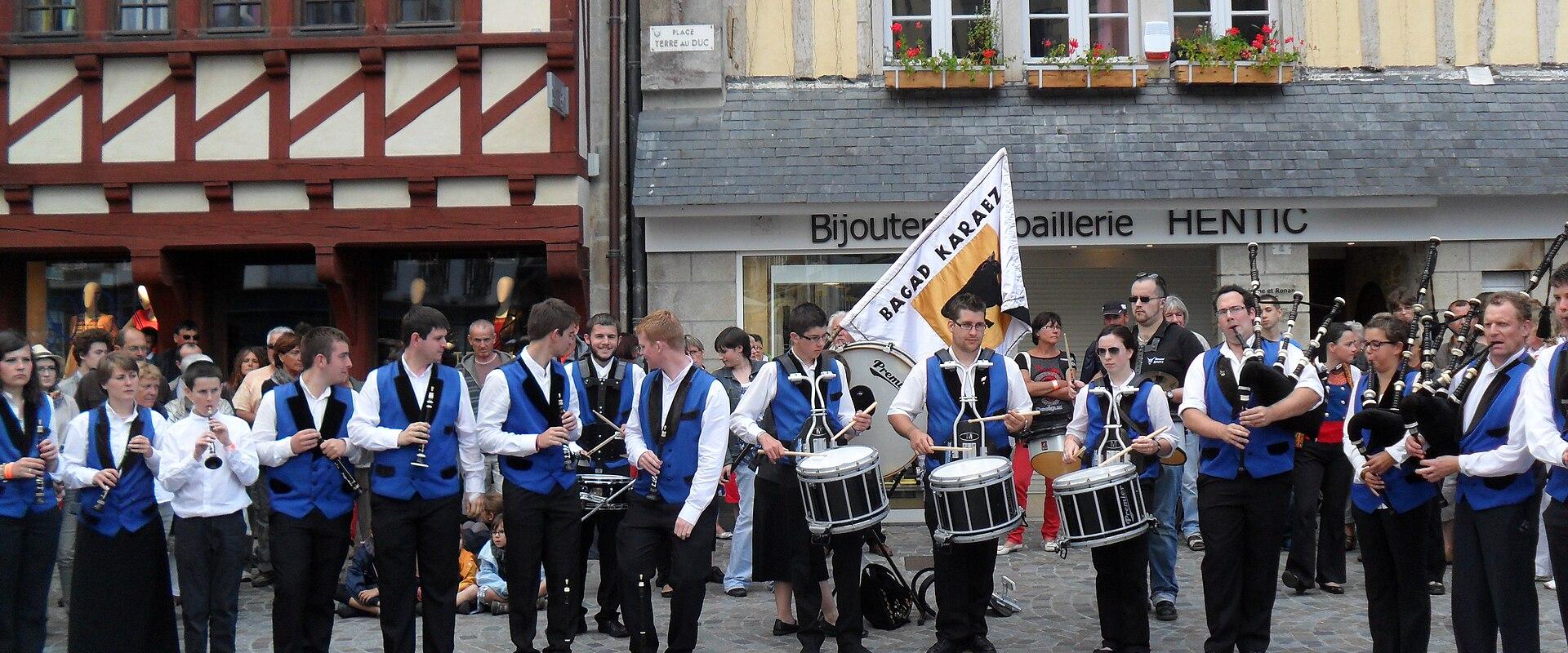
The name Cornouaille belongs to an old Breton kingdom, and in Quimper it is the name that summarises the historic character of the city. The town's name in Breton, Kemper, means the confluence, and it refers to the meeting of the Odet and the Steir rivers, around which the old town grew. Quimper was the capital of Cornouaille, a region of south-western Brittany that took its name, tradition says, from settlers who came from Cornwall in Britain in the early Middle Ages, and the area is still proud of a strong Breton identity. The historic centre, where the cathedral stands, is the centre of that identity, and a walk through it gives a good picture of Breton town life.
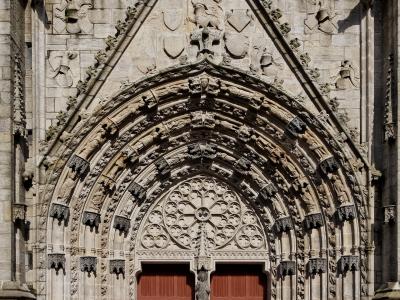
The Cathédrale Saint-Corentin dominates the quarter. It is a Gothic building of the thirteenth to fifteenth centuries, with two tall spires added in the nineteenth century, and a notable feature is the way the nave bends slightly off line, a quirk of its construction that is visible from inside. Between the spires stands a statue of King Gradlon on horseback, the legendary Breton king said to have ruled in the fifth century, who is connected with the story of the drowned city of Ys. Saint Corentin, the first bishop of Quimper, is said to have lived on a single fish that he caught every day in a spring, and that grew back each time, a legend that is still told in the town. The Place de la Cathédrale, in front of the church, is the main gathering point.
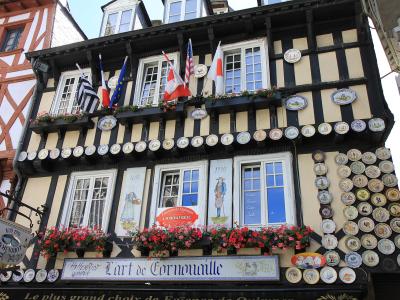
The lanes around the cathedral are lined with half-timbered houses leaning over the street, in the style of old Brittany, and the Rue Kéréon, a pedestrian street, is one of the best examples, with its crêperies, shops and cafés. The Musée Départemental Breton, in the old bishop's palace, tells the story of the region through archaeology, costume and furniture, and the Musée des Beaux-Arts, near the cathedral, holds works that include scenes of Breton life and Pont-Aven painters. The Musée de la Faïence and the Quimper Ceramics factory show the town's well-known pottery.
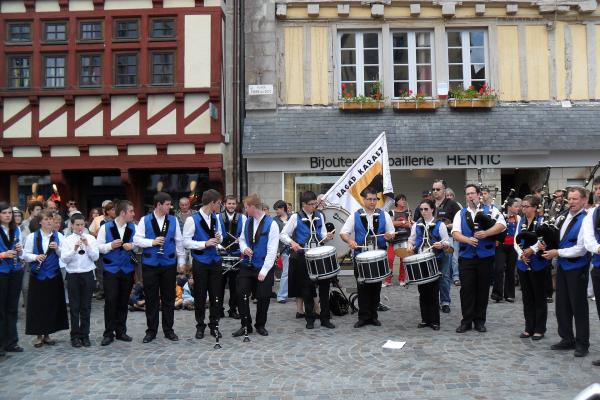
Along the Odet, quays with flower baskets and bridges give a gentle walk, and a path leads up the wooded slope of Mont Frugy, with views over the roofs. Each July, the Festival de Cornouaille fills the town with parades, music and dance, celebrating Breton culture.
The quarter is free to explore and best on foot. It suits culture lovers, walkers and families. The pace is slow, and a crêpe stop is part of the experience.
Categories
More photos coming soon
Nearby Attractions
Other places to visit in Quimper
Quimper Ceramics (Faïencerie)
300-year-old Breton faience factory and museum
Museums & Culture · Craft Workshops
Cathédrale Saint-Corentin
Breton Gothic cathedral with openwork spires
Architectural Landmarks · Churches
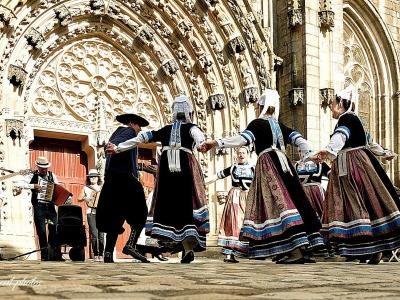
Place de la Cathédrale
Gothic cathedral dominating Quimper's old town
Free Churches · Historic Towns
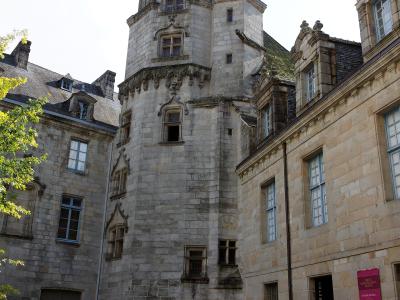
Musée Départemental Breton
16th-century palace housing Breton archaeology and Quimpe...
Historic Architecture · Museums & Culture
Questions people ask
Quick Facts
Best Time to Visit
Late June to early September offers warm weather and ideal conditions for outdoor activities and sightseeing.