







- Where
- Biarritz, Aquitaine
- Directions
- Directions
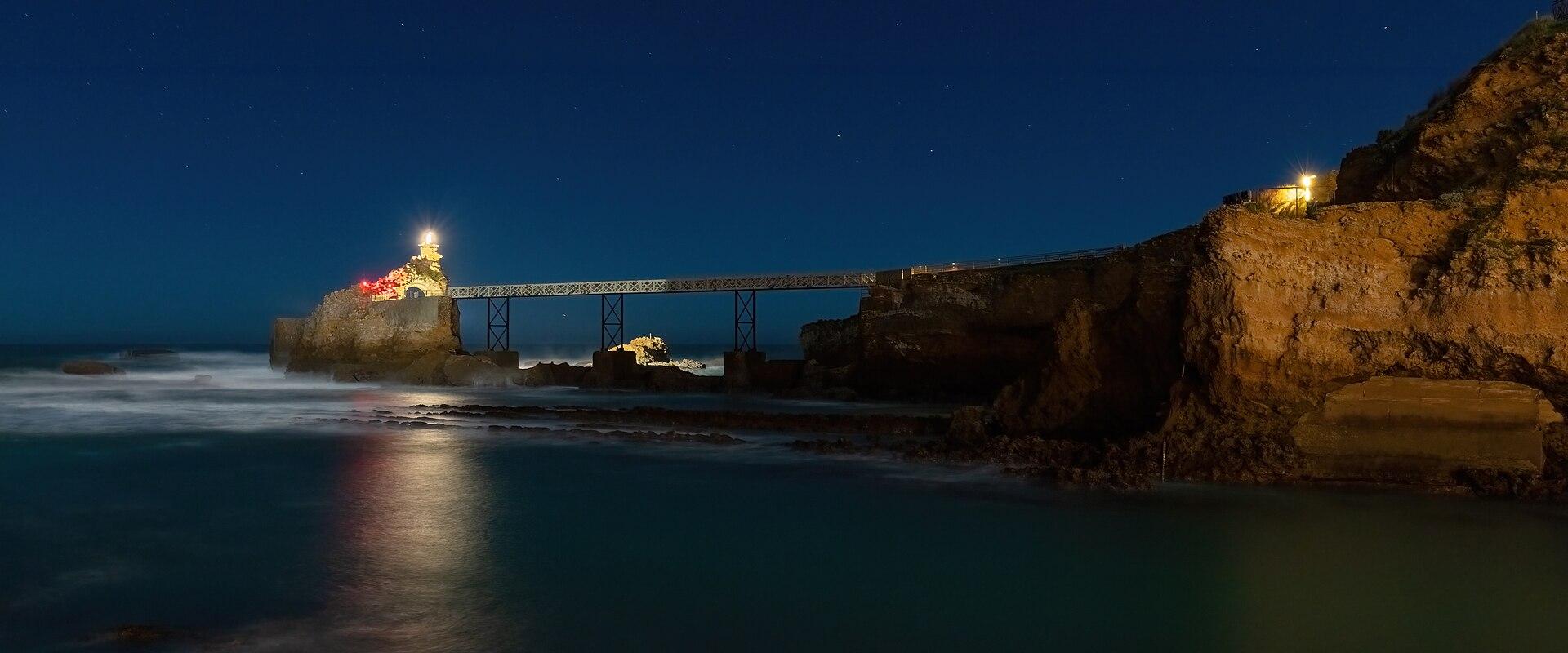
The Rocher de la Vierge is the best-loved landmark of Biarritz, a rocky outcrop in the sea at the edge of the old fishing port and the Grande Plage, topped by a statue of the Virgin Mary with her arms open towards the ocean. It stands only a short distance from the shore and is reached by a long, slender metal footbridge, built in the late nineteenth century. Walking out along the bridge, with the waves breaking on the rocks below and the wind in your face, is one of the essential experiences of a visit to the town.
The rock has long been a place of the sea. In the days when Biarritz was a village of whalers and fishermen, the headland was a lookout for the whales that came into the Bay of Biscay, and the rock served as a landmark for sailors. A local legend says that a statue of the Virgin was set on the rock after a lost fishing crew was led back to the port by a mysterious light. The present statue was erected in 1865, during the years when Napoleon III and Empress Eugénie were making Biarritz fashionable, and it was blessed in a ceremony that year. At that time a wooden walkway was built to reach the rock.
The footbridge was replaced in 1887 by an iron structure built by the company of Gustave Eiffel, the engineer who was soon to build the Eiffel Tower in Paris, and the work is a typical example of his lightweight iron bridges. The bridge crosses a gap in the rocks that is often battered by the sea, and in rough weather, the spray reaches the walkway. The rock itself is a small platform with a narrow path around the statue and benches from which to enjoy the view. From there, you look north along the curve of the Grande Plage, with the Hôtel du Palais and the long promenade, and south towards the Port Vieux, the old fishing harbour, and the Côte des Basques.
The Rocher de la Vierge is best enjoyed at sunset, when the sun sinks into the Atlantic and the sky turns orange and pink, and the rock stands in silhouette. It is also impressive in storms, when waves crash over the rocks, though the bridge may be closed for safety. Access is free and open at any time, but take care in wet or windy weather, as the surface can be slippery.
The rock is close to many other sights. The Musée de la Mer, an aquarium and museum of the sea, stands at the nearby headland of the Atalaye, and the Port des Pêcheurs, with its colourful fishermen's huts, is a short walk away. The Phare de Biarritz, the lighthouse, stands at the north end of the beach, beyond the Plage du Miramar, and the Musée Basque et de l'Histoire de Biarritz tells the local story. The Château de Biarritz and the Parc Municipal are inland. The rock suits couples, photographers and anyone looking for an iconic view, and the walk takes only a few minutes.
Categories
More photos coming soon
Nearby Attractions
Other places to visit in Biarritz
La Grande Plage
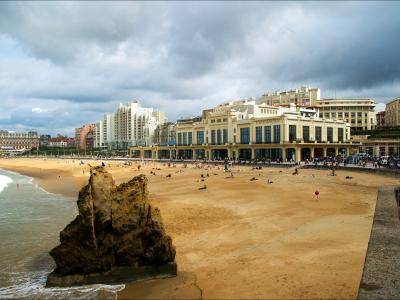
Historic beach facing the Empire-style Hôtel du Palais
Free Beaches · Coastal Promenades
Musée Basque et de l'Histoire de Biarritz
Biarritz history museum in St Andrews Church
Churches · History Museums
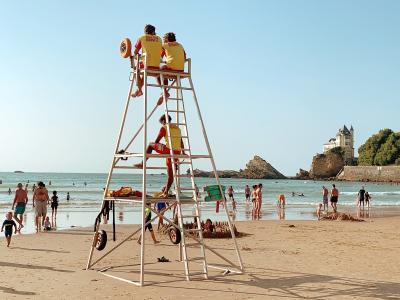
Côte des Basques
Historic Basque surfing beach in Biarritz
Coastal & Maritime · Beaches
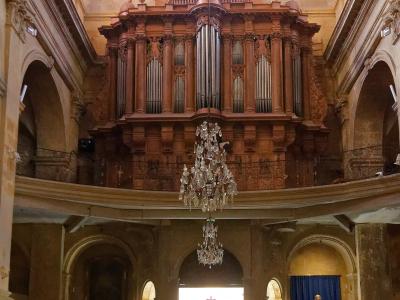
Église Saint-Esprit
Modernist church in Biarritz
Historic Architecture
Questions people ask
Quick Facts
Best Time to Visit
May to June and September to October offer mild weather and fewer crowds for optimal exploration.