







- Where
- Nimes, Languedoc-Roussillon
- Directions
- Directions
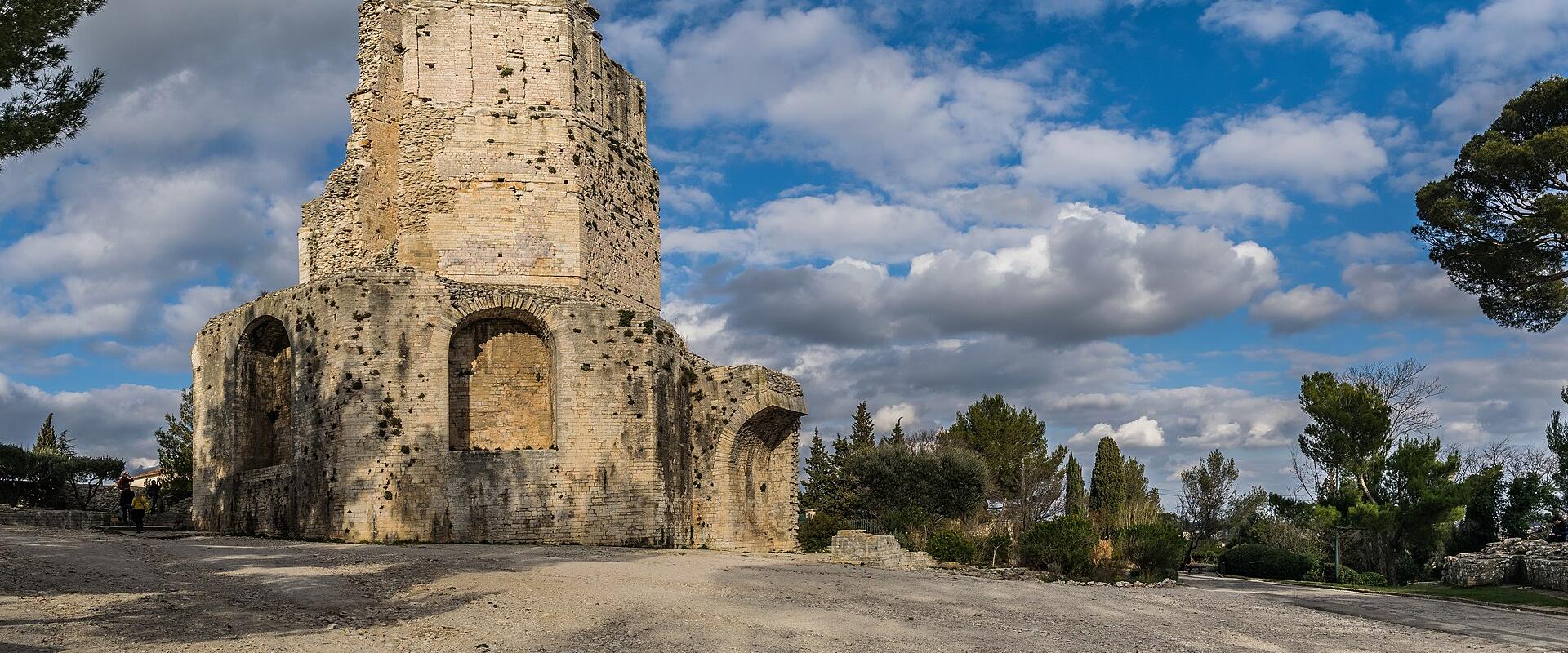
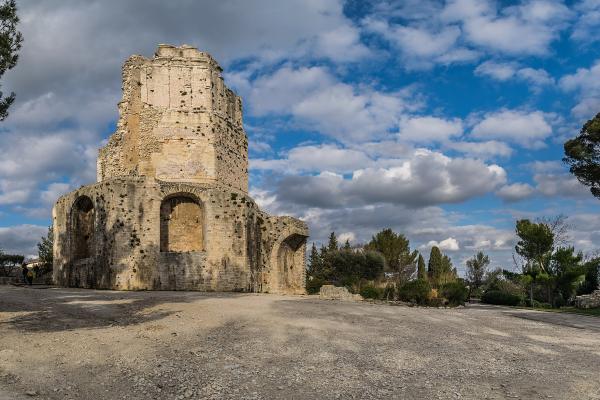
The Tour Magne is a ruined Roman tower that crowns Mont Cavalier, the hill on the north side of Nîmes, and it is the oldest and the most conspicuous monument in the city. It rises in the Jardins de la Fontaine, a landscaped park of the eighteenth century, and its weathered stone shape is a landmark across the city, recognisable from far away. The name Magne comes from the Latin magna, meaning great.
The tower was built around 15 BC, in the reign of Augustus, as part of the great wall that the Romans raised around the colony of Nemausus, a circuit of some six kilometres. It was the highest and most prestigious point of the defences, and it stood at the highest point of the hill, so it could be seen from every direction. It was built around an older core, a dry-stone tower of the Iron Age that belonged to the Gaulish people who had occupied the hill before the Romans. The Roman builders enclosed it in a new structure of masonry with an octagonal plan, which gave it a monumental form, and it stood on the hill as a symbol of the power and prestige of the new town, in sight of the sanctuary at the Sacred Spring below. Its exact function is still debated, whether as a lookout, a trophy, a signal tower or a memorial.
Originally the tower was much taller, with three or more storeys, and today three levels survive, reaching about thirty-two metres. In the early seventeenth century a man named Traucat, who believed that treasure lay hidden inside, dug into the base and damaged the monument, an episode that is still part of local lore. Later, the tower was used as part of the telegraph system and was restored. Today the interior can be visited, with a staircase that leads up through the remaining levels to a platform at the top.
The climb is rewarded by a panorama over the whole of Nîmes, with its tiled roofs, the Arènes and the Maison Carrée, the cathedral and the countryside of the Garrigue and the Cévennes foothills beyond, and on a clear day you can see far across the Rhône plain. Opening hours vary by season, with later closing in summer, and there is an entry fee with reduced rates for children and families, so check them before your visit.
The tower suits history lovers, walkers and photographers. It is a short and pleasant walk up through the gardens from the Temple of Diana and the Fontaine, which also deserve a visit. Allow an hour or two.
Categories
More photos coming soon
Nearby Attractions
Other places to visit in Nimes
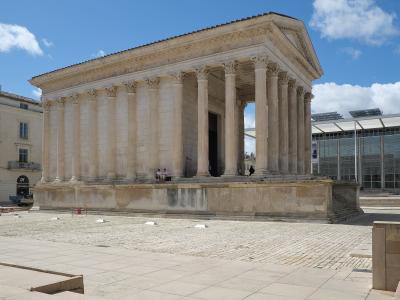
Carré d'Art
Contemporary art museum and library in Nîmes
From €6 Historic Architecture · Museums & Culture
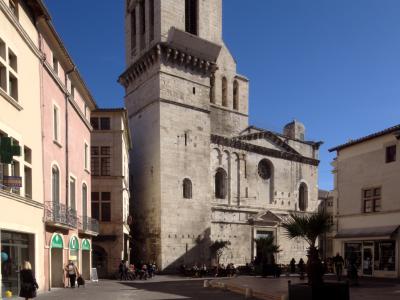
Cathédrale Saint-Castor
11th-century cathedral with Gallo-Roman sarcophagus
Free Historic Architecture · Museums & Culture
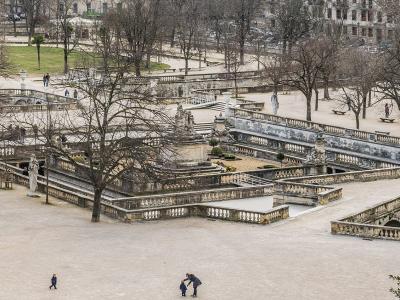
Jardin de la Fontaine
Europe's first public garden, 18th-century French design
Free Guided Experiences · Nature & Parks
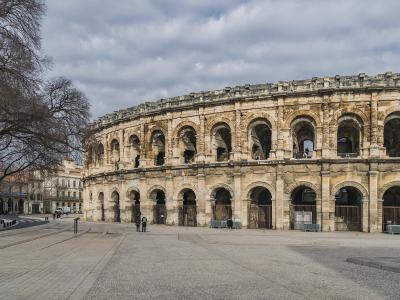
Arènes de Nîmes
Best-preserved Roman amphitheatre in the world
Historic Architecture · Museums & Culture
Questions people ask
Quick Facts
Best Time to Visit
April to June and September to October offer mild weather and fewer crowds for optimal exploration.