







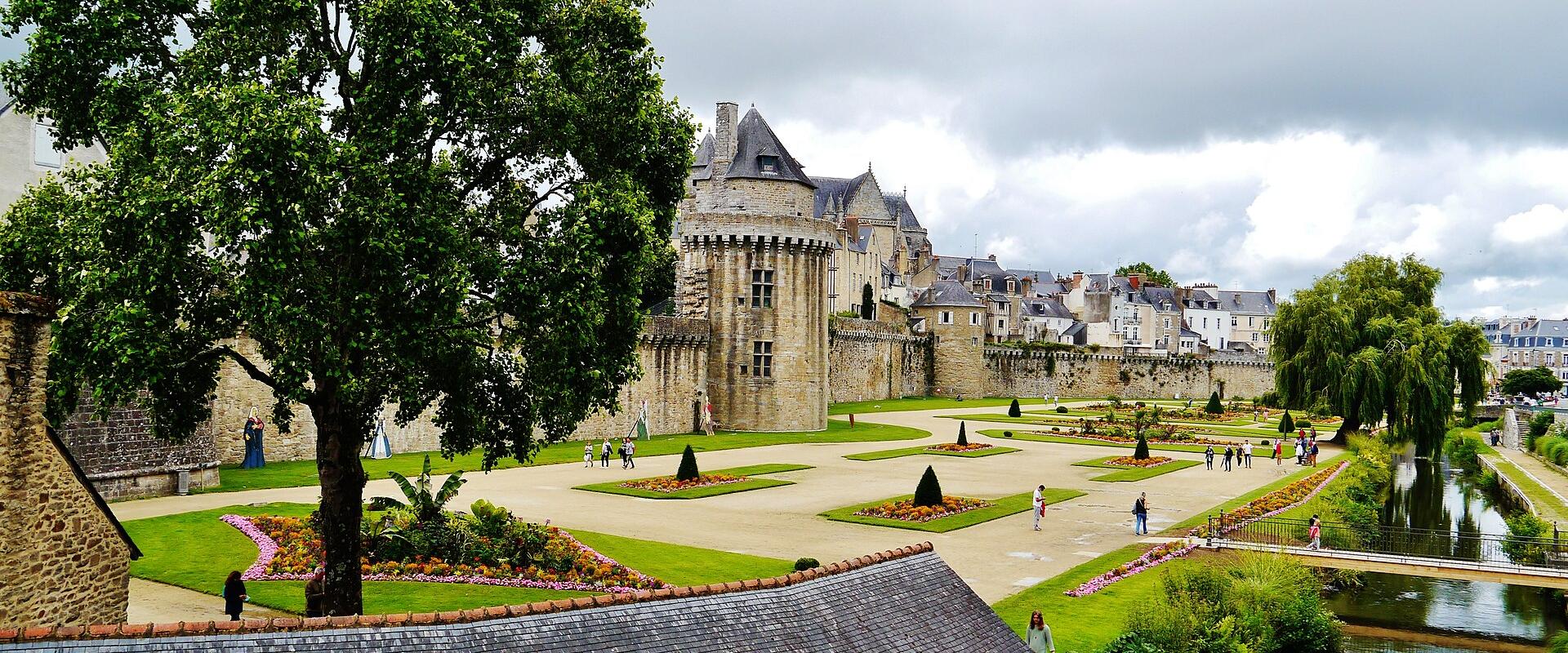
Vannes City Walls (Remparts de Vannes)
14th-century Breton fortifications with Roman origins
- Where
- Vannes, Brittany
- Directions
- Directions
The ramparts of Vannes are among the best-preserved town walls in Brittany, and walking along them is the best way to understand the shape of the old city. Vannes lies at the head of the Gulf of Morbihan, a sheltered inland sea dotted with islands, and the walled town, set back from the harbour, has been a place of importance since Roman times, when it was the capital of the Veneti, a Gaulish seafaring people. A first enclosure of the late Roman Empire, built in the third and fourth centuries, left traces in the foundations of the medieval walls.
The walls that you see today date mostly from the thirteenth to the fifteenth centuries and were rebuilt and extended when Duke John IV of Brittany, in the late fourteenth century, made Vannes one of the principal residences of the ducal court. The duke's castle, the Château de l'Hermine, which stood at the edge of the town, was demolished, and only parts of the defences remain, but the circuit of walls, gates and towers is largely intact on the western side of the old town. Among the fortifications, the Tour du Connétable, a tall, round tower, and the Porte Prison, a gate between two towers, are the most imposing. The Porte Saint-Vincent, the main entrance, is decorated with a statue of Saint Vincent Ferrier, the Dominican preacher who died in Vannes in 1419 and is buried in the cathedral. Vannes has a historic link with the union of Brittany and France: in 1532 the edict of union was signed here, and for a time in the seventeenth century the Parliament of Brittany sat in the town.
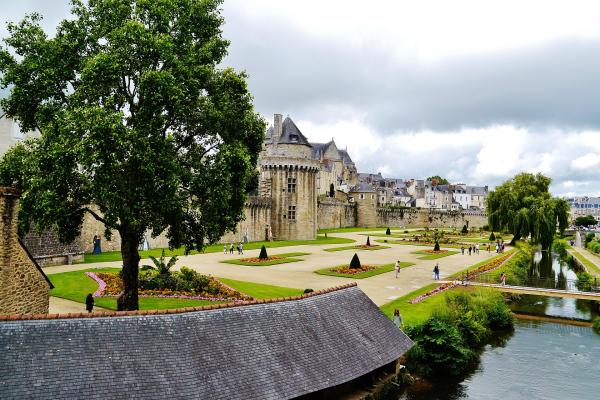
The finest view of the ramparts is from below, in the Jardins des Remparts, a formal garden laid out at the foot of the walls, with flowerbeds in geometric patterns, clipped hedges and a view up to the towers. Nearby, the old washhouses, the lavoirs, built in the nineteenth century beside the Marle river, are among the picturesque corners of the town, with their timber roofs and stone basins. The walk inside the walls leads to the middle of the old quarter, with its half-timbered houses leaning over cobbled streets, the Cathédrale Saint-Pierre and the Place du Martray.
Access is free and open at any time, and the public gardens and ramparts can be explored on foot in an hour. The path is easy, though the cobbles are uneven. In the evening the walls are floodlit.
The walls suit history lovers, families and photographers. From Vannes, boat tours on the Gulf of Morbihan leave from the harbour, and the Château de Suscinio, a ducal castle, lies on the coast to the south.
Categories
More photos coming soon
Nearby Attractions
Other places to visit in Vannes
Musée de Préhistoire et d'Archéologie Nationale
Neolithic artifacts and medieval tiles in Château Gaillard
Museums & Culture
Vannes Old Town (Vieux-Vannes)
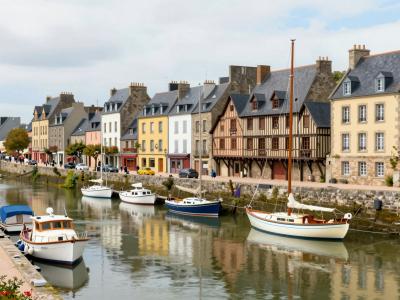
Medieval ramparts, half-timbered houses, and cobblestone ...
Guided Experiences · Historic Architecture
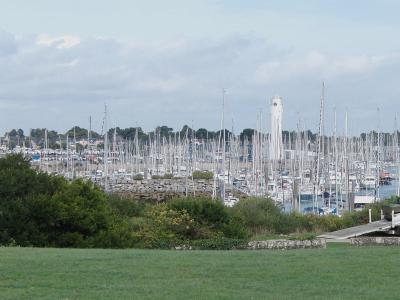
Port du Crouesty
Marina in Arzon, gateway to the Gulf of Morbihan
Coastal & Maritime · Harbors
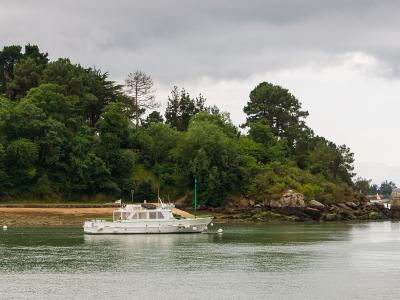
Gulf of Morbihan Boat Tours
Boat tours in the Gulf of Morbihan from Vannes
Coastal & Maritime · Guided Experiences
Questions people ask
Quick Facts
Best Time to Visit
June to early October offers warm weather and ideal conditions for outdoor activities and boat trips.