







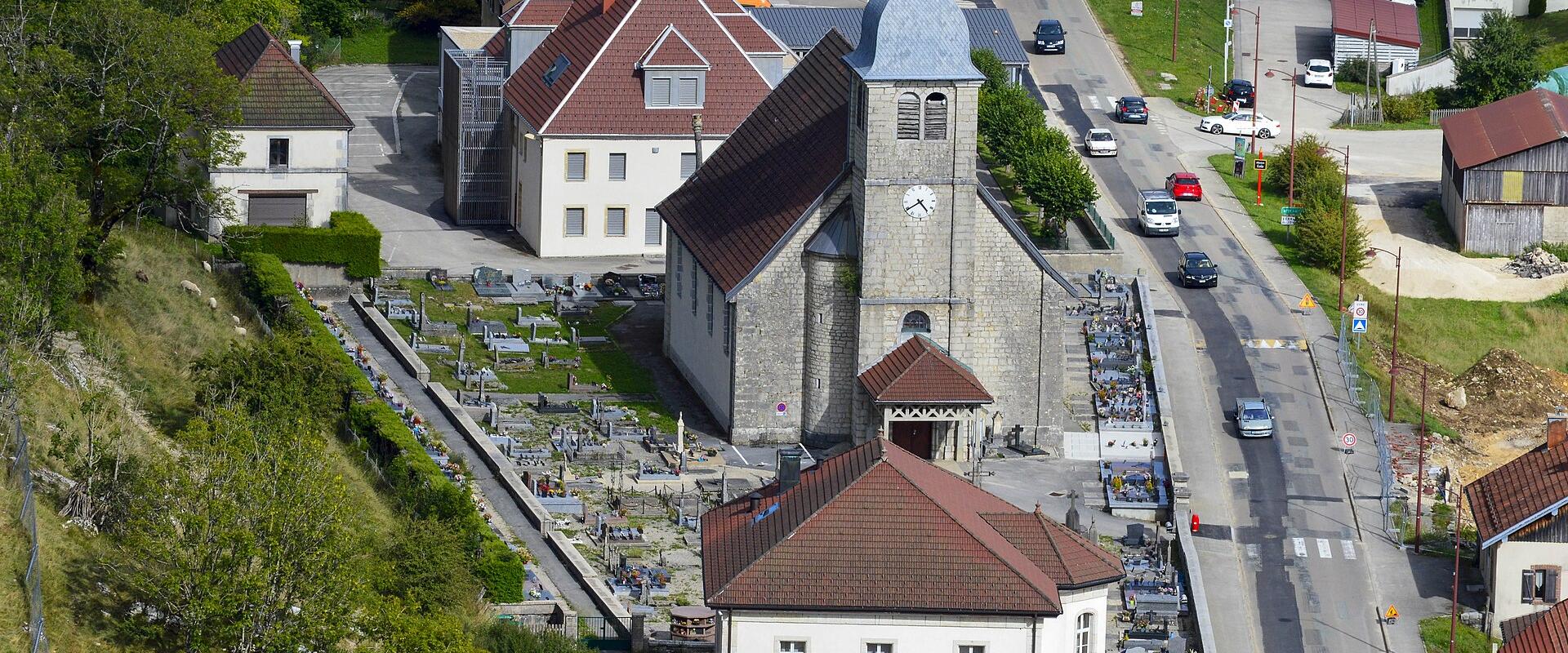
La Cluse-et-Mijoux
Mountain village below the Fort de Joux, in the pass south of Pontarlier
La Cluse-et-Mijoux belongs to the Haut-Doubs, the high country of the Jura, close to the Swiss border. Its altitude, from 837 metres in the valley to about 1,200 metres on the surrounding ridges, means a mountain climate: cool summers, long winters and plenty of snow. The commune has about 1,300 inhabitants and is made up of two settlements, La Cluse in the gorge and Mijoux on the higher ground, which explains the double name. The area is part of the Grand Pontarlier, and the town of Pontarlier is only a few kilometres to the north.
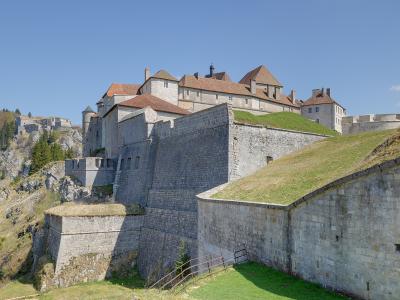
The word cluse describes a type of transverse valley in the Jura, a narrow gorge that cuts across the folded ridges and offers a route through the mountains. The Cluse de Pontarlier, the gorge in which the village stands, has been a major crossing for centuries, linking the plains of France with the Swiss plateau and the roads to Lausanne and the Alps. A small rocky spur above the village commanded the way, and from the eleventh century a fortress stood there. It is the Fort de Joux, also called the Château de Joux.
The first castle was of wood, and over time stone replaced it, giving the site a keep and curtain walls. In 1454 Philip the Good, Duke of Burgundy, bought it and turned it into a border fortress, with a moat and barracks. After the Franche-Comté passed to France in 1678, Vauban reinforced the defences, working here until 1693, and further changes continued in the nineteenth century. The result is a layered fortress, with several lines of walls rising up the rock, one above another.
Joux was also a prison. The French state used it from the seventeenth century to the nineteenth to hold prisoners of rank. Mirabeau, the revolutionary orator, was held here in the 1770s, and so was the German writer Heinrich von Kleist, who was arrested as a spy in the early 1800s. The best known prisoner is Toussaint Louverture, the former slave who led the revolution in Saint-Domingue and became governor of the colony. Napoleon had him seized and sent to France, and he was imprisoned at Joux in 1802. He died in his cell on 7 April 1803, in cold and isolation. His cell can be visited today, and it makes a sober and moving part of the tour.
Inside the fort, visitors see the courtyards, the chapel and the military buildings, as well as a museum of weapons with more than six hundred pieces from the eighteenth to the twentieth century. A famous well, cut deep into the rock to supply water for the garrison, was once said to be the deepest in France. Guided tours are offered in many periods of the year. Opening times and tour schedules vary with the season, so confirm them before you set out. Wear sturdy shoes, since the paths up the rock are steep and cobbled, and take a warm layer because the walls stay cool.
The wider area is a pleasure for those who like mountains and slow travel. Walking trails start in the village and cross pasture and spruce forest, with views over the cluse. Pontarlier is the regional town, known for its absinthe heritage and for the cheeses of the Haut-Doubs, Comté and Mont d'Or, which are made and sold in local dairies. Lake Saint-Point and the source of the Doubs river are within a short drive, and the ski resorts of Métabief and Les Hôpitaux-Neufs are close for winter sports.
Pontarlier has a railway station with services to Besançon and Frasne, and the road from Pontarlier towards Switzerland passes through the cluse, so you can reach the fort without difficulty if you have a car. Public transport to the village itself is limited.
The best months for a visit are May to October, when the weather is more settled and the fort and paths are open. Autumn colours in the forests are especially fine. In winter the village is under snow, the fort has reduced hours and the mountains attract skiers rather than sightseers.
Best time to visit
May to October is best for walking and for visiting the fort. Winter is cold and snowy at this altitude, and brings skiing in the nearby Jura stations, but visits to the fort are reduced.
What to see in La Cluse-et-Mijoux
Our picks first.
La Cluse-et-Mijoux by interest
The same sights, grouped by what you came for.
Planning a visit to La Cluse-et-Mijoux
Good to know
- Currency
- EUR
- Language
- French
Quick Facts
Book your stay
Questions people ask
More places in Franche-Comté
Franche-Comté
Belfort
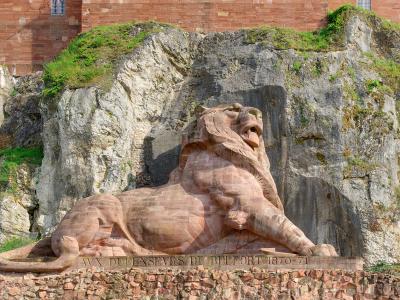
Historic fortress city home to the Lion of Belfort
Franche-Comté
Besancon
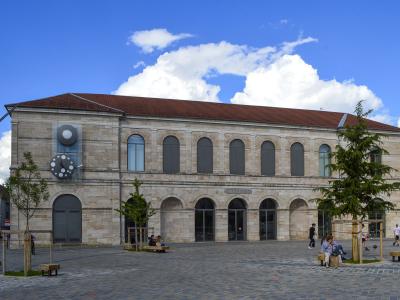
Historic fortified city on a loop of the Doubs River
Franche-Comté
Arbois
Historic Jura town and capital of Arbois wine region
Franche-Comté
Ornans
Birthplace of Courbet in the Jura foothills on the Loue River