Plogoff lies on the Cap Sizun, the narrow peninsula that ends Finistère to the south-west of the Bay of Douarnenez. The terrain is open and windswept, with few tall trees, low stone walls, small fields and long views to the sea. The village is modest, with a church, a few shops and cafés, and the Breton place name carries the same old spelling you find across Cornouaille. The commune covers less than twelve square kilometres, but a good part of it is coastline, and it is that edge of land that draws nearly everyone who comes.
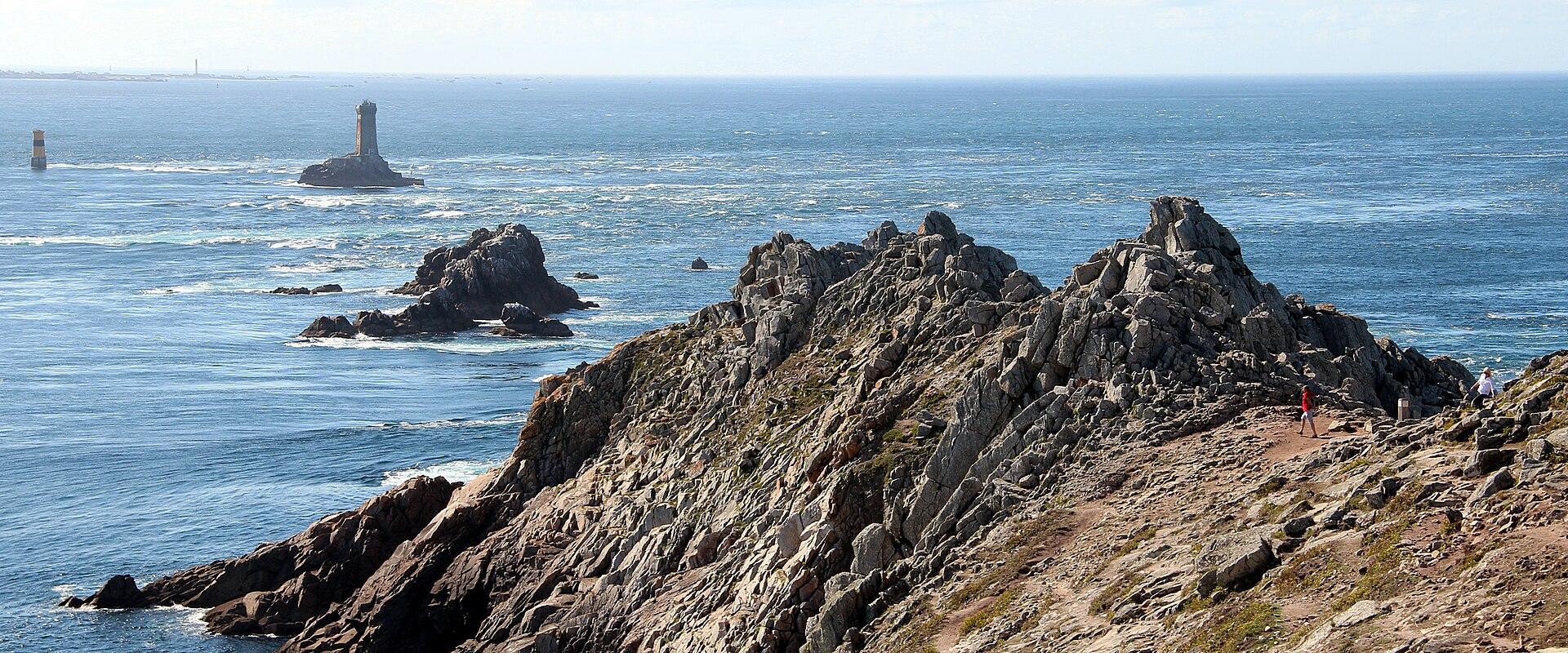
The Pointe du Raz is the obvious first stop. A path leads from the visitor area to the tip, and the walk takes only a few minutes at an easy pace, though the final stretch is exposed and the wind can be strong. At the end you stand on rock high above the water, with the Raz de Sein ahead, where the Atlantic squeezes between the cape and the island of Sein and the currents run hard. The La Vieille lighthouse can be seen offshore, and in calm weather the island of Sein shows as a thin strip on the horizon. A statue of Our Lady of the Shipwrecked looks out over the sea from the point, a reminder of the many ships and crews lost on this coast. Stay on the marked paths: the cliffs are steep, and erosion is a real concern, which is why parts of the headland have been closed off to let the vegetation recover.
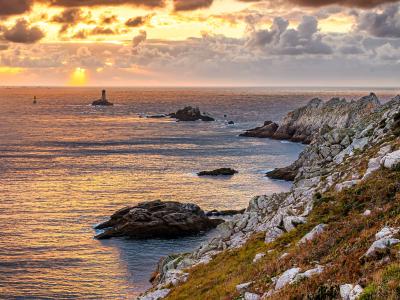
The Pointe du Raz also has a second listing on this site as a nearby viewpoint, because the coastal footpath gives several different angles on the same headland. Walking a little way along the cliffs on either side shows how different the coast looks without the crowd, and each bend reveals another cove or rocky shelf. The long-distance path along the coast, the GR 34 customs path, passes through, and so does the western end of the European E5 route that runs on towards Venice. Close by, a wild cleft known as the Enfer de Plogoff, where the sea roars into a narrow gully in rough weather, shows how violent this coast can become.
The Baie des Trépassés, the Bay of the Dead, lies a short distance north of the point and belongs to neighbouring communes along the same stretch. Its long curve of sand and its name, which people have explained in several ways, are a standard part of a Cap Sizun day. The beach is lovely but swimming is risky, because currents and heavy surf are common.
Plogoff has its own history of resistance. In the late 1970s the state proposed a nuclear power plant on this coast. Local people, supported by many others from Brittany and beyond, opposed it through a long public inquiry and sometimes violent confrontations in 1980. After the 1981 presidential election, the new president kept his promise and cancelled the project. The episode is still part of how people in the commune see themselves.
The small ports are worth a visit for a different feeling of the coast. Fishing boats of modest size work from them, and there is seafood to eat in the area, usually plain and fresh. The farms behind the coast grow vegetables and produce, and the commune is known for traditional Breton biscuits.
Plan for a full day at least if you want to walk, and check the tide, the wind and the forecast before you set out, since fog can close in quickly even in summer. Quimper, the departmental capital, is the nearest large town and the usual place to arrive by train, but you will need a car or a seasonal bus to reach Plogoff itself, and the roads on the peninsula are narrow. Audierne, a short drive east, has more restaurants and is the point of departure for boats to the island of Sein.
Best time to visit
Late April to June and September are the calmest and brightest months, with long evenings and fewer coaches at the headland. Midsummer is busiest. Winter brings spectacular seas and wind, but also fog and rain, so dress for it.
What to see in Plogoff
Our picks first.
Plogoff by interest
The same sights, grouped by what you came for.
Planning a visit to Plogoff
Good to know
- Currency
- EUR
- Language
- French
Quick Facts
Book your stay
Questions people ask
More places in Brittany
Brittany
Brest
Atlantic port city with maritime museums and modern architecture
Brittany
Vannes
Medieval walled city in Brittany with half-timbered houses
Brittany
Rennes
Capital of Brittany with medieval center and vibrant student life
Brittany
Quimper
Historic capital of Finistère with cathedral and faience pottery