Plouguerneau lies about thirty kilometres north of Brest, in the part of Finistère called the Pays des Abers. An aber is a drowned river mouth, a long inlet where the sea runs far inland between wooded banks. The Aber Wrac'h and the Aber Benoît are the two best known, and the commune sits on the eastern side of the Aber Wrac'h and along the open coast of the Channel. The mix of sheltered estuaries and exposed coastline gives it unusual variety for one place.
The commune is spread out. The main village stands a little inland, with a church, shops and services. Lilia, on the coast to the west, is the seaside part, with a beach, rocks and a small harbour, while Le Grouanec lies to the east among farmland. Plouguerneau counts about forty-five kilometres of shoreline, including its islands, which is reportedly the longest of any commune in France. A footpath follows much of the coast, passing dunes, small coves and clear shallow water over pale sand.
The surrounding area is the Pays Pagan, a traditional division of Léon. The name has long been debated, but the identity is real: a distinct local culture, with its own dialect of Breton, which is still taught in some bilingual schools in the commune. Many Breton place names here begin with Ploe, Lan or Tre, and their meaning gives a quick lesson in local history.
Seaweed is the specialty of Plouguerneau, and the commune is considered the seaweed capital of France. Kelp grows thickly on the rocks off the coast, and people have gathered it for centuries, first for fertiliser and later for industry. Today it goes into food products, cosmetics and other uses, and you may see boats and tractors working on the shore at low tide. A local museum tells the story of the seaweed harvesters and their craft, and is a useful stop for understanding the shore.
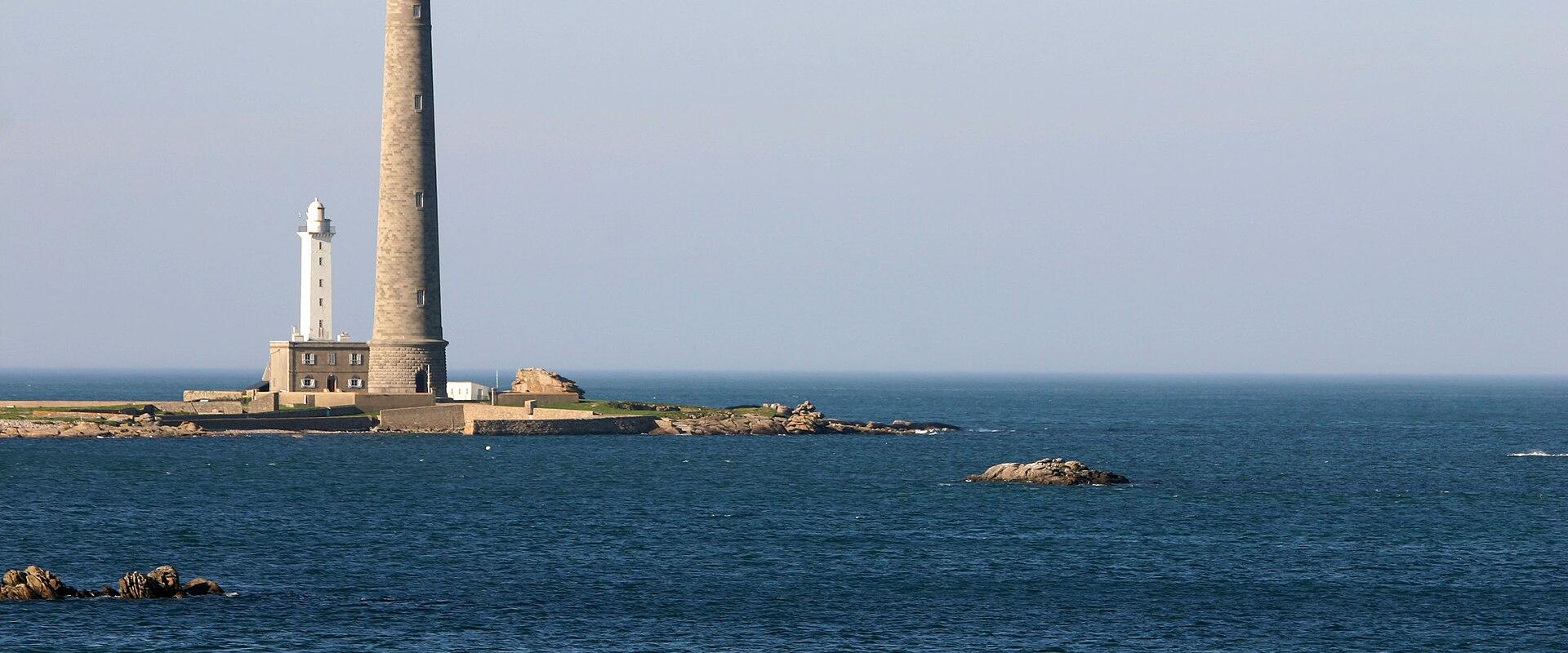
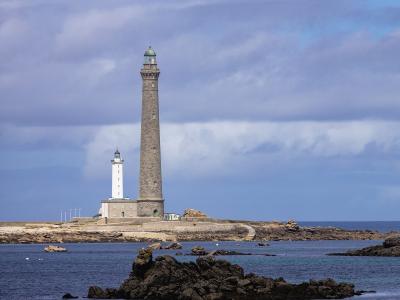
The Île Vierge lighthouse stands on a small island a short distance off the coast. There are in fact two lighthouses: an older one, built in 1845, and the present tower, built between 1897 and 1902. The newer one rises to 82.5 metres and is the tallest lighthouse in Europe. It is built of Kersanton stone, the dark granite from the Brest area that was also used for the base of the Statue of Liberty. Inside, a spiral staircase of 397 steps climbs through the tower, and its walls are lined with thousands of opaline glass plates, which reflect light and give the interior a pale glow. The lighthouse was electrified in 1956, automated in 2010 and classified as a historic monument in 2011. In season, boats take visitors to the island, and in good weather you can climb the tower for a panoramic view. Crossings depend on tides and weather, so check schedules and book ahead. You can also see the tower very well from the shore at Lilia, and from the coastal paths, without crossing.
Other places to see nearby include the Aber Wrac'h, with its harbour, sailing school and oyster beds, and the Aber Benoît. Lannilis, a few kilometres inland, is the main market town of the Abers and has restaurants and shops. The beaches along this coast, the Grève Blanche and others, are good for walking at low tide, and for sailing and kayaking in the estuaries. Swimming is pleasant in summer, though the water stays cold.
You will need a car for most of the area, as public transport is limited. Brest has a rail station and an airport and is the usual gateway to the north-west of Finistère.
The best time is May to September for beaches and boat trips, though spring brings flowering gorse and fewer people, and September often has settled, clear weather. Winter brings storms that send big waves onto the rocks, which can be dramatic to watch from a safe distance, but boat trips to the island stop for the season.
Best time to visit
May to September gives the best weather for the beaches and the boat trips to the lighthouse island, which run in season only. Spring and autumn are calmer and clear, while winter brings storms and empty beaches.
What to see in Plouguerneau
Our picks first.
Plouguerneau by interest
The same sights, grouped by what you came for.
Planning a visit to Plouguerneau
Good to know
- Currency
- EUR
- Language
- French
Quick Facts
Book your stay
Questions people ask
More places in Brittany
Brittany
Brest
Atlantic port city with maritime museums and modern architecture
Brittany
Vannes
Medieval walled city in Brittany with half-timbered houses
Brittany
Rennes
Capital of Brittany with medieval center and vibrant student life
Brittany
Quimper
Historic capital of Finistère with cathedral and faience pottery