







- Admission
- €5 individual
- €3 outside temporary exhibition
- Where
- Caen, Normandy
- Directions
- Directions
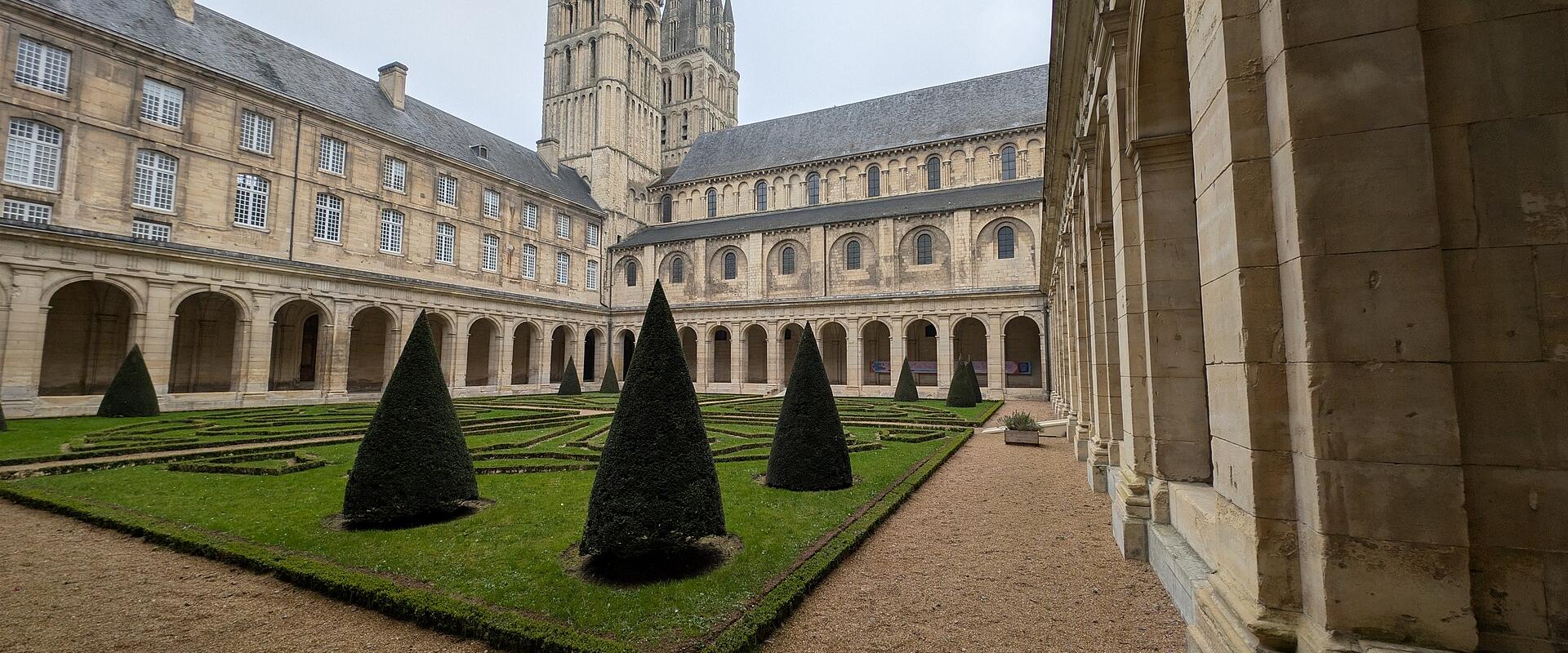
The Abbaye aux Hommes, the Abbey of the Men, is the great Romanesque monument of Caen and the place where William the Conqueror is buried. It stands on the north side of the old town, with the twin western towers and the spires of its church, Saint-Étienne, visible across the rooftops, and together with its counterpart, the Abbaye aux Dames, it was founded by William and his wife Matilda. Tradition holds that the pair did so as penance after the Pope disapproved of their marriage because they were closely related. William's foundation was made in the 1060s, and the abbey church was consecrated in 1077, in the presence of the duke himself.
The first abbot of Saint-Étienne was Lanfranc, an Italian scholar and monk who was one of the most learned men of his time. He had been prior of Bec Abbey in Normandy and later became a trusted adviser to William. After the Norman conquest of England, Lanfranc was appointed Archbishop of Canterbury in 1070, and the architecture of Saint-Étienne, with its simple, powerful forms, influenced the churches built in England after the conquest. The abbey church of Caen was among the largest of its kind, and its facade, with two tall towers and three portals, is one of the models of the Norman Romanesque style. The spires of the towers were added in the thirteenth century.
William died in 1087 at Rouen and was buried at the abbey, as he had wished, in front of the high altar. His tomb has had a troubled history. It was ransacked by Huguenots in the Wars of Religion in the sixteenth century, and his bones were scattered. Only a single thigh bone was later replaced in the tomb, which today is marked by a plain black slab in the choir. The Revolution further disturbed it, but the memorial has been preserved and remains a place of pilgrimage for history lovers.
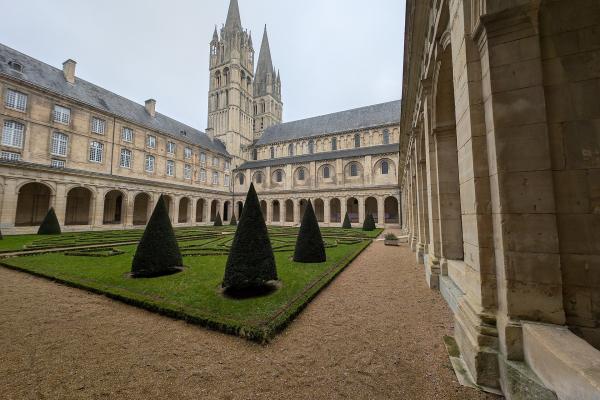
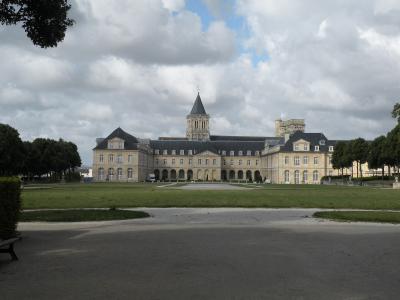
The abbey buildings that stand next to the church were largely rebuilt in the eighteenth century by the Benedictines of the congregation of Saint-Maur, in a classical style with a long, symmetrical facade, a monumental staircase and a cloister. After the Revolution, the buildings served as a school and then, since 1965, as the town hall of Caen. Visitors can see the wood-panelled rooms, the cloister and the gardens on guided tours, which are offered in French and English. The abbey escaped serious destruction in the Battle of Caen in 1944, as the buildings sheltered thousands of civilians, who took refuge here while the city was bombed.
The abbey makes a pair with the Abbaye aux Dames at the other end of the old town. Between them, the Château de Caen, with its ramparts and the Musée de Normandie, the Place Saint-Pierre and the old streets such as the Rue de Geôle, offer a good day's walk. The Mémorial de Caen, a museum of peace and the Second World War, and the Normandy landing beaches are a short drive away. The abbey suits history and architecture lovers and anyone interested in the Norman conquest, and a visit takes about an hour. Admission charges and opening hours vary, with discounts for those arriving by train or bike, so check ahead.
Categories
More photos coming soon
Admission Fees
- Admission
- €5 individual; €3 outside temporary exhibition
Hours and prices change, especially out of season. Check with the venue before you go.
Nearby Attractions
Other places to visit in Caen

Memorial de Caen
Europe's largest 20th-century history museum
Guided Tours · History Museums
Château de Caen
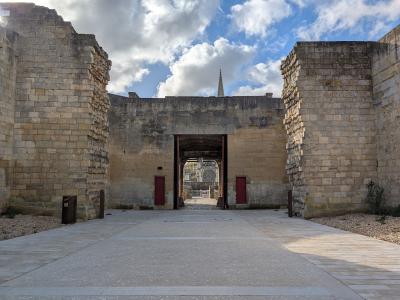
11th-century castle housing two major museums
Free Castles · Guided Tours
Normandy American Cemetery and Memorial
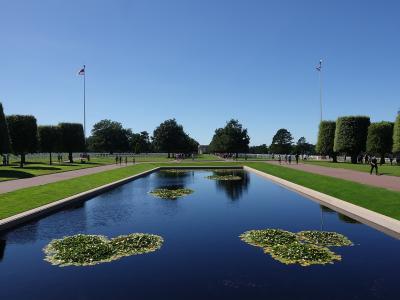
Cliffside WWII cemetery overlooking Omaha Beach
Free Cliffs · Heritage Trails
Abbaye aux Dames
11th-century Benedictine abbey founded by William the Con...
From €3 Historic Architecture · Museums & Culture
Questions people ask
Quick Facts
Best Time to Visit
Late June to early September offers warm weather and ideal conditions for outdoor activities and sightseeing.