







Normandy American Cemetery and Memorial
Cliffside WWII cemetery overlooking Omaha Beach
- Admission
- Free admission
- Hours
- Daily 9 a.m. to 5 p.m., excluding December 25 and January 1
- Where
- Caen, Normandy
- Directions
- Directions
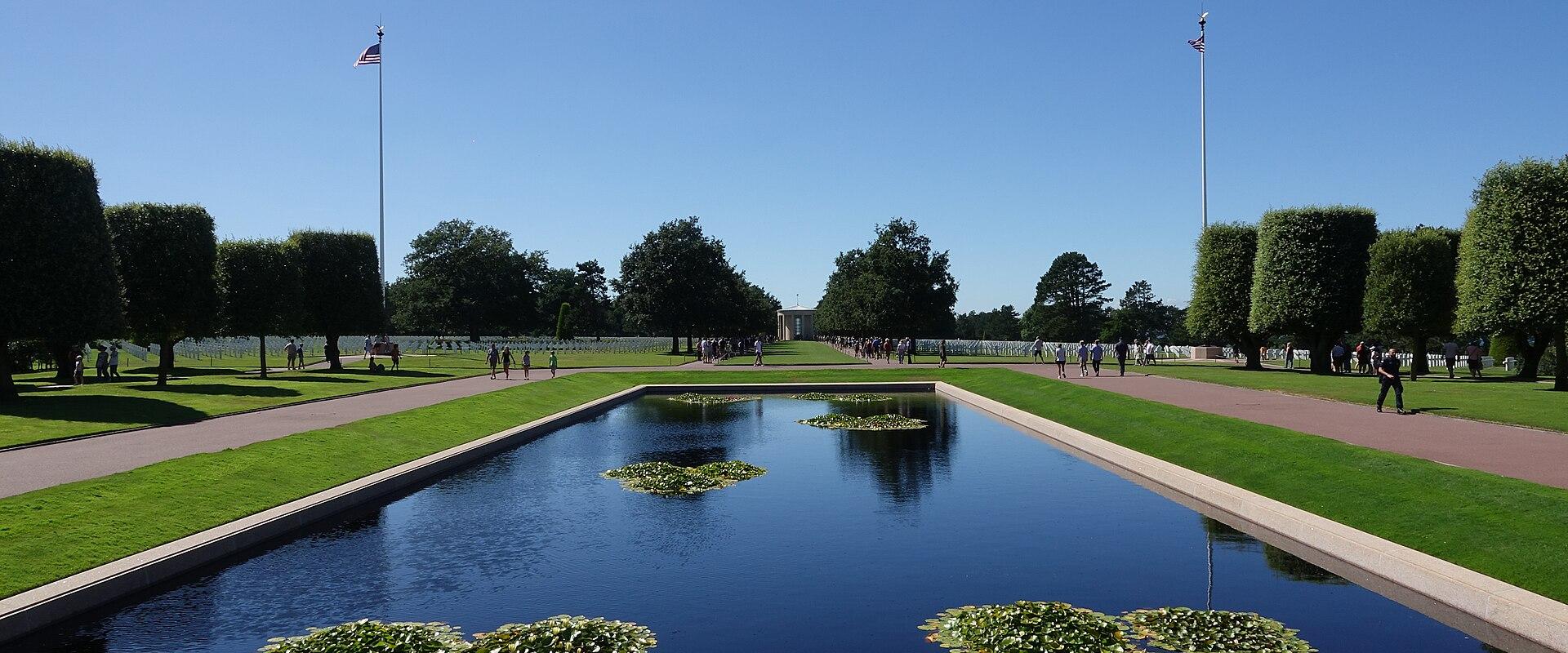
The Normandy American Cemetery and Memorial stands on a bluff above Omaha Beach at Colleville-sur-Mer, in the department of Calvados, and it is among the most visited and most moving of the World War II sites in Normandy. The land is owned by France but has been granted to the United States for use in perpetuity as a burial ground, free of charge, as a gesture of gratitude. The cemetery covers about seventy hectares and is run by the American Battle Monuments Commission, which maintains the grounds, the graves and the memorial structures with the same care as it does at its cemeteries around the world.
The site began as a temporary field cemetery established on 8 June 1944, two days after the D-Day landings, and it was the first American cemetery on European soil in the war. The permanent cemetery was dedicated in 1956. It holds the graves of more than nine thousand American servicemen and women, most of whom died in the landings and in the fighting that followed in Normandy. Rows of white marble headstones, crosses and Stars of David, stretch in orderly lines across an expanse of lawn, and the symmetry and silence of the setting leave a deep impression. Among those buried here are Brigadier General Theodore Roosevelt Jr, who landed with the first wave at Utah Beach and was awarded the Medal of Honor, and his younger brother Quentin, killed in the First World War, whose remains were later moved to lie beside him.
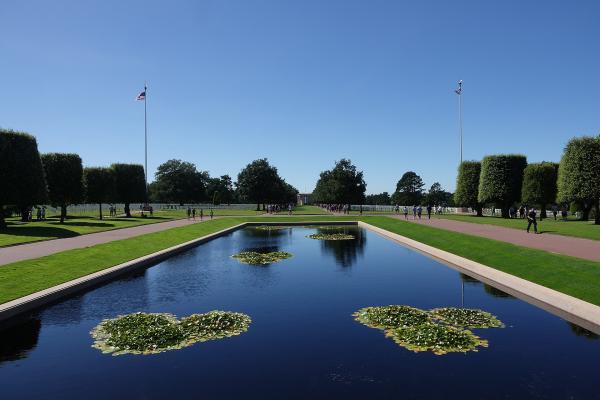
At the centre of the cemetery stands a memorial with a semicircular colonnade, which holds maps of the military operations and a bronze statue called Spirit of American Youth Rising from the Waves. A chapel with a mosaic ceiling lies in the circular garden, a reflecting pool lies to the east, and the Garden of the Missing, with its semicircular wall, bears the names of more than fifteen hundred servicemen who were lost and never recovered. A visitor centre, set into the landscape, tells the story of the landings and of individual soldiers, using photographs, letters and film, and it is useful to begin your visit there. An orientation table near the cliff edge shows the layout of the invasion beaches.
The cemetery is a place of remembrance, and visitors are asked to behave quietly and respectfully. Dress appropriately, keep your voice low, and avoid walking over the grave areas. Entry is free, and large groups and requests for specific graves should be arranged in advance with the commission. Arrive early in the day if possible, as the car park fills in summer.
The site fits into a day of exploring the landing beaches. Omaha Beach lies below, the Pointe du Hoc and the German batteries at Longues-sur-Mer are a short drive away, and Bayeux, with its tapestry, is the nearest large town. In Caen, the Mémorial de Caen, the Abbaye aux Hommes and Abbaye aux Dames, the château and the Musée de Normandie offer further context for those staying in the city. Normandy has other cemeteries, for British, Canadian and German soldiers, and visiting more than one gives a fuller picture of the scale of the campaign.
Categories
More photos coming soon
Hours & Fees
- Open
- Daily 9 a.m. to 5 p.m., excluding December 25 and January 1
- Admission
- Free admission
Hours and prices change, especially out of season. Check with the venue before you go.
Nearby Attractions
Other places to visit in Caen

Memorial de Caen
Europe's largest 20th-century history museum
Guided Tours · History Museums
Château de Caen
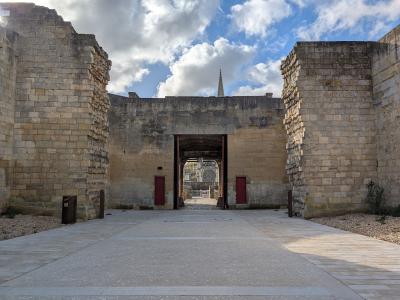
11th-century castle housing two major museums
Free Castles · Guided Tours

Abbaye aux Dames
11th-century Benedictine abbey founded by William the Con...
From €3 Historic Architecture · Museums & Culture
Place Saint-Pierre
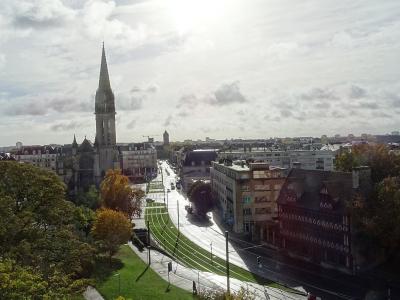
Historic church in Caen's city center
City Centers · Squares
Questions people ask
Quick Facts
Best Time to Visit
Late June to early September offers warm weather and ideal conditions for outdoor activities and sightseeing.