







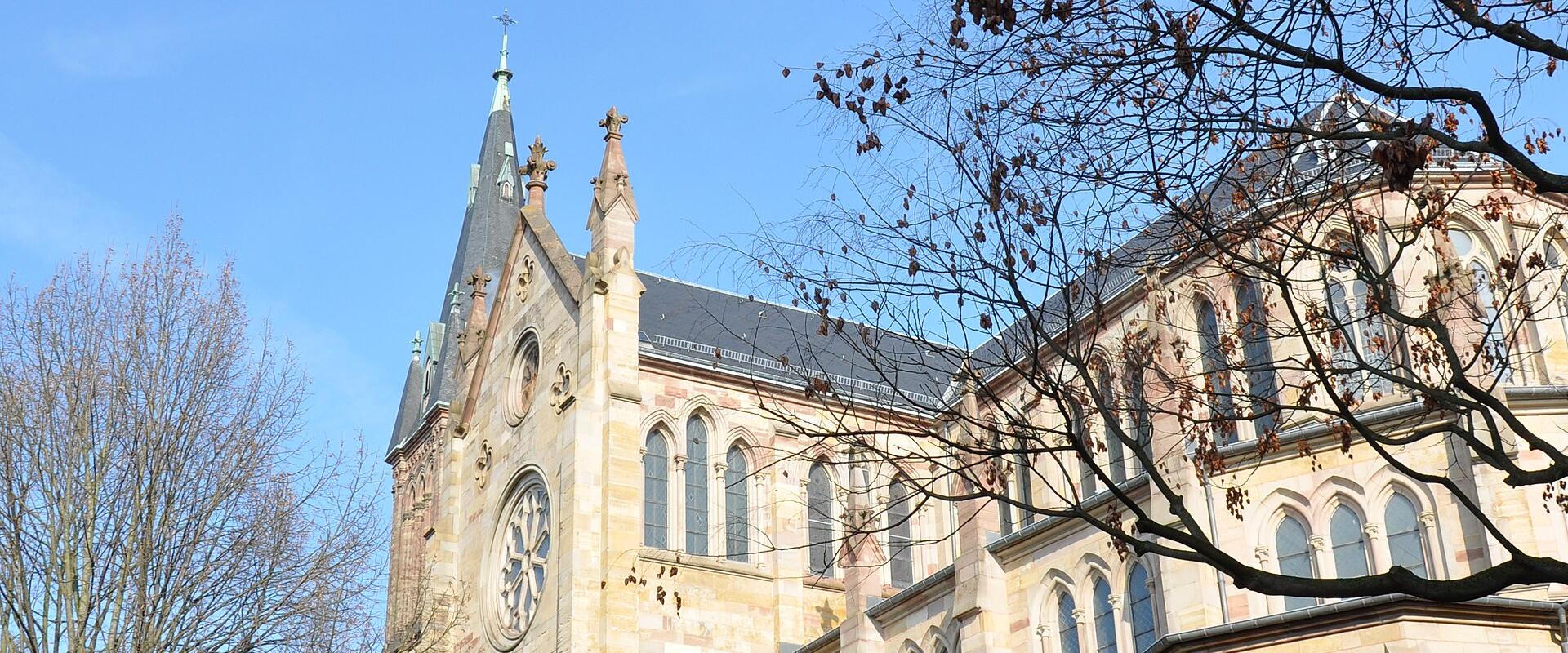
Église Saint-Étienne de Mulhouse
Mulhouse's main Roman Catholic church with cathedral-like...
- Admission
- Free admission
- Hours
- 8:30 AM–7:30 PM
- Where
- Mulhouse, Alsace
- Directions
- Directions
Mulhouse has two churches dedicated to Saint Stephen, and the more famous of them is the Protestant Temple Saint-Étienne, the tallest landmark in the old centre. It stands on the Place de la Réunion, beside the Renaissance town hall with its painted facade, and its Neo-Gothic spire, about ninety-seven metres high, is the highest in the Haut-Rhin. The present building was completed in 1866 and replaced a medieval church on the same site. Its great attraction is the stained glass: several windows dating from the fourteenth century were saved from the earlier church and reinstalled, and they are among the oldest and finest surviving in the Upper Rhine region.
The Catholic Église Saint-Étienne, on Rue Magenta, is a more modest building with its own place in the life of the town. It is a parish church in the centre, with cathedral-like dimensions for the area, a tall nave, transepts and a bell tower with a portico, and it is open to visitors during the day. The interior offers a quiet space for prayer and a chance to see the religious architecture of a city where Protestantism and Catholicism have lived side by side for centuries. Because both churches share the same dedication, travellers sometimes confuse them, so it helps to know which one you want to visit and where it stands.
The contrast between the two reflects the history of Mulhouse. For several centuries the city was an independent republic, allied with the Swiss Confederation, and it adopted the Reformation in the sixteenth century. It joined France only in 1798. In the nineteenth century, it grew into one of the great centres of the textile industry, producing printed cotton fabrics that were exported around the world, and the wealth of the industrial families built many of the city's institutions, as well as workers' housing and museums. The Catholic community grew with the arrival of workers from the countryside, and its churches were built in the same period.
Mulhouse is known today for its museums. The Cité de l'Automobile, home to the Schlumpf collection, is one of the largest automobile museums in the world, with hundreds of historic cars, and the Musée de l'Impression sur Étoffes tells the story of printed textiles, a subject central to the city's past. The Musée Historique, in the old town hall, tells the local story. The Jardin Botanique, the Place de la Comédie and the lively Grand Rue are other places to visit.
Church visits in Mulhouse suit those who are interested in architecture, stained glass and the religious history of Alsace. Entry is free, and visits take around half an hour for each church. Opening hours vary and the churches may close for services, so check ahead. A stroll that takes in both the Temple and the Catholic church, the town hall and the old streets gives a good picture of the city's heritage.
Categories
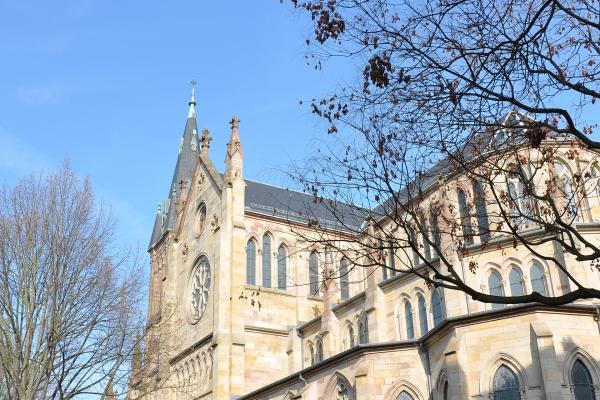
More photos coming soon
Hours & Fees
- Open
- 8:30 AM–7:30 PM
- Admission
- Free admission
Hours and prices change, especially out of season. Check with the venue before you go.
Nearby Attractions
Other places to visit in Mulhouse
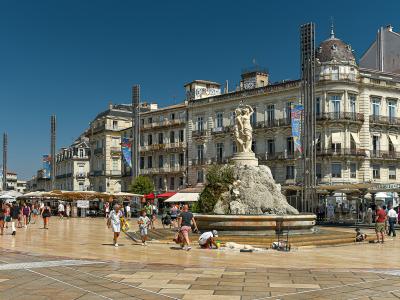
Place de la Comédie
Mulhouse industrial heritage landmark
City Centers · Squares
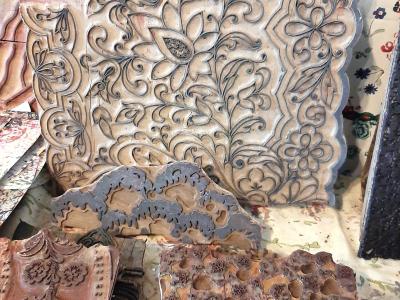
Musée de l'Impression sur Étoffes
Textile printing heritage museum in Mulhouse
Museums & Culture · History Museums
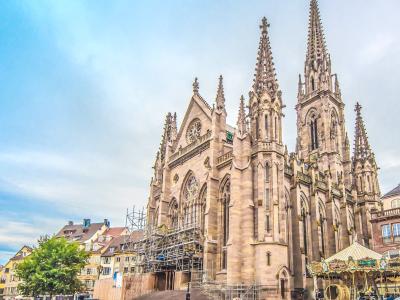
Cathédrale Saint-Étienne
Neo-Gothic Protestant church with 14th-century stained glass
From €3 Guided Experiences · Historic Architecture
Grand Rue
Historic pedestrian street in UNESCO Mulhouse
Urban Exploration
Questions people ask
Quick Facts
Best Time to Visit
Mid-June to early September offers warm weather and ideal conditions for outdoor activities and sightseeing.