







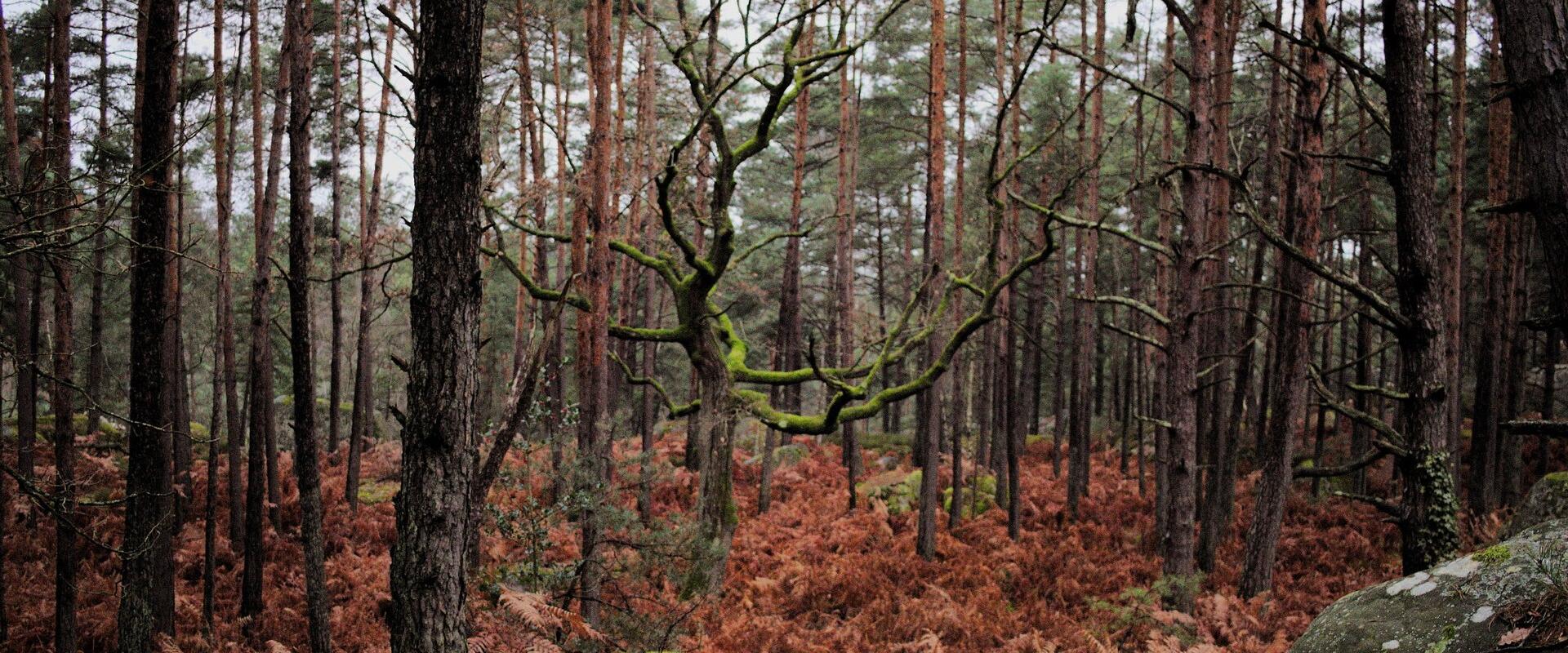
Forêt de Fontainebleau
Ancient forest famous for boulders and rock climbing
- Where
- Fontainebleau, Île-de-France
- Directions
- Directions
The Forêt de Fontainebleau is one of the most celebrated forests in Europe, a vast woodland of about 25,000 hectares some sixty kilometres south-east of Paris, around the town and royal château of Fontainebleau. It is known for two things above all: the sandstone boulders and rock formations that are scattered among its trees, and the painters and climbers who have been drawn to them. In 1998 UNESCO designated the forest and its surroundings as a biosphere reserve, and it is also one of the best protected woodlands in France.
The forest was a royal hunting ground for centuries, and the kings of France built the château of Fontainebleau at its heart. In the nineteenth century it became a place of discovery for artists. In the 1830s a group of painters, among them Théodore Rousseau, Jean-François Millet and Camille Corot, settled in the village of Barbizon at the edge of the forest and painted the oaks, rocks and clearings directly from nature, in what became known as the Barbizon School, an important step toward Impressionism. In 1861, Napoleon III set aside parts of the forest as an artistic reserve, which is regarded as one of the first nature reserves in the world. Around the same time, a former soldier, Claude-François Denecourt, began to mark out paths with blue paint, and the trails that he created, which now run for hundreds of kilometres, opened the forest to walkers.
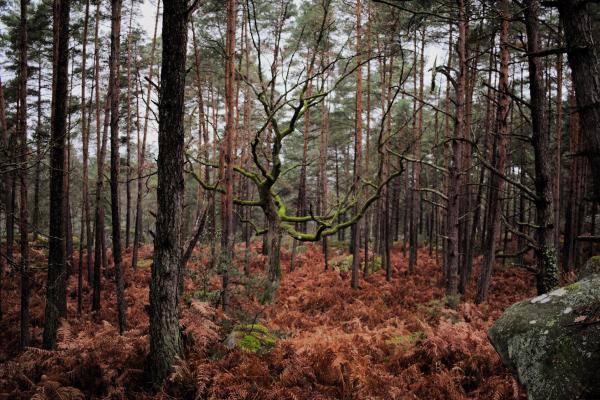
The landscape is a mix of dense beech and oak woods, open stretches of heath with pines and birches, and chaotic fields of sandstone boulders, called roches, shaped by wind and water over millions of years into strange forms. The rocks have made the forest one of the world's most famous places for bouldering, climbing on boulders without ropes, which is often called Bleau by climbers. There are thousands of problems, colour-coded by difficulty, on circuits that have been maintained for decades, and climbers from around the world come here, so on a weekend you will see many climbers with their crash pads. The gorges of Apremont and Franchard and the Mare aux Fées, a pond with a legend, are among the best known sites.
Walkers, cyclists and horse riders find marked trails of every length, including the long-distance GR paths, and the forest is home to deer, wild boar and many birds. Access is free, and the area is open all the time, but rules protect the vegetation, so stay on the paths, and take care with fire.
The forest suits walkers, climbers, cyclists and anyone who wants fresh air near Paris. The Château de Fontainebleau is on the edge of the town, and the Château de Vaux-le-Vicomte is not far.
Categories
More photos coming soon
Nearby Attractions
Other places to visit in Fontainebleau
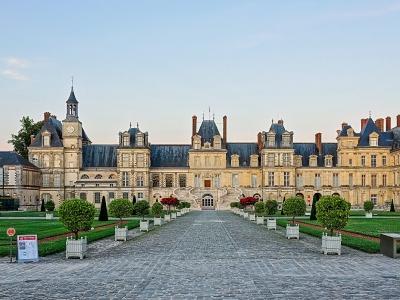
Château de Fontainebleau
Historic royal palace with extensive park
From €15 Castles · Gardens
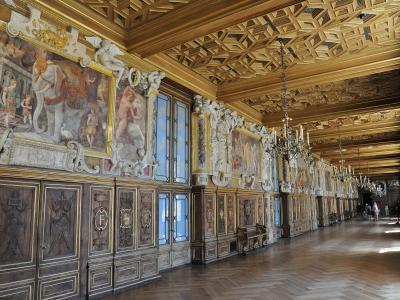
Galerie François Ier
16th-century gallery with Italian Renaissance frescoes
Historic Architecture · Museums & Culture
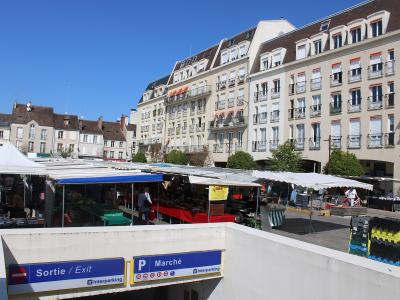
Marché de Fontainebleau
Weekly open-air market in historic Fontainebleau
Free Urban Exploration
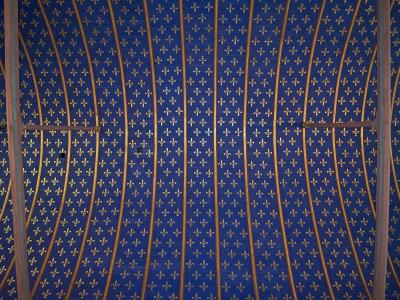
Salle des États
UNESCO palace room for Napoleon's abdication
Art Museums · History Museums
Questions people ask
Quick Facts
Best Time to Visit
April to June and September to October offer mild weather and fewer crowds for optimal exploration.