







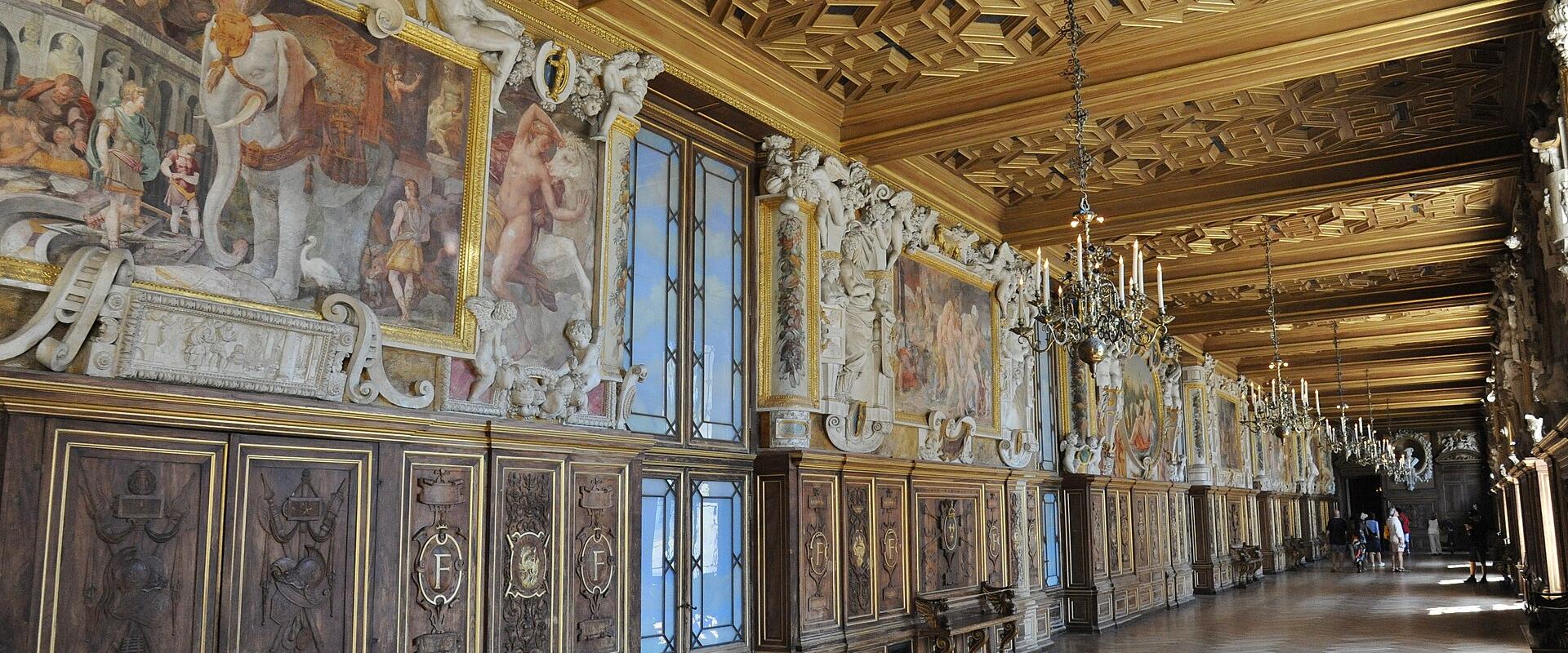
Galerie François Ier
16th-century gallery with Italian Renaissance frescoes
- Where
- Fontainebleau, Île-de-France
- Directions
- Directions
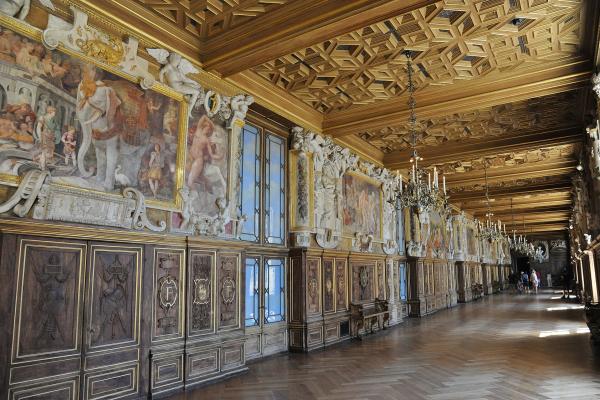
The Galerie François Ier is the long, richly decorated corridor on the first floor of the Château de Fontainebleau, and it is one of the key places in the history of French art. It was built between about 1528 and 1530 for King François I, who had made Fontainebleau his main country residence, and it linked the royal apartments with the chapel of the Trinity. The gallery is about sixty-four metres long and only six metres wide, and the narrow shape makes the decoration feel like a continuous procession on both sides.
The king brought Italian artists to France to decorate it, and the two leading figures were Rosso Fiorentino, from Florence, and Francesco Primaticcio, from Bologna, who arrived a little later. Rosso was in charge of the scheme in the early years, and the gallery is the best surviving work of his in France. The result was something new in French art: a combination of painted scenes in frames, high-relief stucco figures that seem to step out of the walls, and carved walnut panelling lower down. The mixture of painting and sculpture gave birth to what is called the first School of Fontainebleau and carried the Mannerist style of Italy into northern Europe.
The frescoes are allegorical and often puzzling. They include scenes from classical mythology and stories that praise the king as a wise and powerful ruler, such as the one known as the Ignorance Driven Out, in which the king appears as a Roman emperor. The salamander, the king's personal emblem, appears throughout the decoration, along with his monogram, the letter F, and the royal fleur-de-lis. The stucco figures frame each fresco with nude putti, garlands and cartouches, and the details are rewarding to look at slowly. Restoration work, which cleaned and consolidated the frescoes and stucco in modern times, has brought out the colours.
The gallery is part of the standard visit to the château, which also covers the Grands Appartements and the Napoleon I Museum. It sits close to other rooms of the Renaissance period, such as the Salle des États, and to the Cour du Cheval Blanc, the great courtyard with its horseshoe staircase. Video guides, available in several languages, explain the gallery and its symbols, and guided tours can be booked. The château is closed on Tuesdays and some public holidays, and there are seasonal changes to opening hours, so check before you set out.
The gallery can be seen in fifteen to twenty minutes, but the château deserves half a day or more. It suits anyone interested in art history, the Renaissance or French royal life. The Forêt de Fontainebleau and the town's market provide good ways to round out the day.
Categories
More photos coming soon
Nearby Attractions
Other places to visit in Fontainebleau
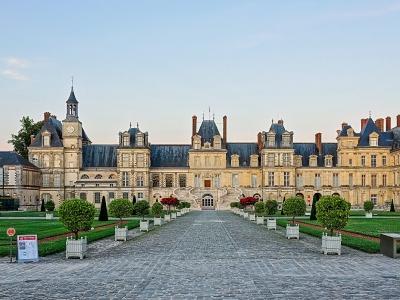
Château de Fontainebleau
Historic royal palace with extensive park
From €15 Castles · Gardens
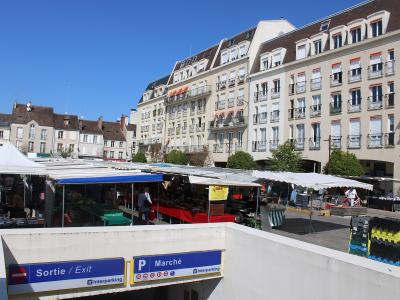
Marché de Fontainebleau
Weekly open-air market in historic Fontainebleau
Free Urban Exploration
Salle des États
UNESCO palace room for Napoleon's abdication
Art Museums · History Museums
Jardin du Roi
Royal gardens with lakes and fountains
Castles · Gardens
Questions people ask
Quick Facts
Best Time to Visit
April to June and September to October offer mild weather and fewer crowds for optimal exploration.