







- Where
- Fontainebleau, Île-de-France
- Directions
- Directions
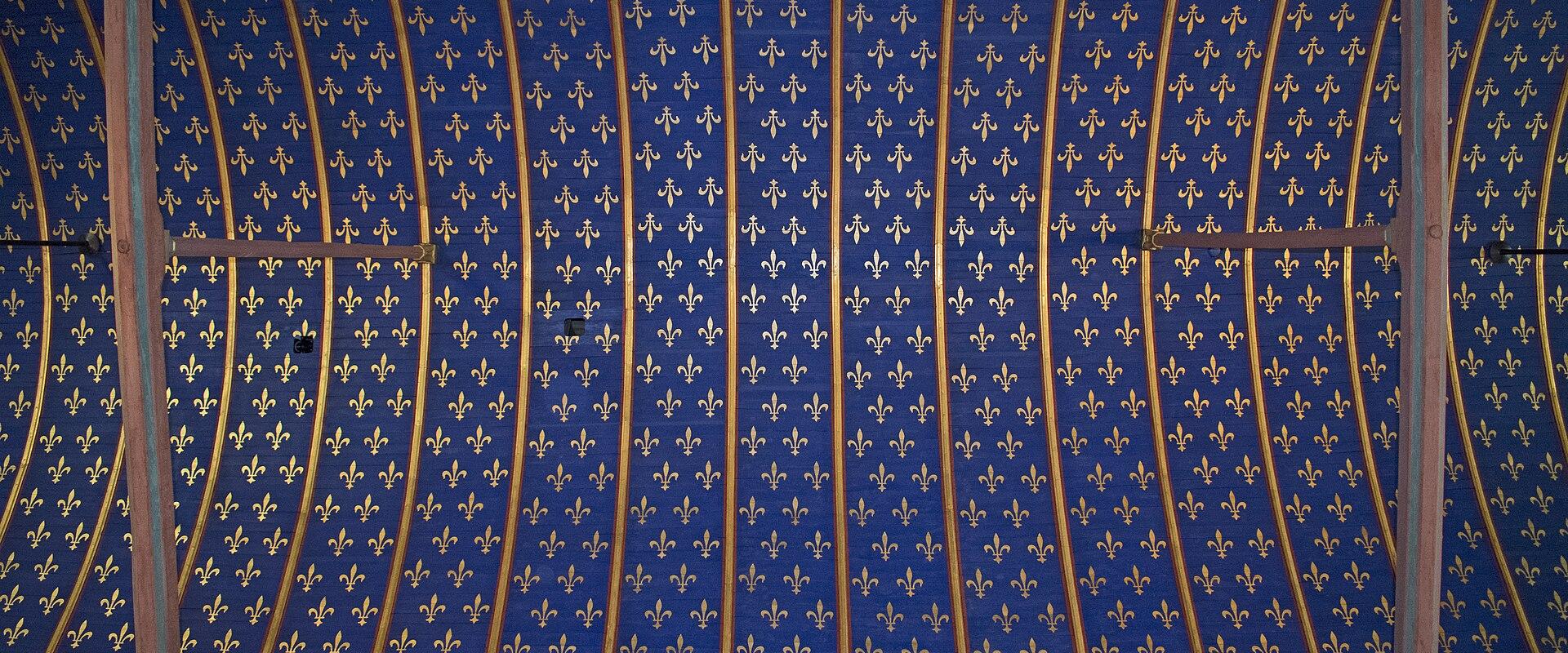
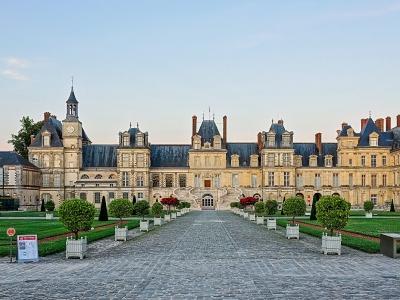
The Château de Fontainebleau, south-east of Paris, is one of the largest and most historic royal residences in France, and the room listed here as the Salle des États is best understood as part of that great palace. The name does not correspond to one of the best-known rooms of the château, so the place to look for the events associated with it is the palace as a whole, in particular the apartments of the emperor, where Napoleon Bonaparte signed his first abdication in April 1814. He took leave of his Old Guard in the courtyard, the Cour du Cheval Blanc, on 20 April of that year, an emotional scene that gave the courtyard its second name, the Cour des Adieux, and then left for exile on the island of Elba.
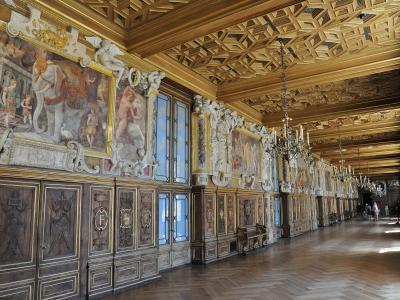
The château's long history made it a home to many monarchs. A hunting lodge stood here in the twelfth century, and Francis I turned it into a Renaissance palace from 1528, employing Italian artists such as Rosso Fiorentino and Primaticcio, who created the Galerie François Ier, a long gallery with painted panels and stucco decoration. Later kings added to it, among them Henry II, whose ballroom is magnificent, Henry IV, Louis XIII, Louis XIV and Louis XV. Napoleon, who called it the true home of kings, refurnished the palace and used it as a residence, and Napoleon III held court here in the nineteenth century. UNESCO inscribed the palace and park on the World Heritage list in 1981.
The interiors are among the finest in France, with a long series of apartments, galleries, chapels and a court theatre, and the Musée de la Grande Galerie is also part of the complex. Outside, the grounds cover about 130 hectares. The Grand Parterre, laid out by André Le Nôtre in the seventeenth century, is one of the largest formal gardens in Europe, and the Jardin de Diane and the English garden, with its winding paths, offer quieter corners. A large carp pond lies beside the palace, and the military stables, a unique feature, add to the interest of the site.
The palace opens every day except Tuesday, with seasonal hours, and tickets may be bought on arrival or online. A visit to the main rooms takes two to three hours, and the park can fill half a day. Fontainebleau is easy to reach by train from Paris, and the town has a market and the forest, which is popular for walks. The Château de Vaux-le-Vicomte is a short drive away.
The château suits history lovers, garden enthusiasts and families, and it is quieter than Versailles.
Categories
More photos coming soon
Nearby Attractions
Other places to visit in Fontainebleau
Château de Fontainebleau
Historic royal palace with extensive park
From €15 Castles · Gardens
Galerie François Ier
16th-century gallery with Italian Renaissance frescoes
Historic Architecture · Museums & Culture
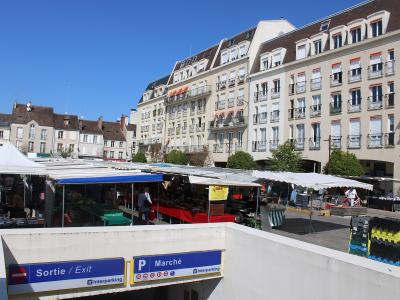
Marché de Fontainebleau
Weekly open-air market in historic Fontainebleau
Free Urban Exploration
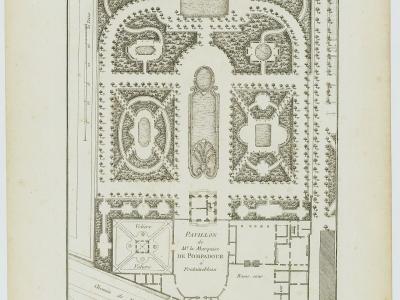
Jardin du Roi
Royal gardens with lakes and fountains
Castles · Gardens
Questions people ask
Quick Facts
Best Time to Visit
April to June and September to October offer mild weather and fewer crowds for optimal exploration.