







- Where
- Fontainebleau, Île-de-France
- Directions
- Directions
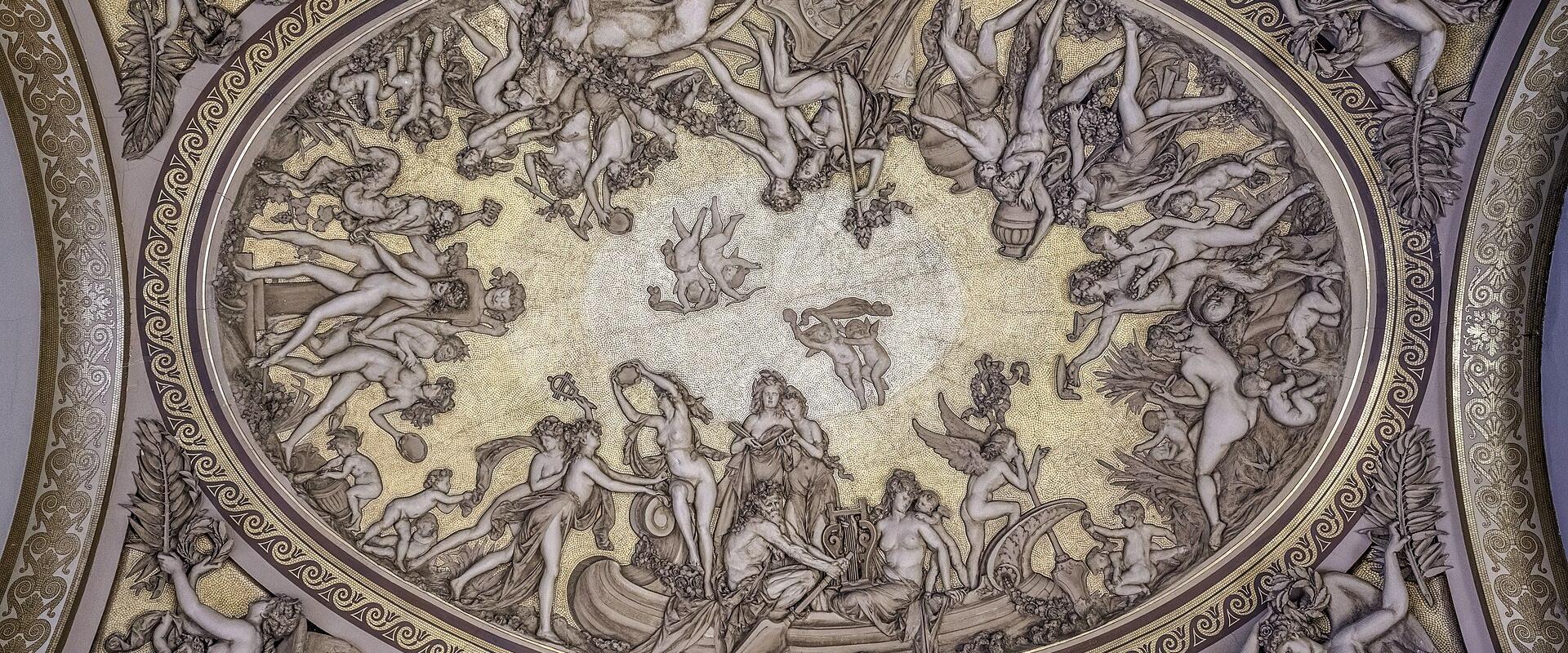
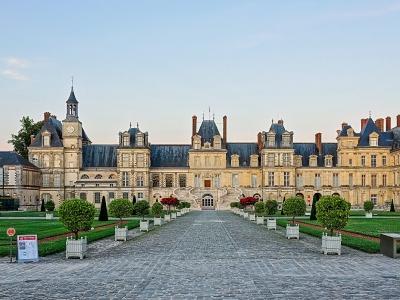
The Château de Fontainebleau, which stands in the middle of a great forest about sixty kilometres south-east of Paris, is a palace that was lived in by French rulers for some eight centuries, and the name given here refers to the galleries and rooms of that palace rather than to a separate museum. Napoleon, who lived here and who spent his last days as emperor in the palace, called it the true home of kings, the house of the centuries, because each ruler left a mark on it. The château is on the UNESCO World Heritage List, and it is among the most interesting royal residences in France, since it grew by stages rather than from a single plan.
The oldest parts go back to the medieval hunting lodge of the Capetian kings in the twelfth century. The most important building campaign began in 1528, when François I ordered the old castle to be rebuilt as a modern palace, and he brought Italian artists, among them Rosso Fiorentino and Francesco Primaticcio, to decorate it, an effort that led to the first school of Fontainebleau and brought the Italian Renaissance and Mannerism to France. Henri II added the great ballroom, Henri IV extended the courtyards and built the Trinity Chapel, and Louis XIII, Louis XIV and Louis XV all made their own changes. Napoleon refurnished the rooms, held Pope Pius VII here in captivity from 1812 to 1814, and signed his abdication in the palace.
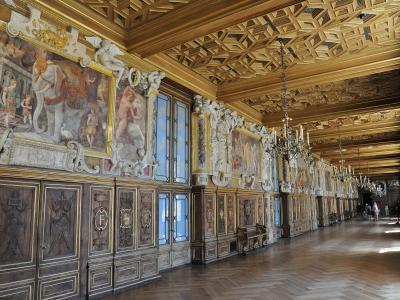
The visit follows several routes. The Renaissance rooms and galleries, with their frescoes and stucco, are among the highlights, and they include the Gallery of Francis I and the ballroom. The Grands Appartements are the state rooms of the sovereigns, lavishly decorated, and the Napoleon I Museum contains the emperor's personal belongings, uniforms, hats and other mementoes. The interior apartment of the emperor, reached on a separate tour, shows how he lived. Other rooms include the throne room, which was the royal bedchamber before Napoleon turned it into the throne room, and the apartment of the Empress Eugénie, wife of Napoleon III, where there is a Chinese museum made in the nineteenth century. Free audioguides are provided for individual visitors, and guided tours can be booked.
The gardens and park are extensive. The Grand Parterre, a great formal garden designed by André Le Nôtre in the 1660s, lies on the east side, with the carp pond in the middle of the courtyards and a large park with a canal beyond. There are also English-style gardens and the Garden of Diana, and in total the estate covers well over a hundred hectares. The forest of Fontainebleau around the palace is a famous place for walking and rock climbing.
The château is reached by train from Paris and then a short bus ride. It is closed on Tuesdays and some holidays, and it takes at least half a day, or a full day with the gardens. Nearby, the Château de Vaux-le-Vicomte, the masterpiece of Le Nôtre and Louis Le Vau, is a short drive away. The visit suits history lovers, art fans and families.
Categories
More photos coming soon
Nearby Attractions
Other places to visit in Fontainebleau
Château de Fontainebleau
Historic royal palace with extensive park
From €15 Castles · Gardens
Galerie François Ier
16th-century gallery with Italian Renaissance frescoes
Historic Architecture · Museums & Culture
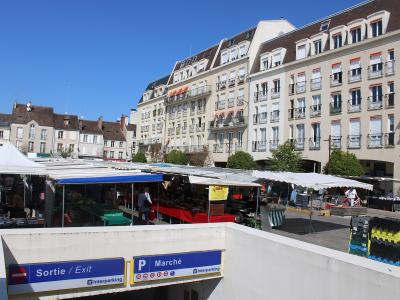
Marché de Fontainebleau
Weekly open-air market in historic Fontainebleau
Free Urban Exploration
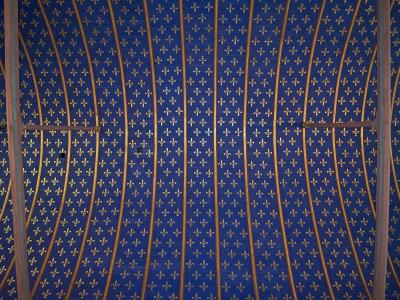
Salle des États
UNESCO palace room for Napoleon's abdication
Art Museums · History Museums
Questions people ask
Quick Facts
Best Time to Visit
April to June and September to October offer mild weather and fewer crowds for optimal exploration.