







- Where
- Caen, Normandy
- Directions
- Directions
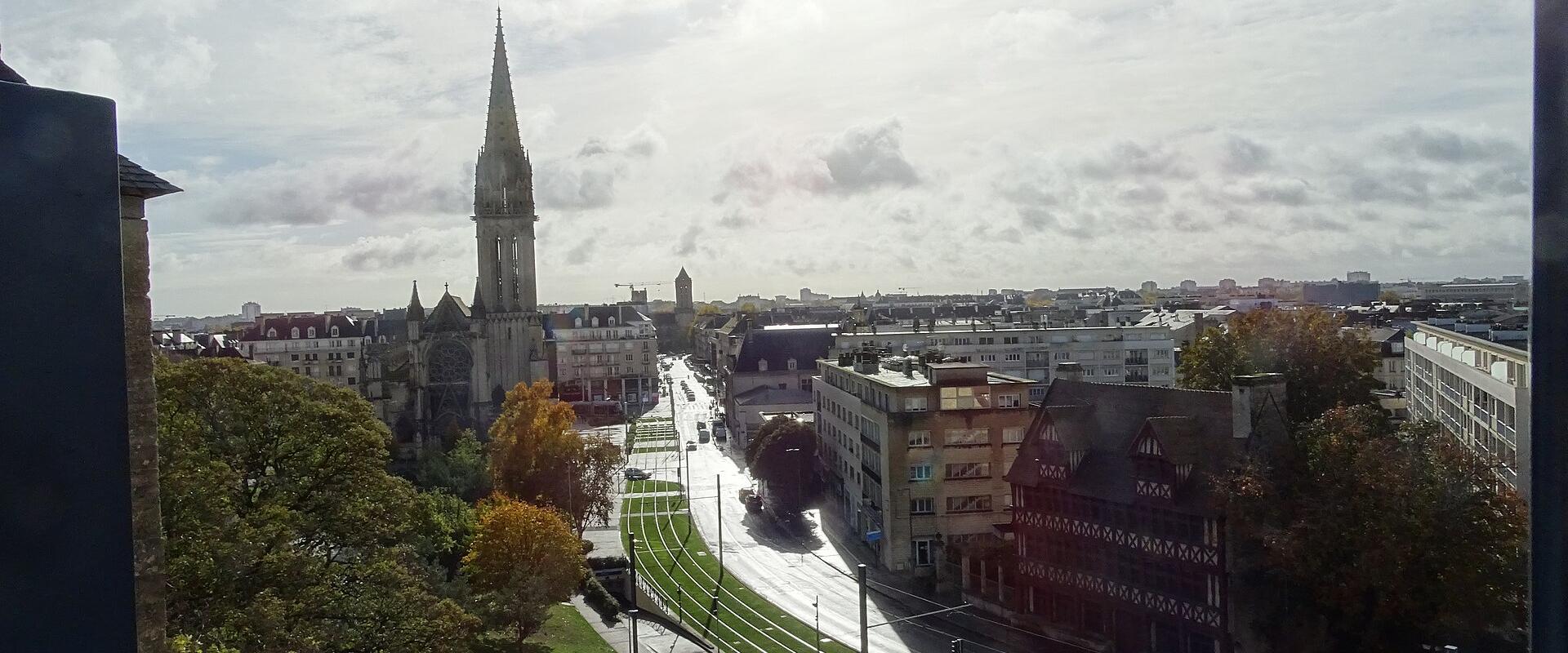
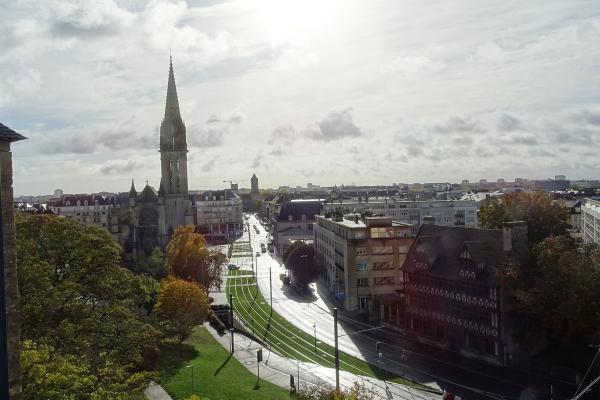
Place Saint-Pierre is the square in the middle of Caen that takes its name from the church of Saint-Pierre, and the church is the reason to come. It stands at the foot of the castle hill, in the busy commercial part of the old town, and its tall spire is visible from many streets. The church was begun in the thirteenth century and finished in the sixteenth, and it shows the history of the Gothic style in Normandy from its early stages to the elaborate Flamboyant and early Renaissance forms. It was among the many buildings of Caen that were badly damaged in the battle for the city in 1944, and the spire, which rises to about seventy-five metres, was rebuilt after the war.
The oldest part is the tower, which dates from the early fourteenth century, and the spire above it was among the great works of its time. The nave is Gothic of the thirteenth and fourteenth centuries, and the most remarkable part is at the east end, where in the sixteenth century the architect Hector Sohier designed a very ornate chevet in early Renaissance style. The apse and the chapels around the choir are covered in carving, with pendant keystones that hang from the vault like stone chandeliers, and lacy tracery. On the outside the buttresses are decorated with pinnacles and carvings. The result is a fusion of late Gothic and Italian ideas, and it is among the finest examples of this transitional period in France.
Inside, look closely at the capitals of the nave pillars, which carry carvings of scenes from stories and daily life, among them figures of knights, fabulous animals and episodes from medieval tales. They offer a view of the imagination of the stone carvers. The choir and the ambulatory chapels, with their rich vaults, repay a slow walk, and the church holds several works of art and furnishings of different periods. As an active church, it holds services, so visits should be quiet.
The square in front is a lively space with shops and cafés, with traffic kept to the edges. On one side stands the Hôtel d'Escoville, a handsome Renaissance mansion of the 1530s, built for a rich merchant, with a courtyard decorated with carved panels and busts. The Rue Saint-Pierre, a pedestrian shopping street, runs through the area, and the market of the district is a short walk away. Caen stone, a pale limestone quarried nearby, was used here, as it was in many famous buildings in England, among them Westminster Abbey and the Tower of London.
The church is a short walk from the Château de Caen, with the Musée de Normandie inside its walls, and the two great abbeys founded by William the Conqueror and his wife Matilda, the Abbaye aux Hommes and the Abbaye aux Dames, which lie on either side of the old town. The Mémorial de Caen, a museum of the Second World War and peace, is a short drive away, and the Normandy landing beaches are not far. A visit to the church takes about thirty to forty-five minutes, and it suits architecture lovers.
Categories
More photos coming soon
Nearby Attractions
Other places to visit in Caen

Memorial de Caen
Europe's largest 20th-century history museum
Guided Tours · History Museums
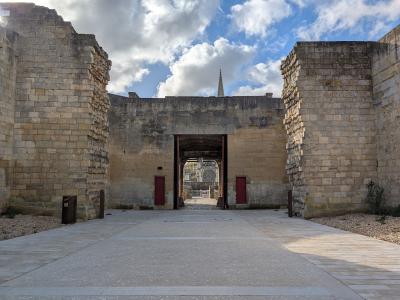
Château de Caen
11th-century castle housing two major museums
Free Castles · Guided Tours
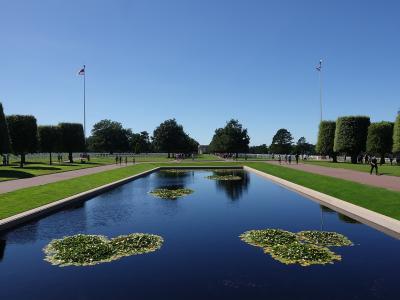
Normandy American Cemetery and Memorial
Cliffside WWII cemetery overlooking Omaha Beach
Free Cliffs · Heritage Trails
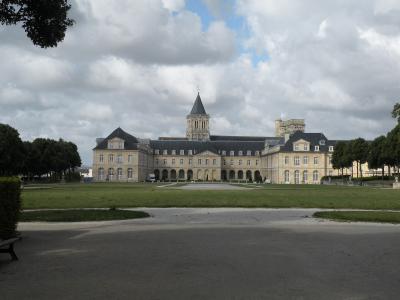
Abbaye aux Dames
11th-century Benedictine abbey founded by William the Con...
From €3 Historic Architecture · Museums & Culture
Questions people ask
Quick Facts
Best Time to Visit
Late June to early September offers warm weather and ideal conditions for outdoor activities and sightseeing.