







- Where
- Chartres, Centre-Val de Loire
- Directions
- Directions
The old town of Chartres is a compact, hilly quarter on the banks of the River Eure, about ninety kilometres south-west of Paris, with one of the world's great Gothic cathedrals at its summit. The two are inseparable. The cathedral stands on the hilltop, its two unequal spires visible from far across the Beauce plain, while the Haute Ville around it and the Basse Ville along the river bank below are a maze of medieval and Renaissance streets, stairways and bridges. Walking down from the cathedral to the river is like walking back through time.
The cathedral itself, Notre-Dame de Chartres, was rebuilt in the early thirteenth century after a fire in 1194, and it has survived with remarkably little alteration. Its stained glass, covering about 2,500 square metres, is mostly original from the same period and gives the interior its deep blue glow, known as Chartres blue. The Royal Portal on the west front, carved in the twelfth century, is one of the finest sculptural ensembles of the early Gothic period, and the labyrinth set into the nave floor draws pilgrims who follow its path as a form of meditation. The two spires differ because the north tower was rebuilt in the sixteenth century in the Flamboyant style, after a fire, while the south tower is the plain Romanesque original. Chartres was listed by UNESCO in 1979.
The lower town has its own character. The Eure splits into branches here, crossed by small bridges, and lanes such as the Rue de la Tannerie follow the water past old tanners' and weavers' houses, with timber-framed fronts reflected in the river. The Porte Guillaume, a fourteenth-century fortified gate, is a surviving piece of the medieval walls and spans the river. Churches such as Saint-Pierre, with fine stained glass, and Saint-André, now used for exhibitions and concerts, are tucked into the lanes, and the Maison du Saumon, a sixteenth-century house with a carved salmon, is a favourite photographic subject. The Hôtel de Ville, built in the seventeenth century, stands near the Place des Halles, and the statue of General Marceau, a native of Chartres who fought in the Revolutionary wars, recalls a local hero.
The town hosts events that make the most of its architecture. In summer and at Christmas, Chartres en Lumières lights up many of the town's monuments and bridges with coloured projections in the evenings, and the old town is at its best at dusk. The Musée des Beaux-Arts, beside the cathedral in the former bishop's palace, and the Centre International du Vitrail, devoted to stained glass, add to the cultural offering. A little outside the centre, the Maison Picassiette is a remarkable house covered in mosaics of broken crockery by a local road-sweeper, Raymond Isidore.
Chartres is an easy day trip from Paris, roughly an hour by train from Montparnasse, and is also a convenient stop between Paris and the Loire Valley. The old town suits walkers, photographers, history lovers and pilgrims. Wear comfortable shoes, as the streets slope steeply, and allow at least half a day to combine the cathedral with the lanes below.
Categories
More photos coming soon
Nearby Attractions
Other places to visit in Chartres
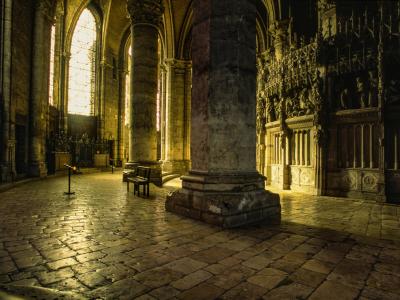
Chartres Cathedral (Cathédrale Notre-Dame de Chartres)
UNESCO Gothic landmark with 12th-century stained glass
Free Churches · Heritage Trails
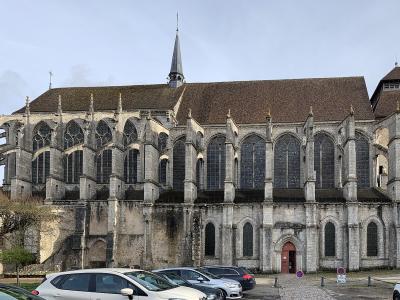
Abbey of Saint-Père-en-Vallée
7th-century abbey with a 10th-century bell tower
Churches · Heritage Trails
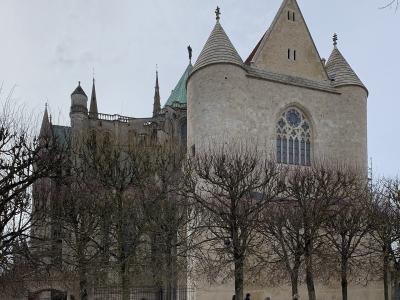
Museum of the Treasury (Trésor de la Cathédrale)
14th-century frescoes and relics in a historic chapel
Free Historic Architecture · Museums & Culture
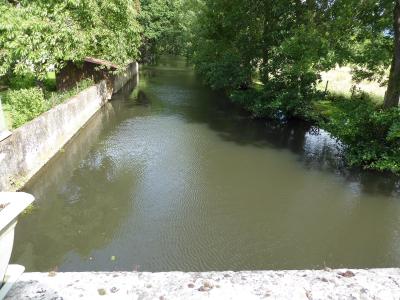
Eure River Banks
Historic riverbanks below Chartres Cathedral
Historic Towns · Promenades
Questions people ask
Quick Facts
Best Time to Visit
Late June to early September offers warm weather and ideal conditions for outdoor activities and sightseeing.