- Admission
- Free admission
- Hours
- The busiest time for visitors is between 11am and 4pm.
- Where
- Etretat, Normandy
- Directions
- Directions
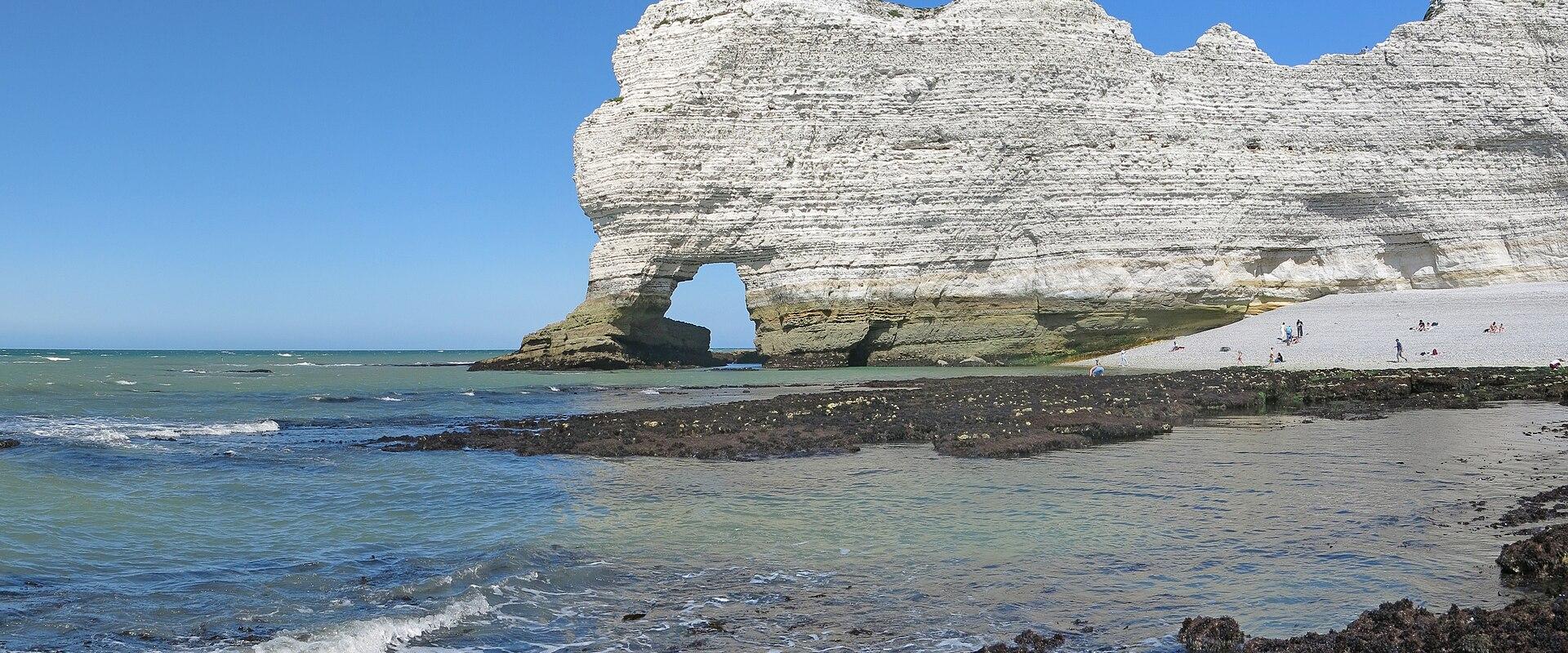
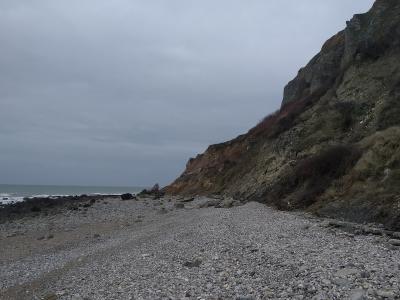
Étretat is a small resort on the Alabaster Coast of Normandy, and its beach is a long curve of grey pebbles squeezed between two great white cliffs. The Falaise d'Amont, the eastern cliff, rises at the end of the beach on one side, and the Falaise d'Aval, with its famous arch, closes the other. The stretch of the shore beneath the Amont cliff is the quieter, eastern end of the beach, usually called the Plage de l'Amont, and it is reached from the middle of the town by walking along the seafront or by descending the steps from the cliff-top path, which makes it an easy place to escape the main crowd. The beach has no sand, and the shingle makes walking slow, so sturdy shoes are useful, and swimming depends on the tide, the wind and the swell, which can create a strong shore break.
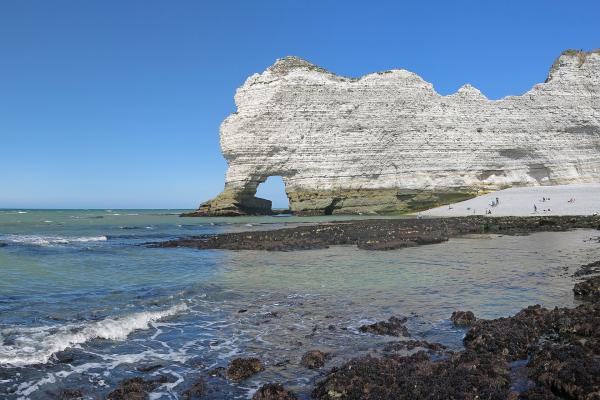
The cliffs are the main attraction. They are made of white chalk, with horizontal bands of black flint embedded in them, and they rise about seventy to ninety metres above the shingle. The sea has carved them into arches and pinnacles. On the Amont side, a small arch, the Porte d'Amont, is cut into the foot of the cliff, and visitors who walk at low tide can pass beneath it. The sea, which has been eating the coast for thousands of years, takes away several centimetres of cliff every year, and the beach is littered with flint pebbles that the waves have rounded. From the beach, the view back along the shore takes in the white arch and the needle rock of the Aval cliff, the famous scene that attracted painters such as Eugène Boudin, Gustave Courbet and, above all, Claude Monet, who painted the cliffs many times between 1883 and 1886.
Above the beach, a path climbs to the clifftop on the Amont side, where a small chapel, Notre-Dame de la Garde, stands near the edge, a place where sailors' families once came to pray for those at sea. Nearby is a monument to the aviators Charles Nungesser and François Coli, who disappeared in 1927 while attempting the first non-stop flight across the Atlantic in their plane, L'Oiseau Blanc, which took off from Paris. A museum and the Jardins d'Étretat, a modern garden laid out on the cliff top, with sculpted hedges and works of art, are other places to see.
The beach is free and open at all times. Many visitors come between eleven in the morning and four in the afternoon, so the early morning or the late afternoon offers a quieter experience and softer light on the stone. Étretat is easy to reach by train and bus, and a coastal path continues beyond the cliffs. Take warm clothes, as the Channel wind can be cool, and watch the tide, since the water can cut off parts of the beach.
The beach suits walkers, photographers and families, and it makes a good start for the cliff walks that Étretat is famous for.
Categories
More photos coming soon
Hours & Fees
- Open
- The busiest time for visitors is between 11am and 4pm.
- Admission
- Free admission
Hours and prices change, especially out of season. Check with the venue before you go.
Nearby Attractions
Other places to visit in Etretat
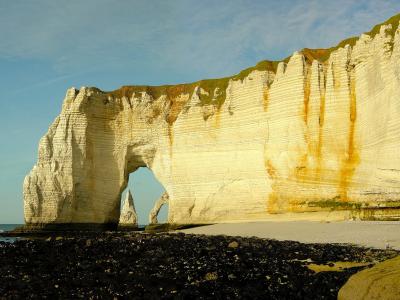
Falaises d'Étretat
Spectacular white chalk cliffs and natural arches
Free Coastal & Maritime · Nature & Parks
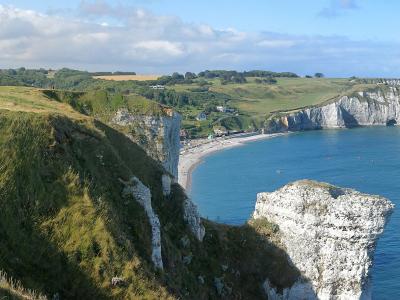
Sentier des Douaniers (GR22)
Coastal trail along Etretat's white chalk cliffs
Free Cliffs · Coastal Promenades
Cap de la Hève
Chalk cliffs with flint arches on Alabaster Coast
Cliffs · Geological Sites
Questions people ask
Quick Facts
Best Time to Visit
Late June to mid-September offers warm weather and ideal conditions for outdoor activities and sightseeing.