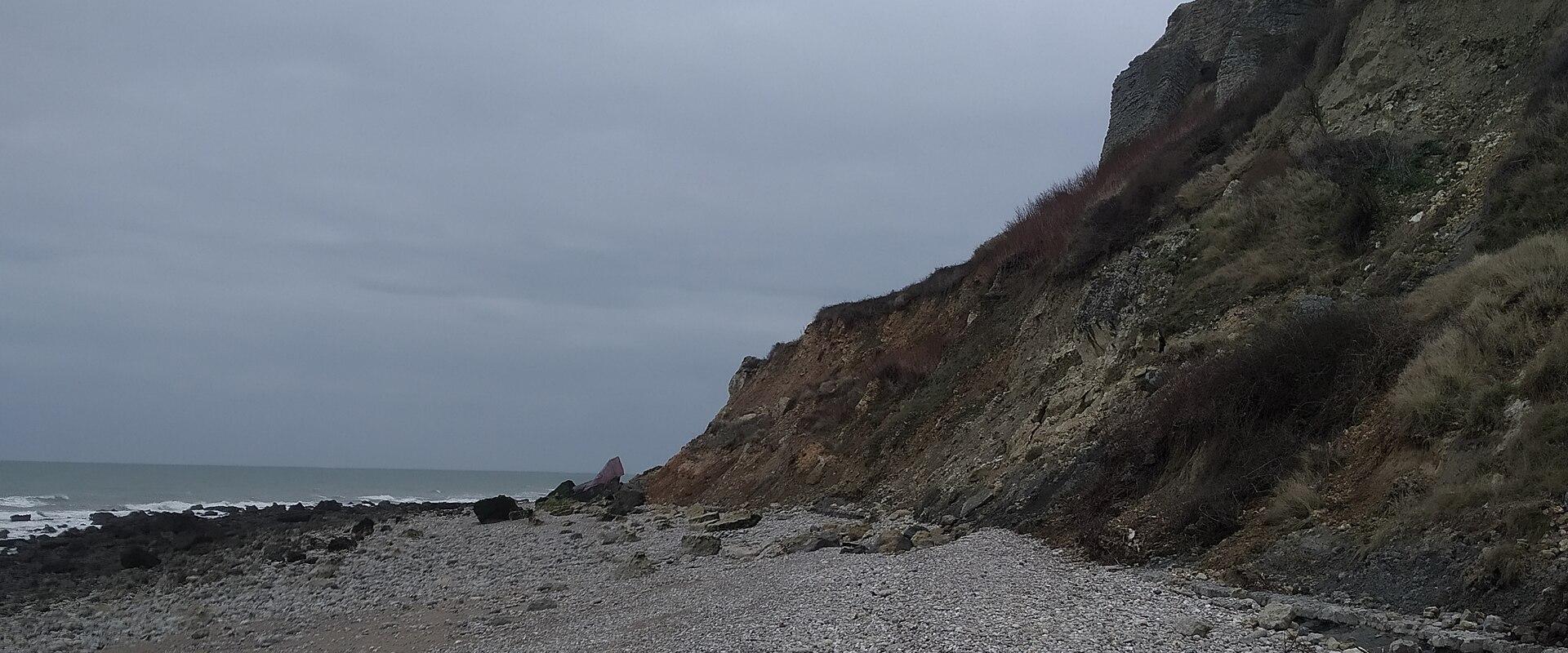
Cap de la Hève
Chalk cliffs with flint arches on Alabaster Coast
Cap de la Hève is a dramatic coastal promontory located approximately 6 kilometers east of Le Havre, marking the southern end of the Côte d'Albâtre and the northern boundary of the Bay of Seine. Rising 100 meters above the English Channel, this natural landmark offers panoramic views of the harbor and the surrounding cliffs. The cape covers an area of 17.05 hectares and is designated as a Natural Zone of Ecological, Faunistic, and Floristic Interest, making it a significant site for observing migratory birds and diverse wildlife, including peregrine falcons and various orchid species.
Visitors can explore the grassy zones and rocky outcrops that characterize the landscape. The area features historical remnants such as old blockhouses, which provide a glimpse into the region's military past. The Phare de la Hève, a lighthouse situated on the cape, serves as a notable navigational aid and a visual anchor for the coastline. The name "Cap de la Hève" derives from the Old English word hêafod, meaning "head" or "promontory."
The cape is part of a larger protected natural area that includes the Falaise d'Amont and the Antifer Valley. Scenic walking paths allow visitors to traverse the landscape, offering opportunities to observe the dramatic chalk cliffs and the sea below. The area is accessible via a small wooden barrier parking area, from which paths lead down to the beach. While there are no specific opening hours or admission fees for the public access areas, visitors are encouraged to respect the natural environment and the ecological sensitivity of the site. The combination of natural beauty, historical interest, and ecological significance makes Cap de la Hève a compelling destination for travelers exploring the Normandy coast.
Categories
More photos coming soon
Nearby Attractions
Other places to visit in Etretat
Frequently Asked Questions
Quick Facts
Best Time to Visit
Late June to mid-September offers warm weather and ideal conditions for outdoor activities and sightseeing.