


- Admission
- Free admission
- Hours
- Daily 9am-6pm
- Where
- Etretat, Normandy
- Directions
- Directions
The cliff path at Étretat follows the old customs officers' route along the Alabaster Coast of Normandy, the stretch of the Channel shore between Le Havre and Le Tréport where white chalk cliffs rise sheer from the sea. The French name, sentier des douaniers, refers to the officers who once patrolled the coast on foot to watch for smugglers, and today the paths along the clifftops are part of the long-distance coastal trail, which is usually shown on maps as the GR21 rather than the GR22 given in the old listing. The section around Étretat is the best-known and most photographed part of the whole route.
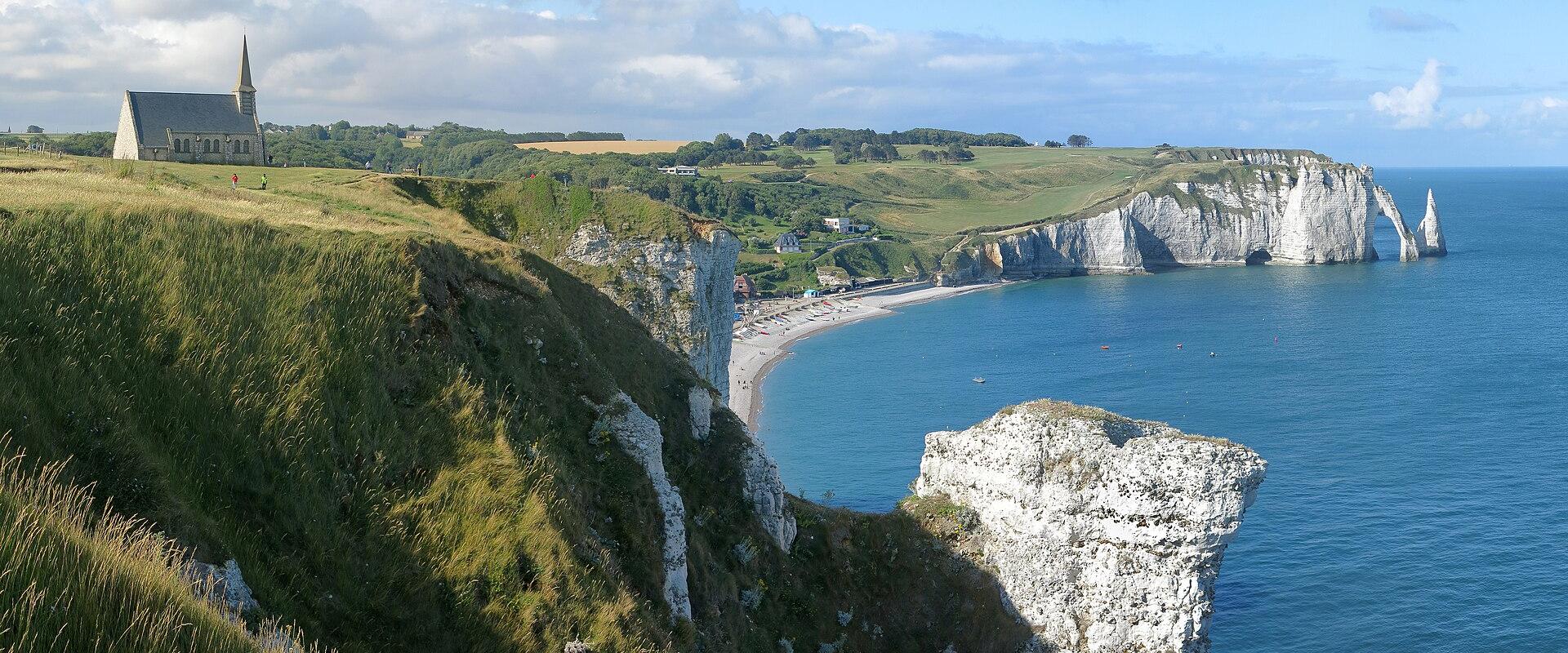
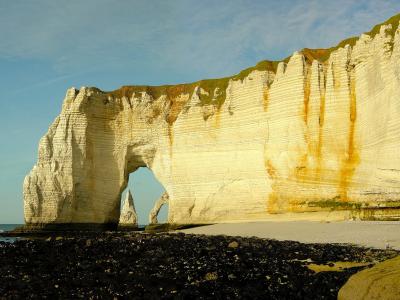
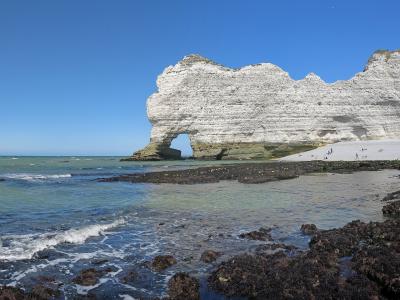
The cliffs are the main reason to walk here. On the western side the Falaise d'Aval, the arch of the Porte d'Aval and the sharp pinnacle of the Aiguille, the Needle, rise to about seventy metres above the beach, and they are the shapes that have made Étretat famous. On the eastern side, the Falaise d'Amont carries the small chapel of Notre-Dame de la Garde and a monument to the aviators Nungesser and Coli, who left Le Bourget in 1927 in the plane L'Oiseau blanc and disappeared over the Atlantic. The chalk is sculpted by wind and waves, and the white of the stone against the grey-green sea changes with the light and the tide, as the painters knew.
Artists were drawn here in the nineteenth century. Courbet, Boudin, and above all Monet, who painted the cliffs many times in different weather, helped to make Étretat a subject of Impressionist painting. The writer Maurice Leblanc made the Aiguille the setting for one of his Arsène Lupin novels, L'Aiguille creuse, in which the Needle conceals a treasure, and he lived in the town for part of his life. The Jardins d'Étretat, a garden on the clifftop, add modern art and planting to the old views, and a golf course lies on the clifftop on the other side.
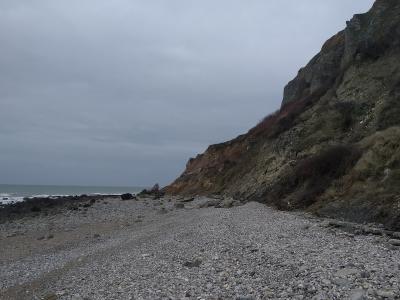
The walk itself is a steady climb. From the pebble beach you take steps and slopes up to the clifftop, where the path runs along the edge of the grass, with views of the sea and of the town below. A round trip along both cliffs can take two to three hours, and the paths can be steep, uneven and slippery after rain. The cliffs are fragile and rockfalls occur, so keep to the marked paths, stay back from the edge and avoid walking on the beach under the cliffs at high tide. Wind can be strong on the top.
The path is free and open at all times, though in practice daylight hours are the sensible choice. It is busiest at midday in summer, so early morning or evening offers the best light and the quietest walk. The area is a Grand Site de France, with measures to protect the landscape. Boat trips offer another view of the cliffs from the water.
Categories
More photos coming soon
Hours & Fees
- Open
- Daily 9am-6pm
- Admission
- Free admission
Hours and prices change, especially out of season. Check with the venue before you go.
Nearby Attractions
Other places to visit in Etretat
Questions people ask
Quick Facts
Best Time to Visit
Late June to mid-September offers warm weather and ideal conditions for outdoor activities and sightseeing.